
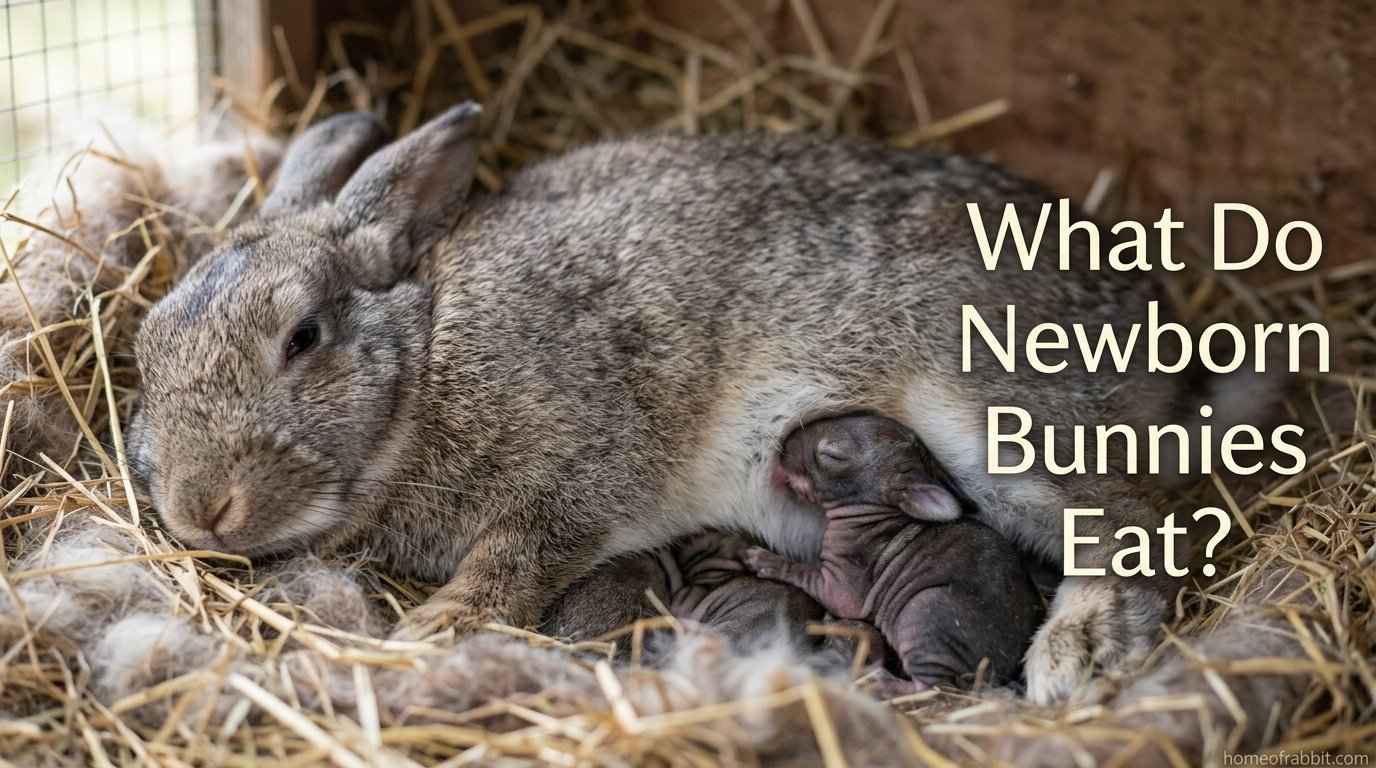
Newborn bunnies eat one thing: their mother’s milk. They don’t need water, hay, pellets, or anything else for the first couple of weeks. If you’ve found a litter, or your doe has just given birth, the more urgent question is usually “Is mom actually feeding them?” The answer is very often yes, even if you never see it happen.
This guide covers what newborn rabbits (called kits) eat, how to tell whether they’re being fed, what to give them if they’re truly orphaned, and when solid food enters the picture.
Mother’s Milk Is the Only Food Newborn Bunnies Need
Rabbit milk is rich, and kits are built to get all their nutrition from it. Domestic rabbits keep nursing their young for roughly eight weeks, gradually decreasing the frequency of feedings until the babies lose interest. miami
Why You Rarely See Her Feeding Them
This is the part that catches new rabbit owners off guard. A doe doesn’t hover over her litter. Rabbits feed their offspring only once or twice per day, usually just before dawn and/or just after dusk, and only when they feel safe. The visits are brief, around five minutes a day by some estimates. rabbit
The reason is instinct. A mother rabbit not feeding stays away from the nest to avoid attracting predators to her babies. A doe who ignores her kits all day is behaving normally. miami
Constant human attention can backfire. If people and children are continually gathered around the cage, the mother may become too stressed to nurse. Give her a quiet spot and check in as little as possible. rabbit
Cecotropes: A Second Food Source From About 10 Days
Around the time their eyes open, kits begin eating something unexpected. By ten days of age, the babies’ eyes will have opened and they will begin eating their mother’s cecotropes, also called “night feces.” Cecotropes are soft, nutrient-rich droppings that rabbits produce and eat as part of normal digestion. For kits, they also help establish healthy gut bacteria. If you see the doe leaving odd-looking soft droppings in the nest area, that’s likely why. rabbit
How to Tell Whether the Babies Are Being Fed
Don’t assume a litter is abandoned because mom isn’t in the nest. Look at the babies instead.
| Looks healthy | Looks like a problem |
|---|---|
| Warm, plump, rounded bellies | Sunken tummies and wrinkled, dehydrated skin |
| Pink, calm, sleeping in a pile | Cold, shrunken, lethargic, and bluish instead of pink |
| Bellies look full after dawn or dusk | Weak, scattered, or crying for long stretches riseandshinerabbitrymiami |
If the babies look healthy, leave them alone. If they look cold, shrunken, and lethargic, the mother might not be feeding them, and only then should you consider hand-feeding. A first-time doe may take up to a day to begin producing milk after giving birth, so wait a day before intervening if the litter is brand new. miami
If the kits are cold, get them warm first (see the steps below). A cold kit can’t digest milk safely.
What to Feed Orphaned Newborn Bunnies
Hand-rearing newborn rabbits is difficult, and survival rates are lower than with a nursing doe. If you can, call a rabbit-savvy vet or a rescue first. If the babies are wild cottontails, contact a licensed wildlife rehabilitator rather than raising them yourself.
Formula
The standard substitute is kitten milk replacer (KMR). For a truly orphaned bunny, kitten milk replacer is the usual option. Rabbit rescue guides often recommend boosting the fat content with plain cream, because rabbit milk is richer than KMR. One widely shared guide describes feeding KMR supplemented with cream. Exact ratios vary between sources, so confirm the mix with your vet or the House Rabbit Society feeding guide before you start. vinscribd
Prepare only what you need. Mix enough replacer for one day and keep it refrigerated between feeds, then warm each portion before feeding. wabbitwiki
How Often and How Much
Less is safer than more. Feed only twice a day, because overfeeding is a leading cause of death in orphaned kits, as it can cause fatal intestinal disease. vin
For a rough starting point, the House Rabbit Society’s guidance is about 2 to 2.5 ml per feeding for newborns up to one week old, and 5 to 7 ml per feeding for one- to two-week-olds, two feedings a day. The same source notes the amount can be much lower for small babies. Treat these as a guide, not a prescription. miami
If a kit won’t finish a feeding, don’t force it. Offer the rest later, but still no more than twice a day.
How to Feed Safely
- Warm the babies first. Keep them in a box lined with soft fabric or fur in a quiet, warm spot. Never feed a cold kit.
- Warm the formula to roughly body temperature. Test a drop on your wrist.
- Use the right tool. Kitten nursers are too large for a baby rabbit’s mouth. If the baby has lost the suckling instinct, a tuberculin syringe with the needle removed can be used. rabbit
- Feed slowly, belly down or in a natural position, a few drops at a time. Let the kit swallow between drops. Milk in the nose can cause aspiration.
- Stop when the kit stops, even if the syringe isn’t empty. A baby can learn to suckle so quickly that it takes in more than its stomach can handle, and it’s better to underfeed slightly than overfeed. wabbitwiki
- Weigh the kits daily on a kitchen scale. Steady gain is the best sign things are working.
Common Mistakes
- Feeding too often. Rabbit kits are not like kittens or puppies. More feedings means more risk.
- Using cow’s milk or human infant formula. These aren’t suitable; stick with a kitten milk replacer and vet guidance.
- Handling too much. Stress and chilling hurt young kits.
- Skipping the vet. An exotics vet can show you the technique and spot problems early.
- Moving a wild nest. Wild mothers also visit just twice a day. Most “abandoned” nests aren’t.
When Do Baby Bunnies Start Eating Solid Food?
Kits start nibbling long before they stop nursing. They begin sampling pellets and solid food at about two to three weeks old, but that does not mean they’re ready to be weaned. miami
| Age | What they eat |
|---|---|
| Birth to ~10 days | Mother’s milk only |
| ~10 days | Milk, plus cecotropes from mom |
| 2–3 weeks | Milk, plus first nibbles of hay and pellets |
| Up to ~8 weeks | Gradually reducing milk, increasing solid food |
When kits begin exploring solids, offer plenty of fresh hay and pellets. Introduce vegetables slowly, one at a time. Some are better left until later; for example, here’s what to know about whether rabbits can eat cabbage and why gas-causing greens call for caution.
Keep feeding mom well during this stage. She needs unlimited pellets, leafy greens, grass hay, and fresh water while nursing.
Quick Checklist
- Babies are warm, plump, and pink.
- Mom has a quiet, low-traffic spot.
- Mom has unlimited hay, pellets, and clean water.
- If orphaned: KMR (confirmed with a vet), warmed, no more than twice a day.
- Kits weighed daily and gaining.
- Hay and pellets available from about 2 weeks.
- A rabbit-experienced vet or rescue on speed dial.
The Short Answer
So, what do newborn bunnies eat? Mother’s milk, once or twice a day, and nothing else until they start nibbling solids around two to three weeks. Check the babies’ bellies, not the nest, to know whether they’re fed. Step in only when they look cold, shrunken, or dehydrated, and if you do, go slowly, feed small amounts, and get expert help.
FAQ
Can newborn bunnies drink water?
Not at first. Mother’s milk provides their hydration. Water becomes relevant when they start eating solids at around two to three weeks.
How often should I feed an orphaned baby rabbit?
No more than twice a day, roughly 12 hours apart. Overfeeding is more dangerous than slightly underfeeding.
Can I use cow’s milk or goat’s milk?
Stick with kitten milk replacer and vet guidance. Some sources mention goat’s milk, but I couldn’t verify it from a reliable source, so check with a vet.
Is it okay to touch newborn bunnies?
Brief, gentle handling is fine when needed. The belief that a mother rejects babies who smell of humans is largely a myth, but too much handling stresses kits, so keep it minimal.
How can I tell if the mother is feeding her babies?
Look at the kits, not the doe. Round, warm bellies and quiet sleeping mean they’re fed.
