
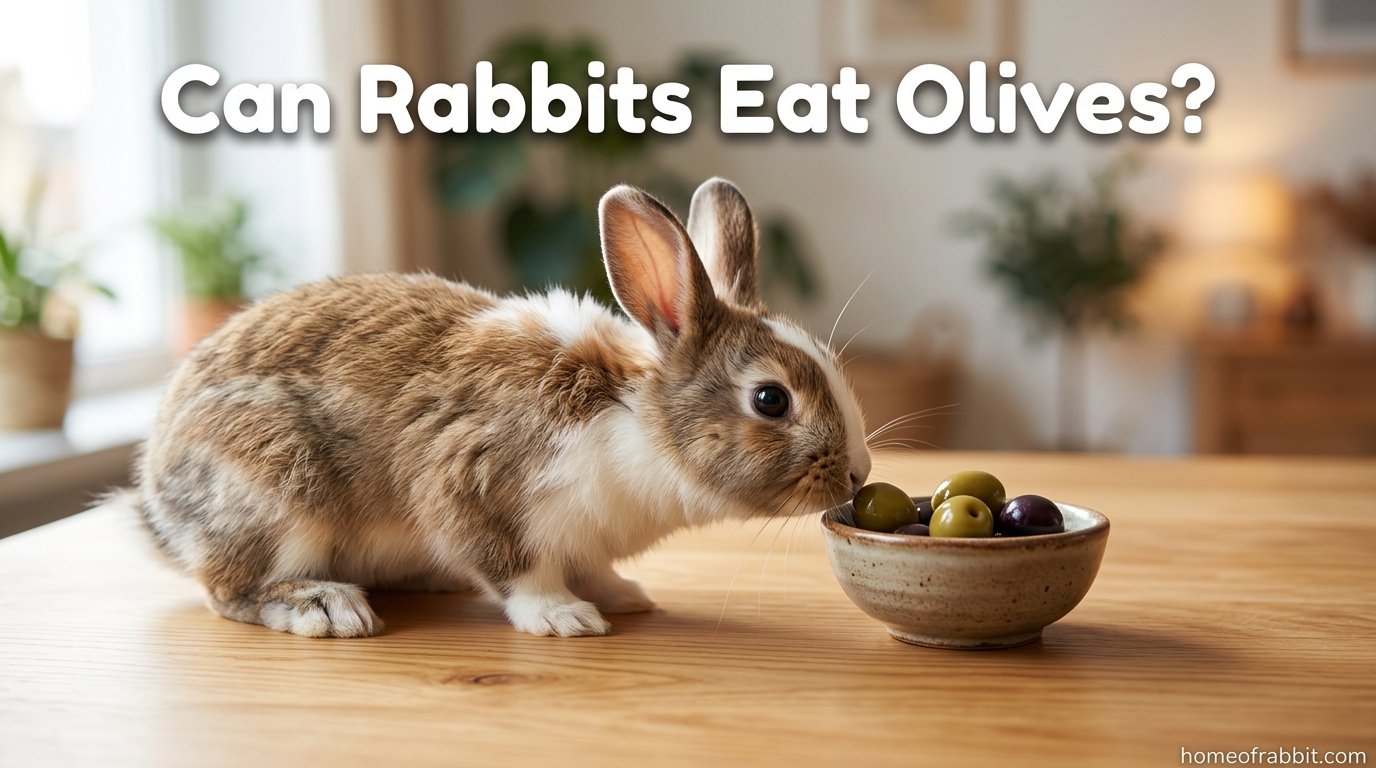
Olives aren’t a good food for rabbits, and it’s best not to offer them. Most olives sold in stores are cured in salty brine, they’re high in fat, and they often contain pits or flavorings. A rabbit’s digestive system is built for fiber, not for any of those.
One olive won’t necessarily harm a healthy adult rabbit. But there’s no benefit worth the risk, and plenty of better treats exist.
Why Olives Aren’t a Good Food for Rabbits
Salt and brine
Jarred and canned olives are cured in brine, which makes them very salty. Rabbits don’t need extra sodium. A small body plus a salty snack can mean excess thirst and an upset stomach. Even “rinsed” olives keep much of the salt that has soaked into the flesh.
High fat
Olives are a fatty fruit, and rabbits are built to eat low-fat, high-fiber plants like hay and leafy greens. Research on feeding olive cake (the pressed leftovers from olive oil production) to fattening rabbits found that fat deposits in several organs may be explained by the greater amount of olive oil fat in the meal. That study involved dried olive cake as a feed ingredient, not whole olives as treats, so it isn’t a direct comparison. It does show that olive-derived fat doesn’t suit a rabbit’s system well. srce
Pits
Whole olives often contain a hard pit, which is a choking hazard. A rabbit that gnaws or swallows one risks a mouth injury or, in the worst case, a blockage. Pitted olives avoid this problem, but the salt and fat remain.
Seasonings and stuffing
Many olives are stuffed or marinated. Common fillings include:
- Garlic and onion (alliums, which are unsuitable for rabbits)
- Blue cheese or cream cheese (rabbits shouldn’t have dairy)
- Almonds, peppers, or spiced oils
Any one of these makes the olive a worse choice.
Are Any Olives Safer Than Others?
| Type | Verdict | Why |
|---|---|---|
| Jarred green olives | Avoid | High salt, often pitted or stuffed with seasonings |
| Canned black olives | Avoid | Salt-cured, high in fat |
| Stuffed or marinated olives | Avoid | Garlic, cheese, spices, oils |
| Raw, fresh olives | Avoid | Not eaten raw by people either, since they’re extremely bitter, and still contain fat and often pits |
| Olive oil | Avoid | Pure added fat with no benefit for rabbits |
In short, there isn’t a form of olive I’d recommend for a pet rabbit.
A note on olive leaves: Some rabbit owners mention nibbling olive leaves or twigs from untreated trees. I couldn’t verify that this is safe from a reliable rabbit-care source, so check with an exotic-animal vet before offering any of it. Never offer leaves from trees sprayed with pesticides.
What to Do If Your Rabbit Ate an Olive
Don’t panic. Here’s a simple way to handle it.
- Remove any remaining olives and check whether a pit is missing.
- Make sure fresh hay and water are available. Don’t force-feed anything.
- Watch your rabbit closely for the next 24 hours.
- Call an exotic-animal vet if the olive was stuffed or seasoned, if your rabbit ate several, or if you see any warning signs below.
| What you see | What to do |
|---|---|
| Eating, pooping, and acting normally | Keep watching for a day |
| Soft stool or mild diarrhea | Call your vet for advice |
| Eating less, fewer or smaller droppings | Contact a vet the same day |
| No droppings, bloated belly, hunched posture, or lethargy | Emergency: see a vet immediately |
| Choking, drooling, or pawing at the mouth | Emergency: see a vet immediately |
A rabbit that stops eating or pooping can decline quickly (this is often called GI stasis), so don’t wait it out.
What Rabbits Should Eat Instead
A healthy rabbit diet is built mostly on unlimited grass hay, with fresh leafy greens, a measured amount of plain pellets, and only small treats. The House Rabbit Society’s rabbit diet guide is a reliable place to check portions for your rabbit’s age and size.
If you want to share a snack, these are better choices than olives:
- Romaine lettuce or cilantro
- Fresh herbs like parsley or basil
- A small piece of apple (no seeds) or a slice of banana, as an occasional treat only
Introduce any new food slowly, one at a time, and in a tiny amount. Young rabbits have especially sensitive digestion, so if you’re raising a baby bunny, our guide to caring for a baby bunny covers what they can and can’t eat at each stage.
Quick Checklist
- Keep olives and olive oil out of your rabbit’s reach
- Check that nothing seasoned or stuffed has fallen on the floor
- Stick to hay, leafy greens, and plain pellets as the base of the diet
- Offer new treats in tiny amounts and watch the droppings
- Know your nearest exotic vet before you need one
Conclusion
So, can rabbits eat olives? It’s best to say no. The salt, fat, pits, and seasonings make olives a poor fit for a rabbit’s gut, and a handful of safer treats offer more value. If your rabbit steals one, stay calm, watch eating and droppings closely, and call a vet if anything looks off.
FAQ
Can rabbits eat black olives?
Canned black olives are salt-cured and fatty, so it’s best to avoid them.
Can rabbits eat green olives?
Green olives are usually brined, and often stuffed or pitted with seasonings. Avoid them.
Can rabbits have olive oil?
It isn’t recommended. Rabbits don’t need added fat, and it can upset their digestion.
Will one olive kill my rabbit?
Unlikely for a healthy adult, but I can’t promise it’s harmless, especially if the olive was stuffed, salty, or had a pit. Monitor closely and call a vet if you’re worried.
Can baby rabbits eat olives?
No. Young rabbits have more delicate digestion and should stick to the diet recommended for their age.
