
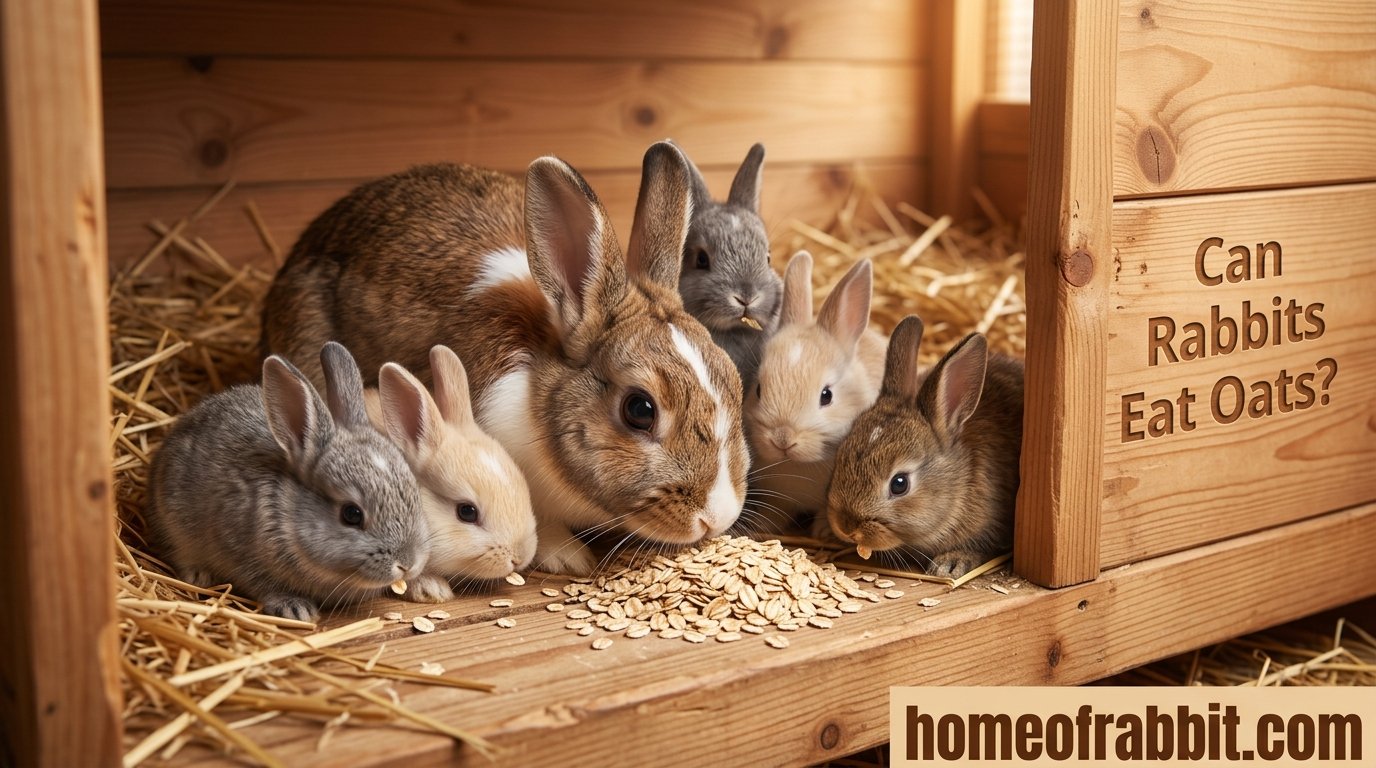
Yes, rabbits can eat oats — but only occasionally and in small amounts. Oats aren’t toxic, and a small pinch now and then won’t hurt a healthy adult rabbit. But oats aren’t something a rabbit’s diet needs, and feeding too many, too often, or the wrong type can cause real problems. Here’s what actually matters.
The Quick Answer
A healthy adult rabbit can have a small amount of plain, uncooked oats — rolled oats or whole oat groats — as an occasional treat. That’s it. Oats should never replace hay, fresh greens, or a rabbit’s regular pellets, and they shouldn’t become a daily habit.
The confusion usually comes from the fact that “oats” can mean several different things: the grain itself, oat hay (the dried plant), oatmeal, and processed oat products like granola bars. They are not interchangeable, and safety depends heavily on which one you mean.
Oats vs. Oat Hay — Don’t Mix These Up
This is the single most important distinction to understand:
- Oat hay is the dried stalks and leaves of the oat plant, harvested before the grain fully matures (sometimes with some seed heads still attached). It’s a legitimate hay option for rabbits — high in fiber, low in starch, and safe to feed regularly alongside or instead of timothy or orchard hay.
- Oats (the grain) — the part used for human breakfast oatmeal — is a starchy cereal grain. It’s calorie-dense and comparatively low in fiber, which is the opposite of what a rabbit’s digestive system is built for.
If a product is labeled “oat hay,” it belongs in the same category as your rabbit’s regular hay supply and can be fed generously. If it’s oats sold for human consumption (the kind in a canister on a grocery shelf), that’s the grain, and it belongs in the “occasional treat” category only.
Why Oats Aren’t a Core Part of a Rabbit’s Diet
Rabbits are hindgut fermenters with digestive systems built around a nearly constant supply of high-fiber, low-starch plant material. According to the House Rabbit Society, hay should make up roughly 85% of an adult rabbit’s diet, with limited fresh vegetables and a small amount of high-fiber pellets rounding things out. Grains like oats don’t fit that pattern well.
| Timothy/grass hay | Oats (grain) | |
|---|---|---|
| Fiber content | High | Comparatively low |
| Starch/carbohydrate | Very low | Higher |
| Role in diet | Should be unlimited, daily | Occasional treat only, if at all |
| Digestive effect | Supports healthy gut motility | Can contribute to GI upset or weight gain if overfed |
Multiple rabbit-welfare organizations, including the House Rabbit Society and its regional chapters, specifically warn against pellet mixes or “muesli” blends that include seeds, grains, or dried corn, noting that these are poorly digested and have been linked to serious intestinal blockages in rabbits. That’s a caution about grain-heavy mixed feeds rather than a plain oat treat, but it illustrates why grains are treated differently from hay and vegetables in rabbit nutrition guidance.
How to Feed Oats Safely
If you want to offer oats, a few rules keep it low-risk.
Which oats are safe
- Safe: plain, uncooked rolled oats or whole oat groats, with nothing added.
- Avoid: instant oats, flavored oatmeal packets, sweetened oatmeal, or anything mixed with sugar, salt, milk, honey, or dried fruit. These additions offer no benefit and can cause digestive upset.
- Cooking isn’t necessary and isn’t recommended — plain, dry (not soaked or cooked) rolled oats are the more common way owners offer this treat, though some prefer softening a small amount in water first if their rabbit has trouble with dry textures. Either way, keep the oats plain.
How much and how often
There’s no single official gram or teaspoon measurement endorsed across veterinary sources, so the safest approach is to think in terms of “a pinch” rather than a serving:
- Offer a small pinch — a few individual oat flakes — rather than a spoonful.
- Once or twice a week at most, not daily.
- Watch your rabbit’s droppings and appetite for 24–48 hours after introducing any new treat.
If you’re feeding a smaller breed, an older rabbit, or one with any history of digestive issues, treat these amounts as an upper limit, not a target, and check with a rabbit-savvy veterinarian first.
Introducing oats for the first time
- Start tiny. A few flakes, not a handful.
- Offer them alone, not mixed with other new foods, so you can tell what caused any reaction.
- Wait and watch. Normal, round fecal pellets and a normal appetite over the next day or two are good signs.
- If you see soft stool, reduced appetite, or your rabbit seems lethargic, stop the treat and contact your vet. Rabbits can develop gut motility problems (GI stasis) quickly, and it’s a genuine emergency, not something to wait out at home.
When Oats Can Actually Help
Some owners and shelters use small amounts of oats or oat-based treats as a way to add calories for underweight or recovering rabbits, or to encourage appetite in a rabbit that’s eating poorly. This is a reasonable idea in principle, but it’s worth being careful with it:
- It should be a short-term tool, not a long-term feeding strategy.
- A rabbit that isn’t eating normally needs a veterinary exam — reduced appetite in rabbits can indicate GI stasis, dental problems, or other issues that oats won’t fix.
- If a vet confirms your rabbit is underweight and recommends extra calories, follow their specific guidance on quantity and food choice rather than guessing.
Rabbits That Should Skip Oats Entirely
- Baby rabbits (kits) and very young rabbits. Their digestive systems are still developing, and introducing grains too early can disrupt that process. Young rabbits should stick to nursing, then hay, fresh water, and age-appropriate pellets, with treats like oats reserved until they’re a fully weaned, healthy adult.
- Rabbits with a history of GI stasis or other chronic digestive issues. Some rabbits need pellets and treats reduced or removed entirely — this should be managed with a vet, not adjusted based on general advice like this article.
- Overweight rabbits. Oats are calorie-dense relative to hay, so they’re not a good fit for a rabbit that already needs to lose weight.
Common Mistakes Owners Make
- Treating oats as a food group instead of an occasional treat. A daily oat habit adds unnecessary calories and starch to a diet that should be hay-dominant.
- Buying “gourmet” rabbit food or muesli mixes that include oats, seeds, and dried fruit. These mixed feeds let rabbits pick out the tasty (starchy, sugary) bits and leave the balanced portion behind — not the same as a controlled, occasional plain-oat treat.
- Feeding cooked or flavored oatmeal, which often comes with added sugar, salt, or dairy that rabbits don’t need and can react poorly to.
- Assuming oat hay and oat grain are the same thing and either overfeeding the grain or unnecessarily avoiding a perfectly good hay option.
What About Oatmeal, Granola Bars, and Oat Milk?
- Plain, unsweetened cooked oatmeal (just oats and water, nothing added) is not toxic, but there’s no nutritional reason to offer it over dry oats or a rabbit-appropriate treat, and it’s easier to overfeed.
- Flavored oatmeal, oatmeal packets, and granola bars almost always contain added sugar, salt, chocolate, or dried fruit, and should not be given to rabbits.
- Oat milk is a processed, sweetened or thickened liquid product not designed for animal digestion — it isn’t a recommended way to give a rabbit oats and offers no advantage over water or an appropriate treat.
Quick Checklist
- Only plain, uncooked rolled oats or whole oat groats
- A small pinch, not a spoonful
- No more than once or twice a week
- Never for baby rabbits or rabbits with known GI issues
- Never flavored, sweetened, or mixed with other ingredients
- Hay still makes up the bulk of the daily diet
- Any appetite loss or soft stool after a treat means stop and call your vet
Conclusion
So, can rabbits eat oats? Yes — a small amount of plain oats now and then is unlikely to cause problems for a healthy adult rabbit. But oats are a treat, not a diet staple, and there’s no real nutritional gap they need to fill if your rabbit is already getting unlimited hay, fresh greens, and appropriate pellets. Keep portions tiny, skip anything flavored or cooked with additives, and when in doubt about a specific rabbit’s needs — especially a young, underweight, or digestively sensitive one — a rabbit-savvy vet is a better guide than a general feeding rule.
FAQ Section
Is oat hay the same as oats?
No. Oat hay is the dried oat plant (stalks and leaves), which is a fiber-rich forage suitable for regular feeding, similar to timothy or orchard hay. Oats — the grain used in human oatmeal — is a starchy cereal grain that should only be an occasional treat.
Can baby rabbits eat oats?
No. Young rabbits have developing digestive systems and should stick to nursing, then hay, water, and appropriate pellets. Introducing grains like oats too early can cause digestive problems.
Can rabbits eat oatmeal?
Plain, unsweetened oatmeal isn’t toxic, but it offers no real benefit over dry oats and is easy to overfeed. Flavored, sweetened, or dairy-added oatmeal should be avoided entirely.
My rabbit got into a bag of oats — should I panic?
A single accidental nibble is unlikely to seriously harm a healthy rabbit, but watch closely for the next day or two for soft stool, reduced appetite, or lethargy, and contact your vet if you notice any of those signs.
Do wild rabbits eat oats?
Wild rabbits primarily eat grasses, weeds, and other natural vegetation rather than cultivated grains, so oats aren’t a natural part of their diet either.

3 Comments
Pingback: Can a Rabbit Eat Rice? (Short Answer: No) - homeofrabbit
Pingback: Can Rabbits Eat Nettle? What Is Safe and How to Feed It - homeofrabbit
Pingback: Can Rabbits Eat Beetroot Leaves? - homeofrabbit