
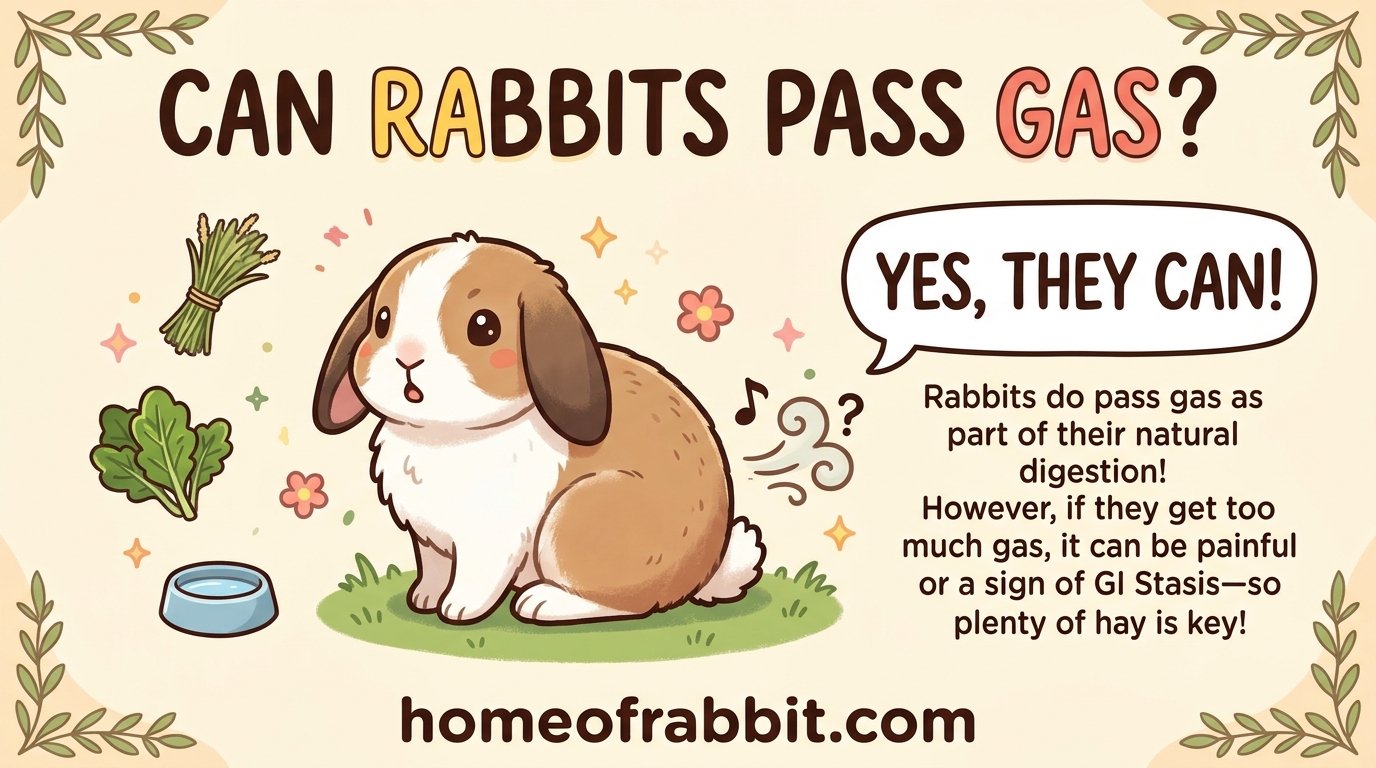
Yes, rabbits can pass gas, and they need to. Passing gas is one way rabbits clear gas from the digestive tract and relieve discomfort. You’ll rarely notice it, because a healthy rabbit’s occasional gas is small and quiet. hepper
What deserves your attention is the opposite situation: a rabbit that is not passing gas, has a swollen belly, and has stopped eating. That combination can be life-threatening. The rest of this article explains how to tell the difference.
Yes, rabbits pass gas, and it’s mostly out the back door
Rabbits ferment food in a large digestive pouch called the cecum, and fermentation produces gas. That gas has to leave somewhere.
Unlike many animals, rabbits can only release gas from the rear end. They can’t burp or vomit. If something blocks the gut or digestion slows, the gas has nowhere to go. This is why a gassy rabbit is more serious than a gassy dog or cat, and why rabbit owners are told to treat digestive changes as urgent. hepper
What causes gas in rabbits
Some gas is simply part of digesting a high-fiber diet. Excess gas usually has a cause you can look into:
- Too many sugary or starchy foods. Food high in carbohydrates or sugar causes gas. Fruit, bread, crackers, and cereal are common culprits. If you’re unsure about fruit, our guide on whether rabbits can eat bananas explains how to portion sugary treats. rabbitcaretips
- Not enough hay. Fiber keeps the gut moving. A low-fiber diet is a common route to digestive trouble.
- Sudden diet changes. New veggies or pellets introduced all at once can upset the gut bacteria.
- Stress, dehydration, or eating too fast. These are also listed as causes of gas. rabbitcaretips
- Slowed gut movement (GI stasis). GI stasis is the slowing of food moving through the digestive tract. Causes range from dental pain to other underlying illness, so a vet needs to find the reason. vcahospitals
- Blockages. Swallowed hair or foreign material such as carpet or cloth fibers can obstruct the gut. Less commonly, items like carpet, cloth, rubber, or plastic can block it. lafeber
Normal gas vs. dangerous gas
| Usually normal | Possible emergency | |
|---|---|---|
| Appetite | Eating hay and food as usual | Refusing food or water |
| Droppings | Regular, round, similar size | Few, tiny, misshapen, or none |
| Belly | Soft, normal shape | Swollen, very hard, or very soft |
| Behavior | Moving and curious | Hunched, hiding, reluctant to move |
| Sounds | Occasional quiet gurgles | Loud gurgling, or complete silence, with other signs |
| Breathing | Normal | Fast or shallow |
One quiet toot with normal eating and droppings is not a concern. The pattern matters more than any single sign.
Warning signs of bloat and GI stasis
Contact a vet right away if your rabbit shows any of these, especially together:
- Appetite loss. Appetite loss is a leading sign of GI stasis, along with stomach gurgling and a hard or very soft belly. hepper
- Little or no stool
- A visibly swollen abdomen
- Teeth grinding (a sign of pain)
- Hunched posture and reluctance to move
- Fast, shallow breathing, which can happen when severe gas pressure presses on the diaphragm
- Cool ears or limbs, which can suggest shock
This is not a wait-and-see situation. One veterinary proceedings paper describes GI stasis as a serious disease that must be treated as an emergency. A related condition, bloat, can come on suddenly. As the stomach enlarges, it can compress blood vessels and become life-threatening very quickly. vinvetafarm
A rabbit with a silent belly and no appetite is a very different case from a rabbit with a few gurgles. If you’re not sure which one you have, call the vet and describe the signs. Many rabbit-savvy and exotic-animal clinics will advise by phone.
What to do if you think your rabbit has gas trouble
- Check the basics. Is your rabbit eating, drinking, and producing normal droppings? Note when each last happened.
- Call a vet the same day if appetite or droppings have dropped off, or immediately if the belly looks swollen or breathing is off. If your regular vet doesn’t see rabbits, look for an exotic-animal or emergency clinic ahead of time.
- Keep your rabbit warm and calm while you arrange care. A rabbit in pain can chill quickly. Wrap a warm (not hot) water bottle in a towel if needed.
- Bring details. Recent foods, any diet changes, and droppings you’ve noticed will help the vet.
- Follow the vet’s treatment plan. Supportive care for GI stasis may include fluids for rehydration and syringe feeding, and motility drugs only once the rabbit can produce droppings. Gas-relief medication is sometimes used too, but dosing for rabbits is specific and should come from your vet. vcahospitals
Common mistakes to avoid
- Waiting a day or two to see if it passes
- Giving human gas or digestive medication without veterinary dosing guidance
- Massaging a hard, painful belly aggressively, which could do harm if there is a blockage
- Offering extra treats to coax eating instead of calling the vet
- Assuming a quiet rabbit is a calm one when it may be in pain
How to reduce gas risk
Most prevention is about diet and routine. VCA Animal Hospitals recommends a high-fiber, hay-based diet with vegetables, a small amount of pellets, and very limited fruit, plus regular vet checkups. Use this as a checklist: vcahospitals
- Unlimited fresh grass hay available at all times
- Measured portion of pellets, not a bowl that never empties
- Fruit and sugary treats kept small and occasional
- New foods introduced one at a time, in small amounts
- Fresh water available every day
- Regular brushing, especially during shedding, to reduce swallowed hair
- Chewable, rabbit-safe items so your rabbit doesn’t chew carpet or fabric
- Routine vet checks, including teeth
- A habit of glancing at droppings daily
Daily observation is the most useful habit. A rabbit that changes eating or droppings is telling you something early.
Conclusion
So, can rabbits pass gas? Yes, and healthy rabbits do it quietly now and then. The real concern is trapped gas, because rabbits can’t burp or vomit to relieve it. If your rabbit stops eating, produces few or no droppings, or develops a swollen belly, treat it as an emergency and call a vet. For everything else, steady hay, limited sugar, and regular observation go a long way.
FAQ
Do rabbit farts smell?
Usually not noticeably. Rabbits’ gas is small in volume, and most owners never detect it. Strong, frequent, or foul gas alongside other symptoms is a reason to check with a vet. (I couldn’t find a reliable veterinary source on smell specifically, so this is general guidance, not a verified fact.)
Can rabbits burp?
No. Rabbits can’t burp or vomit. hepper
How long can a rabbit go without eating before it’s an emergency?
Sources vary, so check with your vet. One owner-oriented source suggests consulting an expert if there’s no interest in food for more than 12 hours. In practice, a rabbit that stops eating should be assessed promptly.
Can I give my rabbit simethicone at home?
Veterinarians do use it, but dosing for rabbits is specific, and gas can also signal a blockage. Ask your vet before giving anything.
Can rabbits die from gas?
Severe trapped gas from bloat or GI stasis can be fatal without treatment. That’s why early veterinary care matters.
