
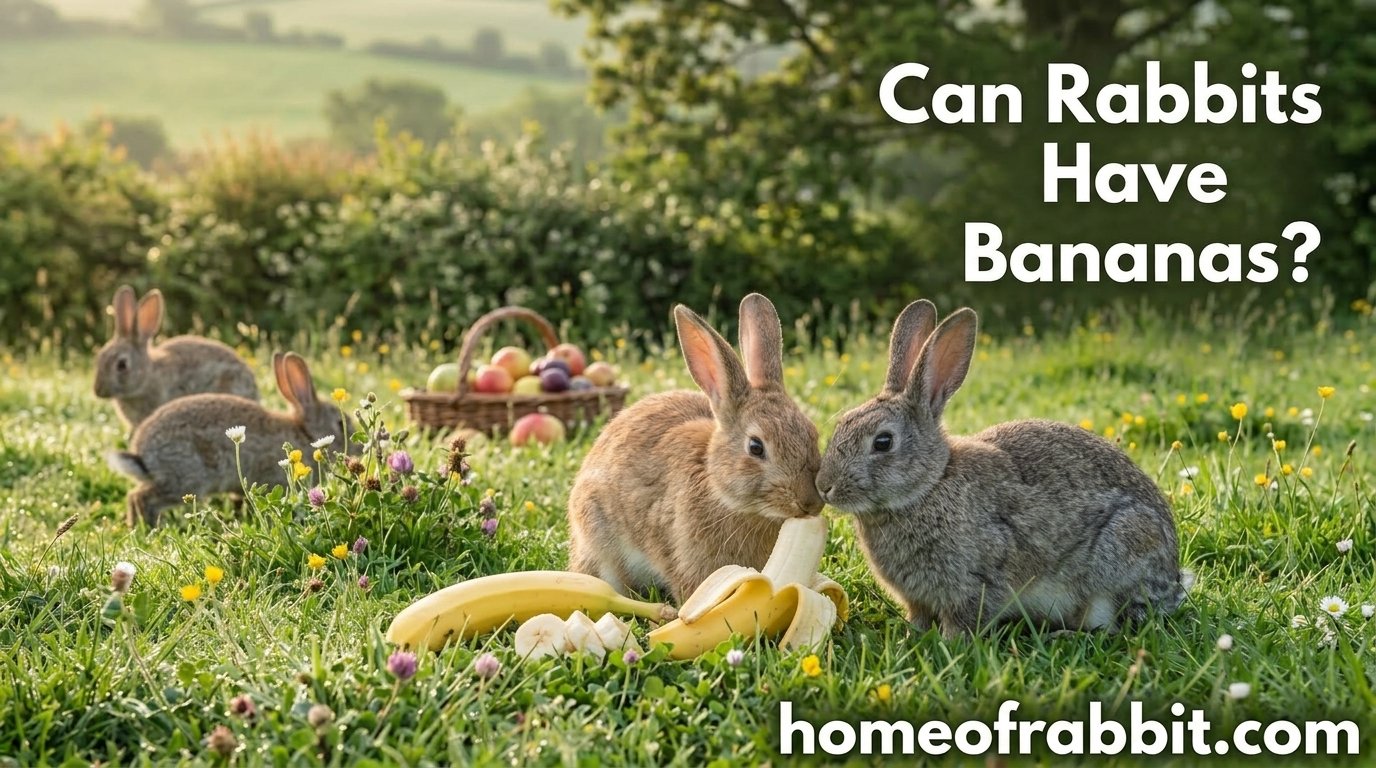
Yes, rabbits can eat bananas. Most rabbits enjoy them, and small amounts are generally considered safe. But banana isn’t a health food for rabbits — it’s a sugary treat, and treats should make up only a small fraction of a rabbit’s diet.
The short version: a thin slice or small piece of banana, given a couple of times a week at most, is fine for a healthy adult rabbit. Whole bananas, daily bananas, or bananas for rabbits under 12 weeks old are where things go wrong.
Here’s what actually matters if you want to do this safely.
Why Bananas Are a “Sometimes” Food, Not a Daily One
A rabbit’s digestive system is built around fiber, not sugar. The bulk of their diet — around 80% or more — should be grass hay, with a smaller portion of fresh leafy greens and a measured amount of pellets. Fruit, including banana, sits in a separate category: an occasional extra, not a food group.
Banana is one of the higher-sugar fruits rabbits are commonly given. That’s exactly why portion size matters more here than it does with, say, a piece of lettuce. Rescue and rehoming organizations that specialize in rabbit care consistently list banana among the fruits that are safe in small amounts, right alongside apple, pear, and melon in guidance describing bananas as an appropriate fruit treat alongside apples, blueberries, cherries, grapes, melon, pear, and peach. The emphasis in that guidance is on “treat,” not “supplement” — fruit should be limited and given no more than about twice a day in small amounts. potterleaguepotterleague
Too much sugary fruit, banana included, can lead to two real problems:
- GI upset and soft stools from disrupting the balance of bacteria in a rabbit’s cecum.
- Weight gain, since excess sugar and calories add up quickly in an animal that only weighs a few pounds.
One rabbit nutrition resource puts it plainly: rabbits have a strong sweet tooth, and if left to their own devices they would overeat starchy, high-calorie treats, which can lead to weight gain and GI problems. That’s the core reason portion control matters more with banana than with, say, herbs or leafy greens. rabbit
How Much Banana Can a Rabbit Eat?
Recommendations vary slightly between sources, but they land in a similar range. As a practical rule:
Serving size guideline (fresh fruit, including banana):
- Roughly 1 teaspoon to 1 tablespoon of fruit per 2–5 lbs of body weight, depending on the source.
- One rescue-affiliated feeding guide recommends limiting fresh fruit to about one teaspoon per 2 lbs of body weight. rabbit
- A regional House Rabbit Society chapter’s printed diet sheet advises limiting fruit to about one tablespoon per 5 lbs of body weight, and none at all if the rabbit is on a weight-loss diet. houserabbitga
In real-world terms, that’s usually one or two small, thin slices of banana for an average-sized adult rabbit (4–6 lbs) — not a whole banana, and not a big chunk.
How often to offer banana
Once or twice a week is a reasonable ceiling for most healthy adult rabbits. Some owners rotate banana with other safe fruits (apple, pear, melon, berries) rather than giving the same fruit repeatedly, which also helps limit total sugar intake across the week.
Bananas should never replace hay, greens, or pellets in the feeding routine — they’re an addition on top of an already-balanced diet, not a substitute for any part of it.
How to Introduce Banana Safely
If your rabbit has never had banana before, don’t start with a full slice. Rabbit digestive systems are sensitive to sudden diet changes, and even a “safe” food can cause loose stools if introduced carelessly.
- Wait until the rabbit is old enough. Fruit shouldn’t be introduced until a rabbit is eating hay and vegetables well and is past the very young stage — many rabbit-care communities suggest waiting until after about 12 weeks of age before adding fruit treats.
- Start with a tiny piece. A piece roughly the size of your thumbnail is plenty for a first try.
- Wait 24 hours and watch. Check for normal, round fecal pellets and normal appetite before offering banana again.
- Increase gradually, if there’s no reaction. Move toward (but not past) the serving-size guidelines above.
- Keep a routine, not a habit of “extra.” Decide on a schedule (e.g., twice a week) and stick to it rather than giving banana whenever your rabbit begs.
Can Rabbits Eat Banana Peel?
This one is genuinely debated among rabbit owners, and there isn’t strong consensus. Some owners offer small pieces of peel because rabbits will readily chew on it and it offers some fiber and enrichment value from the gnawing. Others avoid it because commercially grown bananas can carry pesticide residue on the skin, and peel is tougher and more fibrous than the fruit itself, which some rabbits don’t digest as easily.
If you do want to try peel:
- Use organic bananas when possible, and wash the peel thoroughly.
- Offer only a small strip, not the whole peel.
- Treat it the same as fruit flesh for portion purposes — it still counts toward the day’s treat allowance.
If you’re unsure, it’s simplest to stick with the banana flesh only and skip the peel.
What About Dried Banana Chips?
Be careful here. Dried fruit is not simply a “smaller, more convenient” version of fresh fruit — it’s far more concentrated in sugar because the water content has been removed. One rabbit-focused treat guide notes that dried fruits are roughly three times as concentrated as fresh fruit, so portions need to be adjusted down accordingly. rabbit
That means a piece of dried banana that looks small can pack the sugar equivalent of a much larger fresh serving. If you use dried banana at all:
- Use plain, unsweetened dried banana with no added sugar, oil, or coating.
- Cut the effective portion down to a fraction of what you’d give in fresh banana.
- Treat it as a rare, small treat, not a regular one.
For most rabbit owners, fresh banana in small slices is the simpler and safer option.
Signs Your Rabbit Had Too Much Banana
Watch for these after introducing banana or increasing the amount:
- Soft, mushy, or unusually small/misshapen fecal pellets
- Diarrhea
- Reduced appetite or reluctance to eat hay
- Bloating or a visibly uncomfortable, hunched posture
- Lethargy
If you see any of these, stop offering fruit entirely and go back to hay, water, and normal greens. If symptoms don’t improve within a day, or your rabbit stops eating or producing droppings altogether, that’s a sign of a potential GI stasis emergency — a genuinely serious condition in rabbits — and warrants a same-day call to a rabbit-savvy veterinarian rather than waiting it out.
Common Mistakes Owners Make
| Mistake | Why It’s a Problem | What to Do Instead |
|---|---|---|
| Giving a whole banana at once | Far exceeds safe sugar intake for a rabbit’s size | Cut a thin slice; save the rest for another day |
| Feeding banana daily | Chronic excess sugar contributes to obesity and GI imbalance | Limit to 1–2 times per week |
| Introducing banana to a very young rabbit | Immature digestive systems handle sugar and new foods poorly | Wait until the rabbit is well-established on hay and greens |
| Using banana as a substitute for hay/greens | Fruit lacks the fiber rabbits need for gut health | Treat banana as an addition, never a replacement |
| Assuming “natural” means unlimited | Natural sugar is still sugar to a rabbit’s gut | Stick to weight-based portion guidelines |
| Feeding dried banana chips like fresh | Dried fruit is far more sugar-dense per bite | Reduce portion significantly or avoid dried fruit |
Bananas vs. Other Rabbit-Safe Fruits
| Fruit | Sugar Level (Relative) | Typical Serving Notes |
|---|---|---|
| Banana | Higher | Small slice, 1–2x/week |
| Apple (no seeds/stem) | Moderate | Small piece, a few times/week |
| Blueberries | Moderate | A few berries at a time |
| Melon | Moderate | Small cube, occasional |
| Papaya | Lower–Moderate | Small piece, occasional |
| Strawberries | Moderate–Higher | Half a berry, occasional |
This isn’t a precise nutritional ranking — it’s a practical guide for owners rotating treats so the same high-sugar fruit isn’t offered every single day.
Quick Checklist Before You Feed Banana
- Rabbit is a healthy adult (not underweight, not diabetic-prone, not a very young kit)
- Rabbit already eats hay and vegetables well
- Portion is a small slice, not a whole banana
- This is the only sugary treat offered that day
- You’re prepared to skip banana if soft stools appear
- Banana is being added on top of hay/greens/pellets, not replacing them
Conclusion
Rabbits can have bananas, and most rabbits genuinely enjoy them — but the safe way to feed banana is in small, occasional amounts, layered on top of a hay-heavy diet, not as a regular snack. A thin slice once or twice a week is a reasonable target for most healthy adult rabbits. Skip it for very young rabbits, watch your rabbit’s droppings after introducing it, and when in doubt about your individual rabbit’s health or weight, a rabbit-experienced veterinarian can give portion advice tailored to that rabbit specifically.
FAQ
Can baby rabbits eat bananas?
It’s best to wait. Young rabbits need time to establish a healthy gut on hay and vegetables before any fruit is introduced — many rabbit-care communities suggest waiting until around 12 weeks of age.
Is banana bad for rabbits?
Not inherently — it’s the amount and frequency that cause problems, not the fruit itself. Banana in small, occasional portions is generally considered safe for healthy adult rabbits.
Can rabbits eat banana peel?
Some owners do offer small amounts, but opinions vary, and it should be washed well (organic if possible) and given only in small pieces if at all.
How often can I give my rabbit banana?
Once or twice a week, in a small slice, is a reasonable guideline for most healthy adult rabbits.
What happens if a rabbit eats too much banana?
Possible effects include soft stool or diarrhea, reduced appetite, and — with chronic overfeeding — weight gain. Severe or prolonged symptoms warrant a vet visit.

1 Comment
Pingback: How Long Do Angora Rabbits Live? Lifespan and Care Factors - homeofrabbit