
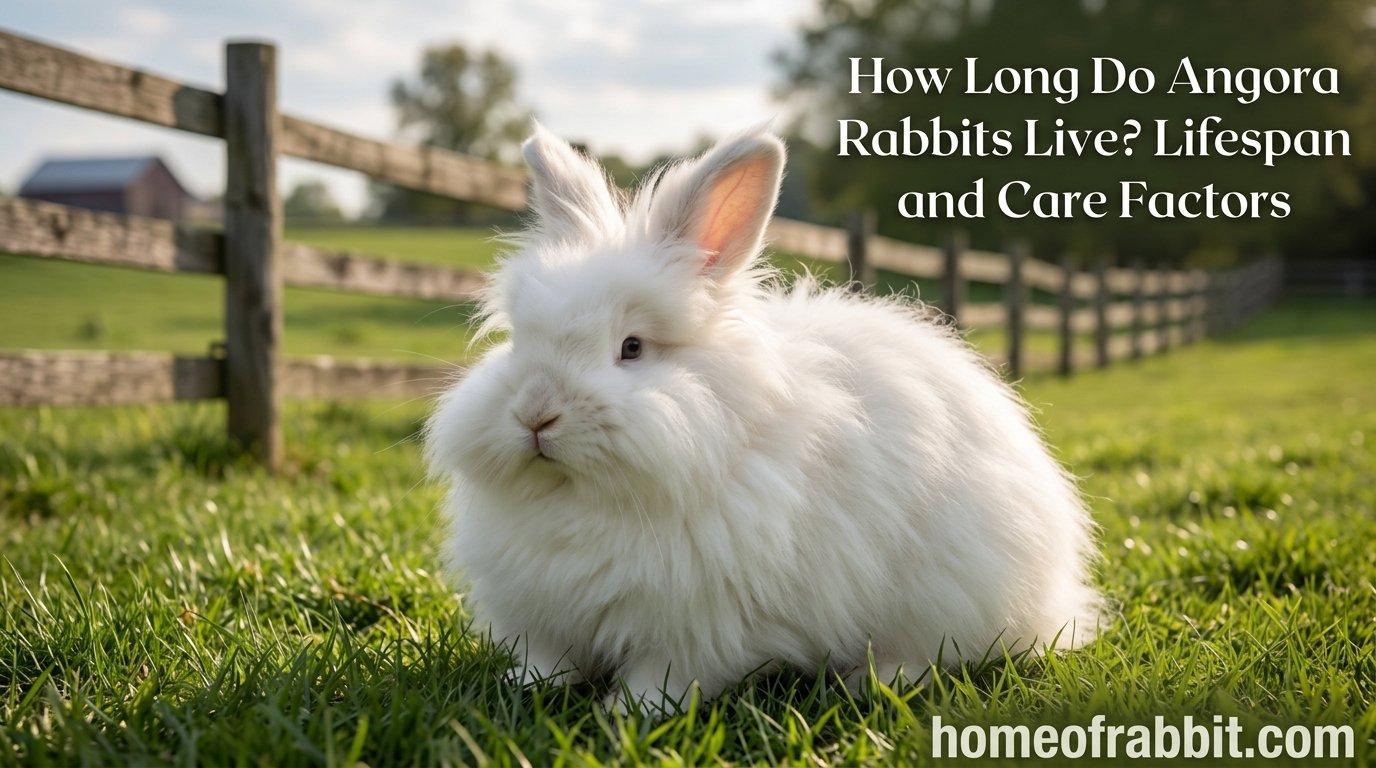
Most Angora rabbits live about 7 to 12 years with good care. Some sources give a lower range, and the difference usually comes down to breed, grooming, and health management. The coat is the main risk to an Angora’s lifespan, so grooming routines matter more here than with most breeds.
Angora Rabbit Lifespan at a Glance
| Source type | Reported lifespan |
|---|---|
| General breed references | 7–12 years |
| Veterinary pet-health site (PetMD) | 5–12 years |
| Some hobbyist/breeder sites | 5–8 years (often for English Angoras) |
PetMD reports an average lifespan of five to 12 years, with larger rabbits typically living longer than smaller breeds. Wikipedia’s breed summary lists 7–12 years. petmdWikipedia
If you want a realistic planning figure, think 7 to 10 years with attentive care. Treat 12 as the upper end, not a promise.
Why Sources Give Different Numbers
There are four common reasons:
- Breed size. The four Angora types recognized by the American Rabbit Breeders Association (ARBA) are English, French, Satin, and Giant. Adults range from about 4 to 12 pounds depending on breed. petmd
- Purpose. Show and fiber rabbits are managed differently from indoor pets.
- Care quality. Grooming and diet habits vary widely.
- Weak data. There is no large, standardized study of Angora lifespan that I could verify. Most figures are averages repeated across breed guides, so treat exact numbers with caution.
What Shortens an Angora Rabbit’s Life
Wool block and GI stasis
Angoras groom themselves and swallow loose hair. The length of Angora hair raises the risk of impaction, which can lead to death. Wikipedia
Rabbits can’t vomit, so a slowdown in the gut is an emergency. GI stasis is when food passage through the digestive tract slows or stops, and signs include reduced appetite, fewer droppings, and lethargy. It needs prompt veterinary care. petmd
If you want to understand how common these problems are across all rabbits, see our guide to the most common cause of death in rabbits.
Skin problems and mites
Long fur can make skin infections and hair-related digestive problems more common in Angoras than in short-haired rabbits. Cheyletiella mites are a skin parasite often found in Angoras, and flaky patches and fur loss are signs. Matted or damp wool also traps moisture against the skin, so keep it dry and clean. petmdWikipedia
Diet, housing, and stress
Poor diet, cramped housing, and chronic stress are risks for any rabbit, and dense wool adds to them.
- Constant access to grass hay supports gut movement.
- Heat is a special concern because of the thick coat. Keep your rabbit in a cool, ventilated space and avoid direct sun.
- Use our rabbit hay calculator and rabbit feeding calculator to check daily amounts.
- Give enough room to move. Our rabbit cage size calculator can help.
How to Help Your Angora Rabbit Live Longer
Daily and weekly habits
- Groom on a schedule. Brush regularly and check for tangles, especially behind the ears, under the belly, and around the hind end.
- Shear or pluck on time. Clipping or plucking every 90–120 days is described as necessary to prevent wool block. Another breed guide recommends shearing about every three months. Your exact schedule depends on the individual rabbit’s coat growth. Ask a vet or experienced breeder to show you the technique before doing it yourself. Wikipediapangovet
- Feed hay first. Fresh grass hay should make up most of the diet, with measured pellets and leafy greens. Introduce anything new slowly. If you’re curious about treats, see whether rabbits can eat bananas and clover.
- Watch droppings and appetite daily. Smaller or fewer droppings are often the first warning sign.
- Find an exotics or rabbit-savvy vet before you need one.
- Consider pet insurance. PetMD recommends it for Angoras because skin and digestive issues can be more common. petmd
- Give companionship and enrichment. Rabbits are social. Read can rabbits live alone before deciding on pairing.
How to Tell How Old Your Angora Is
If you adopted an Angora, you may not know its age. Our rabbit age calculator converts age into human-equivalent terms and helps you judge life stage. For older rabbits, a vet can also assess teeth, weight, and mobility.
Warning Signs That Need a Vet Quickly
Contact a vet the same day if your Angora:
- Stops eating or drinking
- Produces no droppings or noticeably smaller ones
- Sits hunched, grinds its teeth loudly, or seems bloated
- Has diarrhea or a soiled, wet rear end
- Shows flaky skin, bald patches, or heavy scratching
Conclusion
So, how long do Angora rabbits live? Expect roughly 7 to 12 years, with 5 to 8 on the lower end in some breed accounts. The coat is what makes Angoras different. Consistent grooming, a hay-heavy diet, and quick action on changes in appetite or droppings give your rabbit its best chance at a long life.
9. FAQ
Do Angora rabbits live longer indoors or outdoors?
No verified comparison exists specifically for Angoras. Indoor rabbits are easier to monitor and protect from predators and heat. If housed outdoors, the hutch must be secure. PetMD notes Angoras can live inside or outside as long as an outdoor hutch is secured from predators. petmd
Which Angora breed lives longest?
PetMD says larger rabbits typically live longer than smaller breeds. Beyond that, I couldn’t verify reliable breed-by-breed lifespan data, so avoid exact claims. petmd
Do Angora rabbits die from wool block?
Yes, it can be fatal if untreated, which is why regular wool removal and quick vet care matter.
How old is a senior Angora?
No universal cutoff was verified. Many rabbit owners treat rabbits as seniors somewhere around 5–6 years, but confirm with your vet, especially for large breeds.
