
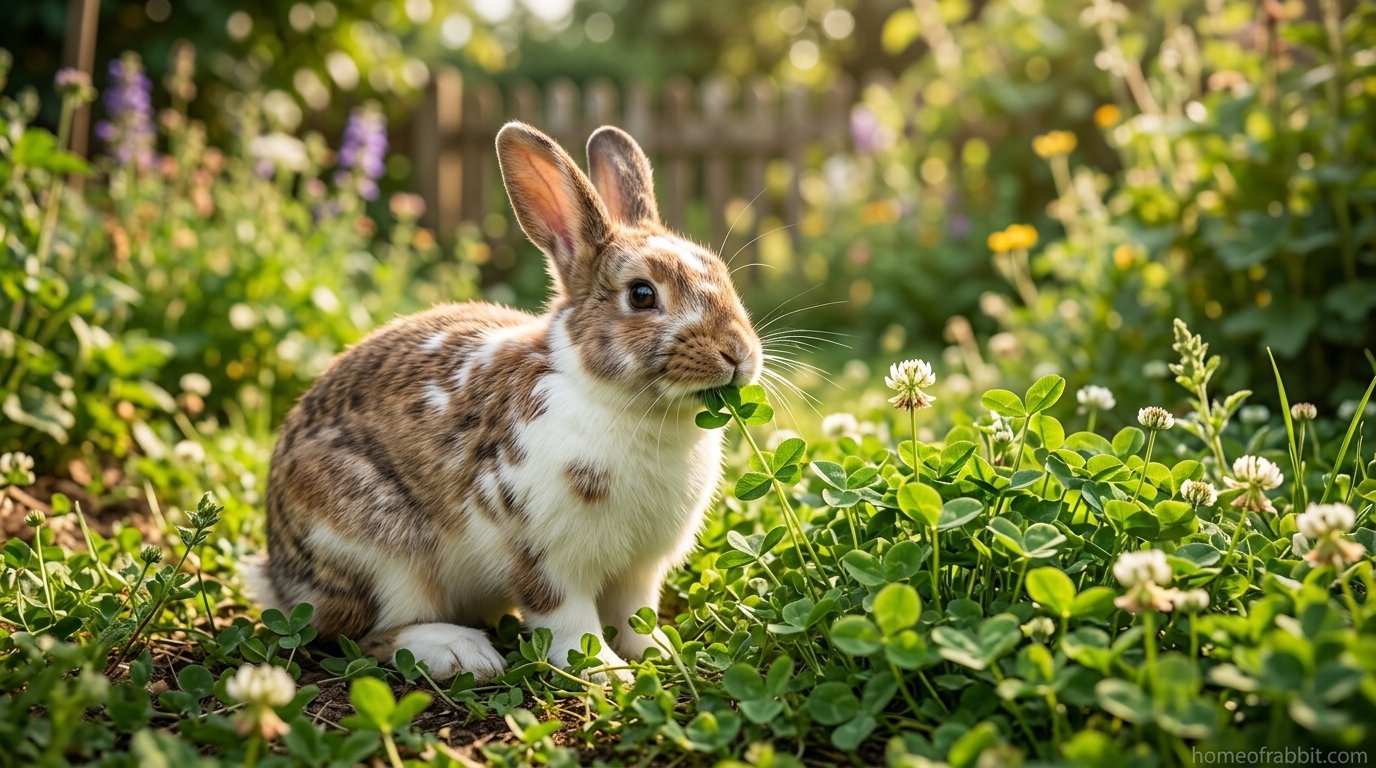
Can Rabbits Eat Clover?
Yes. Rabbits can eat clover, including the leaves, stems, and flowers, and most rabbits genuinely enjoy it. Clover isn’t toxic to rabbits, and wild rabbits graze on it regularly. The catch is that it’s rich in protein and can cause gas if you feed too much too fast, so it works best as a regular treat or forage addition alongside hay — not as a main food.
If you’re standing in your yard right now wondering whether to let your rabbit nibble the clover growing there, the short version is: a small handful, pesticide-free, a few times a week is fine for a healthy adult rabbit.
Why Clover Works for Rabbits
Clover (genus Trifolium) is a legume, not a grass, which is why it behaves differently in a rabbit’s diet than something like timothy hay. It’s naturally higher in protein and calcium than most leafy greens, and it contains fiber, along with a mix of vitamins and minerals that support general health.
That nutrient density is exactly why moderation matters. A rabbit’s digestive system is built around a steady supply of low-calorie, high-fiber grass hay. Foods like clover are useful additions, but too much protein or calcium relative to hay intake can eventually contribute to digestive upset or, over the long term, urinary tract issues in some rabbits.
Which Types of Clover Are Safe?
Most common clover species are fine for rabbits. Here’s how the main types compare:
| Clover Type | Safety | Notes |
|---|---|---|
| White clover | Safe | Most common lawn/pasture variety; tender leaves, mild taste |
| Red clover | Safe | Higher protein than white clover; taller growth, easy to hand-harvest |
| Crimson clover | Safe | Common in pasture mixes; similar profile to red clover |
| Alsike clover | Generally safe in small amounts | Some sources flag it with more caution in horses; feed sparingly and don’t rely on it as a primary forage for rabbits |
| Sweet clover (Melilotus) | Feed with caution | Not a true clover; can develop mold-related compounds (coumarin) if improperly dried — avoid moldy or fermented sweet clover hay |
A practical note: clover is easy to confuse with oxalis (wood sorrel), which looks similar but is a different plant. Oxalis is high in oxalic acid and shouldn’t be a regular part of a rabbit’s diet, so if you’re foraging rather than buying from a pet store, take a moment to confirm you actually have clover — three rounded leaflets and a compact flower head, not the heart-shaped leaflets of oxalis.
How Much Clover Can a Rabbit Eat?
There’s no single official gram amount published by a governing body, and portion needs vary by rabbit size, but the general guidance from rabbit rescues and experienced breeders lands in a consistent range:
- Adult rabbits (6+ months): A small handful, 2-4 times a week, mixed in with other leafy greens or offered on top of hay.
- Young rabbits (under 12 weeks): Skip fresh clover. Young rabbits have more sensitive digestive systems, and new foods — clover included — should wait until they’re older and already established on hay and pellets.
- Rabbits 12 weeks to 6 months: Introduce very slowly, starting with a few leaves rather than a handful.
Hay should still make up the large majority of your rabbit’s daily diet (commonly cited as roughly 80% or more), with clover functioning as one part of the fresh-forage rotation rather than a daily staple on its own.
How to Introduce Clover Safely
- Start small. Offer 2-3 leaves or one flower head the first time, not a handful.
- Wait 24 hours. Watch your rabbit’s droppings and appetite. Normal, round, consistent droppings and a normal appetite are good signs.
- Increase gradually. If there’s no reaction, slowly work up to a small handful over one to two weeks.
- Rotate with other greens. Don’t make clover the only fresh food — variety reduces the risk of any single food causing a problem and gives your rabbit a broader nutrient mix.
- Source it carefully. Only harvest from lawns or fields you know haven’t been treated with herbicide, pesticide, or fertilizer. Avoid clover within about 50 feet of a roadside, where runoff and exhaust residue can collect.
Risks and Warning Signs
Clover itself isn’t toxic, but there are real risks tied to how it’s fed:
- Gas and bloat. This is the main concern. Legume forages like clover can ferment more than grasses, producing gas. In rabbits, gas buildup (often called GI stasis when it slows the gut) can become serious quickly. Watch for a hunched posture, a firm or swollen belly, reduced appetite, or fewer/smaller droppings — these warrant a call to an exotic-animal veterinarian, not a wait-and-see approach.
- Pesticides and fertilizer. Lawn clover is often treated. Never feed clover from a yard you don’t control unless you know its spray history.
- Wet or fermented clover. Freshly cut clover that’s been left in a pile and started to wilt or ferment can upset digestion. Feed it fresh, and remove uneaten portions after a few hours.
- Overfeeding protein/calcium. Persistent overfeeding of protein-rich, calcium-rich greens like clover has been linked by veterinarians to a higher long-term risk of bladder sludge or urinary stones in susceptible rabbits — another reason it stays a supplement, not a base food.
Clover Sprouts vs. Mature Clover vs. Clover Hay
- Clover sprouts: Often listed on rabbit-safe food lists, sprouts are fine in small amounts but are more concentrated in nutrients per bite than mature leaves — treat portions the same way you would flowers, as an occasional extra rather than a daily green.
- Mature clover (leaves, stems, flowers): The standard way most owners feed it — fresh-picked or store-bought, offered a few times a week.
- Clover hay: Dried clover hay exists commercially and is sometimes mixed into hay blends. Because drying concentrates nutrients, clover hay is generally treated as a treat-level item, not a substitute for timothy, orchard grass, or meadow hay as your rabbit’s primary hay.
Common Mistakes Owners Make
- Giving free access to a clover patch. Unsupervised grazing in a yard with clover removes your ability to control the amount, which is the single biggest cause of clover-related digestive problems.
- Feeding clover as the main “salad” ingredient. It should rotate in alongside other greens, not replace them.
- Skipping the pesticide check. This is the most preventable risk and the easiest one to miss if you’re grabbing a handful from a public park or a neighbor’s yard.
- Introducing it too fast to a young or new rabbit. Sudden diet changes are a common trigger for digestive upset in rabbits generally, not just with clover.
Simple Feeding Checklist
- Rabbit is over 12 weeks old
- Clover is pesticide- and fertilizer-free
- Source is away from roadsides
- Starting amount is a few leaves, not a handful
- Hay is still freely available and makes up most of the diet
- You’re watching droppings and appetite for the first 24 hours
- Portion stays to a small handful, a few times a week, once established
Conclusion
Rabbits can eat clover safely, and for most healthy adult rabbits it’s a nutritious, well-liked addition to a hay-based diet. The real skill isn’t deciding whether to feed it — it’s controlling the amount and knowing where it came from. Keep portions moderate, confirm it’s pesticide-free, introduce it gradually, and let hay stay the backbone of the diet. Do that, and clover is one of the easier “yes” foods in a rabbit’s diet, rather than a source of worry.
FAQ
Can baby rabbits eat clover?
It’s best to wait until rabbits are at least 12 weeks old before offering fresh clover, since young rabbits have more sensitive digestive systems and are still adjusting to hay and pellets.
Is white clover different from red clover for rabbits?
Both are safe. Red clover tends to run higher in protein, so it’s worth feeding in slightly smaller portions than white clover, especially for rabbits prone to digestive sensitivity.
Can rabbits eat clover every day?
Small, consistent amounts (a few leaves mixed with other greens) are generally tolerated well by healthy adult rabbits, but many owners rotate it in a few times a week rather than daily to keep the diet varied and protein intake balanced.
Why does my rabbit’s poop look different after eating clover?
Softer or slightly irregular droppings after a new food, including clover, usually mean you introduced too much too quickly. Cut back to a smaller amount and reintroduce more slowly. If droppings stop entirely, appetite drops, or your rabbit seems uncomfortable, contact a vet promptly.
Can rabbits eat clover sprouts?
Yes, in small amounts. Treat sprouts like an occasional extra rather than a daily food.
