
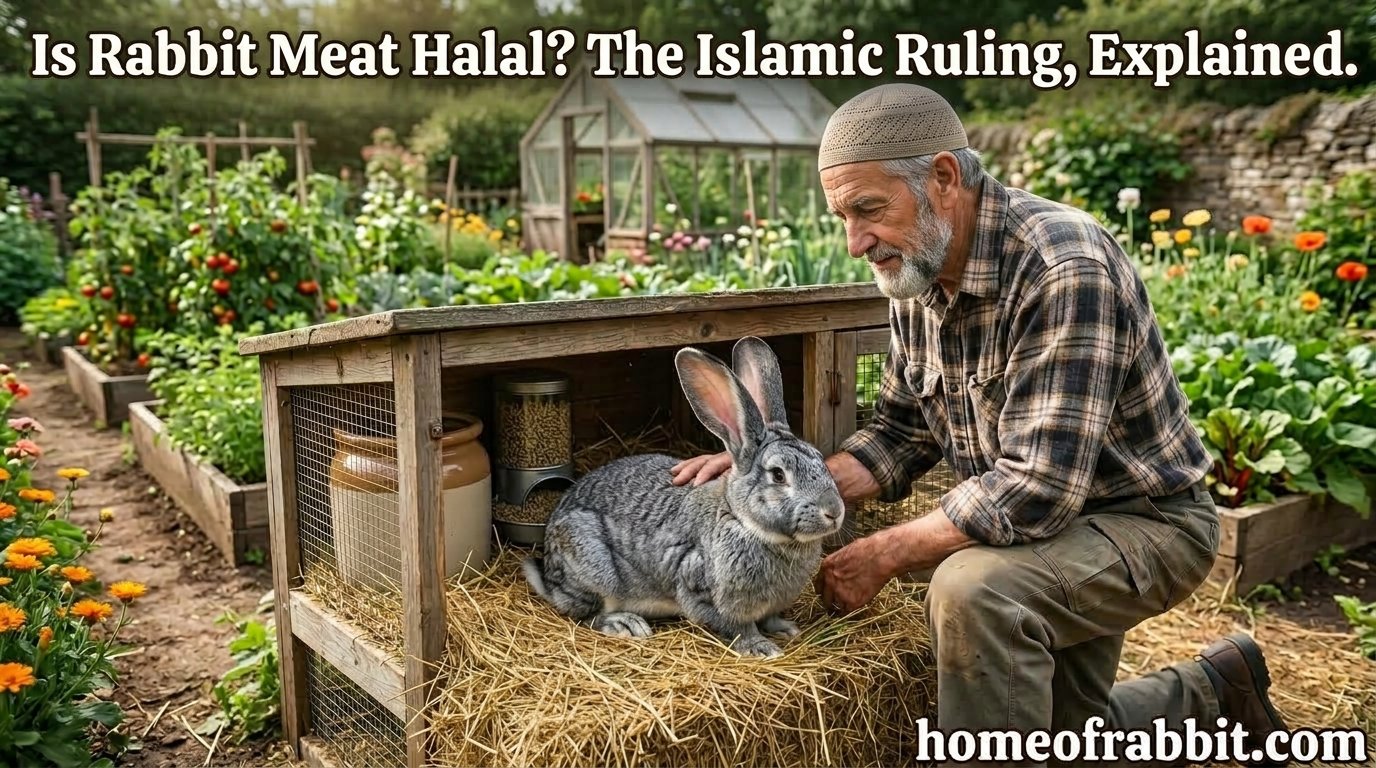
Yes. Rabbit meat is halal according to the Quran, authentic Hadith, and the consensus of scholars from all four major Sunni schools of thought — Hanafi, Maliki, Shafi’i, and Hanbali. The permissibility comes with one condition that applies to any meat: the rabbit must be slaughtered according to Islamic requirements (zabiha) or hunted according to the Islamic rules for game.
There’s one notable exception worth knowing about: some Shia (Ja’fari) scholars hold a different view, which we’ll cover further down.
Why Rabbit Meat Is Considered Halal
Islamic dietary law starts from a broad principle: everything is permissible to eat unless it’s specifically prohibited. The Quran names the main prohibitions directly — carrion, blood, pork, and anything slaughtered while invoking a name other than Allah’s (Quran 6:145). Rabbit doesn’t fall into any of these categories, so the starting assumption is permissibility.
The Hadith of Anas ibn Malik
The strongest textual evidence comes from a hadith recorded in Sahih al-Bukhari and Sahih Muslim. Anas ibn Malik narrated that while traveling near Marr al-Zahran, a group of companions chased down a rabbit. Anas caught it, and it was given to Abu Talhah, who slaughtered it and sent portions — the thighs — to the Prophet Muhammad ﷺ, who accepted and ate from it. Scholars across the centuries have cited this narration as direct proof that rabbit meat is permissible, since the Prophet did not object to it being hunted, slaughtered, or eaten.
The “No Fangs, No Talons” Rule
Separately, there’s a hadith (recorded in Sahih Muslim) prohibiting the meat of predatory animals that have canine teeth used for hunting, and birds that hunt with talons. This rule is why animals like wolves, lions, and birds of prey are haram. Rabbits don’t qualify under this prohibition at all — they’re herbivores with no predatory instinct, no fangs for tearing flesh, and no claws used for hunting. Their teeth are built for grinding plants, not attacking prey. This puts them in the same broad category as other permitted grazing animals like cattle, sheep, and goats, rather than anywhere near the prohibited list.
What All Four Sunni Schools Say
| School of Thought | Ruling on Rabbit Meat |
|---|---|
| Hanafi | Permissible (halal) |
| Maliki | Permissible (halal) |
| Shafi’i | Permissible (halal) |
| Hanbali | Permissible (halal) |
Some early scholars noted a minor difference of opinion — a small number considered eating rabbit makruh (disliked, not forbidden) based on folk beliefs about rabbits menstruating, which was seen as a matter of ritual cleanliness rather than a dietary prohibition. This is a minority, non-binding view and doesn’t change the overall halal status.
The Shia (Ja’fari) Perspective Is Different
This is where the picture gets more nuanced, and it’s a distinction a lot of shorter articles skip. In Ja’fari (Twelver Shia) jurisprudence, land animals are generally classified using criteria closer to the Torah’s dietary framework — animals that chew cud and have cloven hooves are permitted, while others are excluded. Because rabbits don’t meet this specific classification, a number of Shia scholars and fatwas hold rabbit meat to be haram, rather than merely disliked.
What this means practically: if you or someone you’re cooking for follows Shia jurisprudence, don’t assume the Sunni ruling applies. It’s worth checking directly with a trusted Ja’fari scholar or a specific marja’s fatwa, since positions can vary by source and this is a case where sect matters more than usual.
Rabbit vs. Cat: Debunking a Common Misconception
A recurring argument you’ll see online is that rabbits should be haram because they supposedly resemble cats in shape or the sounds they make, and cats are prohibited. This reasoning doesn’t hold up under Islamic legal methodology for a simple reason: rulings on food are derived from clear textual evidence (Quran and Hadith), not from visual or auditory resemblance to another animal. Plenty of halal animals share superficial traits with haram ones without that changing their status. The direct hadith evidence about rabbit already settles the question, so the resemblance argument isn’t a valid basis for overriding it.
Is Rabbit Halal or Kosher? (Common Confusion)
People sometimes assume halal and kosher rules line up, but they don’t always. In Jewish dietary law (kashrut), rabbit is explicitly listed as non-kosher because it doesn’t have a cloven hoof, even though it was historically believed to chew cud. So you’ll get a genuinely different answer depending on which dietary system you’re asking about — halal, yes (Sunni majority view); kosher, no.
What Makes Rabbit Meat Actually Halal to Eat
Being a permissible species is only half the requirement. How the rabbit dies matters just as much.
Requirements for Farm-Raised Rabbits (Zabiha)
For a domesticated rabbit to be halal, the slaughter (zabiha) should generally follow the same standards used for any halal meat:
- The person slaughtering should be a Muslim (or, per most scholars, a Jew or Christian, consistent with the broader rule on “People of the Book”).
- Allah’s name (Bismillah) is invoked at the moment of slaughter.
- A sharp knife is used to cut the throat quickly, severing the trachea, esophagus, and the major blood vessels, allowing the blood to drain fully.
- The animal should be treated with care beforehand — not shown the knife, not made to watch another animal being slaughtered, and not caused unnecessary distress.
- Pre-slaughter stunning is a genuinely debated area. Some halal certification bodies accept certain forms of stunning that don’t kill the animal before the cut; others reject stunning outright. If you follow a stricter standard, look specifically for “non-stunned” or “hand-slaughtered” labeling.
Requirements for Hunted/Wild Rabbits
Hunting rabbits (common in rural areas and among hobbyist hunters) has its own set of rules under Islamic law for game:
- Allah’s name must be invoked before releasing the arrow, bullet, or trained hunting animal.
- The tool or animal used must cause a wound that draws blood — a kill by blunt trauma alone (for example, a rock or a blunt strike with no cut) does not meet the requirement.
- If the rabbit is found already dead when you reach it, and there’s no way to confirm the fatal wound was caused by the hunting method itself (rather than, say, a fall), scholars generally advise caution rather than assuming it’s halal.
Comparison Table: Halal Requirements by Scenario
| Scenario | Is It Halal? | Key Condition |
|---|---|---|
| Farm-raised rabbit, hand-slaughtered with Bismillah | Yes | Full zabiha method followed |
| Farm-raised rabbit, mechanically stunned then slaughtered | Debated | Depends on certifying body’s standard |
| Wild rabbit, shot with Bismillah invoked, wound draws blood | Yes | Hunting rules (game) satisfied |
| Rabbit killed by blunt force, no cut/blood | No | Fails the bleeding requirement |
| Rabbit meat with no verified slaughter method | Uncertain — avoid | Can’t confirm species and method both meet requirements |
How to Find Halal Rabbit Meat in the USA
Rabbit isn’t a mainstream item in most American grocery stores, halal or otherwise, so sourcing it takes a bit more effort than picking up halal chicken or beef:
- Look for small rabbit farms and breeders. Many smaller USDA-inspected rabbit processors will slaughter to order and can accommodate halal requests — ask directly whether they can do a hand-slaughter with Bismillah invoked, rather than assuming a general “processed” label covers it.
- Check halal certification marks. Organizations such as IFANCA (Islamic Food and Nutrition Council of America) and ISNA’s Halal Certification Agency certify various meat products in the US. If a rabbit product carries one of these certifications, the sourcing and slaughter method has already been verified.
- Ask your local halal butcher. Some halal butchers that specialize in game or specialty meats can special-order rabbit or point you to a supplier they trust.
- Verify, don’t assume, with online and specialty retailers. If you’re buying rabbit meat online, contact the seller directly and ask how the animals were slaughtered before assuming a “farm-raised” or “organic” label means halal — those labels describe animal welfare and diet, not religious slaughter method.
Common Mistakes People Make
- Assuming farm-raised or organic automatically means halal. These labels have nothing to do with slaughter method.
- Relying on the “resembles a cat” argument to avoid rabbit meat, when this isn’t a recognized basis for a ruling.
- Treating the Sunni ruling as universal without checking that it applies to their own school of thought, especially for Shia readers.
- Buying rabbit meat with no visible certification or verifiable slaughter information and assuming it’s fine by default.
Quick Checklist Before You Buy or Cook
- Confirm the rabbit was slaughtered by a Muslim (or a Jew/Christian per the broader rule), not stunned to death or killed by other non-compliant methods
- Confirm Bismillah was invoked at slaughter
- Look for a recognized halal certification mark if buying pre-packaged
- If hunting, invoke Allah’s name before the shot and confirm the kill drew blood
- If following Ja’fari (Shia) jurisprudence, check with your own scholarly source before assuming the Sunni ruling applies to you
Conclusion
For the majority of Muslims — those following Hanafi, Maliki, Shafi’i, or Hanbali fiqh — rabbit meat is halal, supported directly by Hadith and centuries of scholarly consensus. The permissibility isn’t automatic, though: the rabbit still needs to be slaughtered or hunted according to standard Islamic requirements, the same as any other halal meat. The main exception to keep in mind is the Shia (Ja’fari) position, where a number of scholars classify rabbit differently. If you’re unsure which ruling applies to you, the safest step is asking a scholar within your own tradition rather than relying on a general answer. You can also read this article what are rabbit meat good for?
FAQ
Is rabbit meat halal in all four Sunni madhabs?
Yes. Hanafi, Maliki, Shafi’i, and Hanbali scholars all agree rabbit meat is permissible, based primarily on the hadith of Anas ibn Malik.
Is rabbit haram for Shia Muslims?
Many Ja’fari scholars hold rabbit to be haram, based on a different classification system for land animals. This varies by scholar and marja, so Shia readers should check a specific, trusted fatwa rather than assume either answer.
Does rabbit need to be slaughtered a specific way to be halal?
Yes. Whether farm-raised or hunted, the general requirements are the same as for any other meat: a Muslim (or Jew/Christian) performing the slaughter, Allah’s name invoked, and a method that causes the blood to drain (for farmed animals) or a hunting method that produces a bleeding wound (for game).
Is rabbit meat kosher?
No. In Jewish dietary law, rabbit is not kosher because it lacks cloven hooves, even though some sources note it was historically believed to chew cud.
Can I eat rabbit meat if I don’t know how it was slaughtered?
Scholars generally advise caution here. If you can’t verify the slaughter method, it’s safer to look for a certified source or ask the supplier directly rather than assume.
