
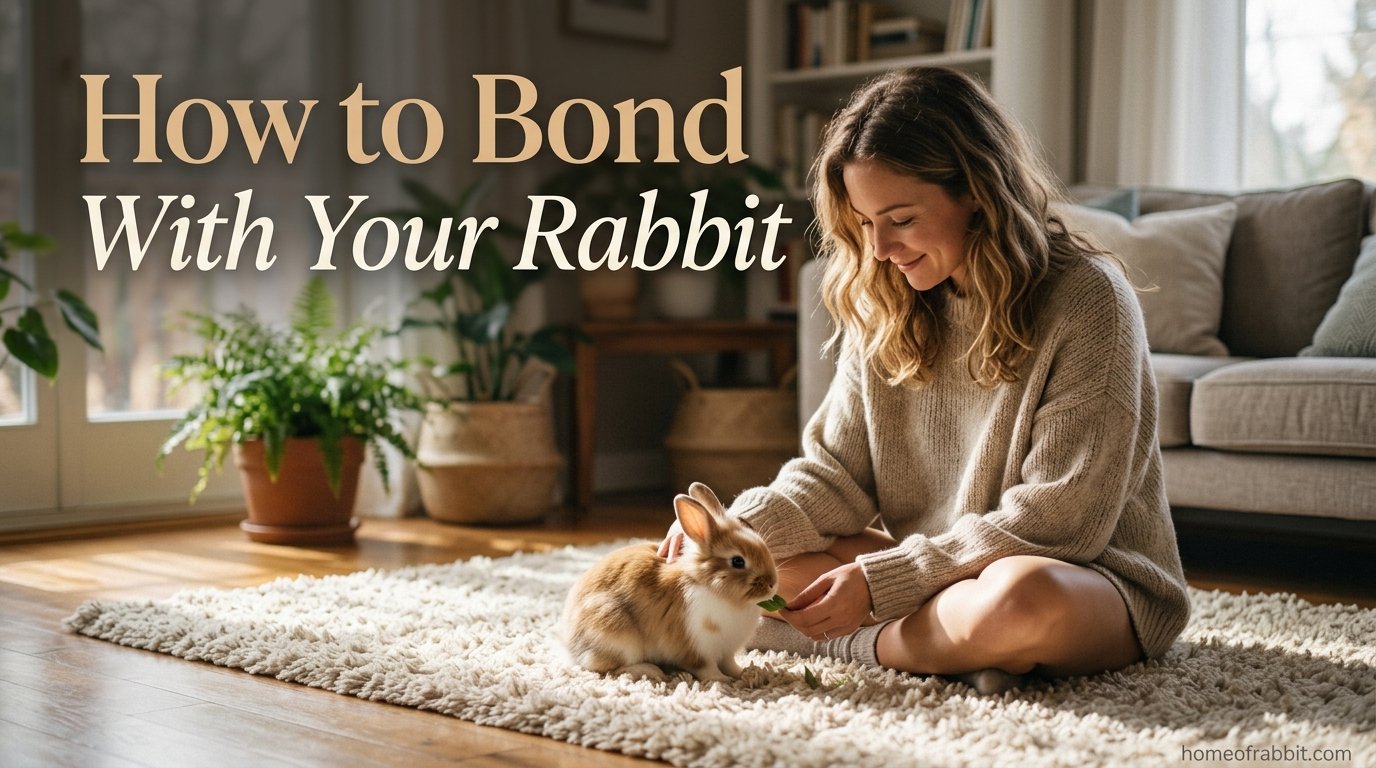
The most reliable way to bond with your rabbit is to let them set the pace. Sit on the floor, stay calm, offer small healthy treats, and wait for your rabbit to approach you. Rabbits are prey animals, so trust is earned through predictable, gentle behavior. Chasing, grabbing, and picking up your rabbit are the fastest ways to lose it.
Below is a step-by-step plan, what progress looks like, and how to handle shy, rescue, or grumpy rabbits.
Why Rabbits Are Slow to Trust
In the wild, rabbits are eaten by many predators. Their instincts tell them that anything large, fast, or coming from above is dangerous. Being scooped up looks a lot like being caught by a hawk.
This means a rabbit that runs from you isn’t being rude or stubborn. It’s behaving normally. Bonding is about teaching your rabbit that you are predictable, calm, and the source of good things.
Individual personalities vary a lot. Some rabbits are bold within days, while others take months. Past experiences, age, and whether the rabbit came from a shelter all play a part.
How to Bond With Your Rabbit, Step by Step
Step 1: Set up a safe home base
A rabbit that feels secure explores more and hides less. Before you focus on bonding, make sure the basics are in place:
- A roomy enclosure or exercise pen, not a small cage
- At least one hiding spot (a cardboard box with two openings works well)
- A quiet location away from loud TVs, barking dogs, and heavy foot traffic
- Non-slip flooring, since slippery floors frighten rabbits and can injure them
Let a new rabbit settle in for a few days before you try anything. During this time, keep your interactions to feeding, refilling water, and cleaning, and speak softly while you do it.
Step 2: Sit on the floor and ignore them
This is the step most people skip, and it matters most. Sit or lie down in your rabbit’s space, a bit away from them, and do something quiet like reading or scrolling on your phone.
Your goal is to become boring and safe. Staying low makes you look less threatening, and ignoring your rabbit lets their curiosity take over. Many rabbits will eventually sniff your shoes, hop over your legs, or investigate your hand. Do about 15 to 30 minutes at a stretch if your rabbit is relaxed. Short, frequent sessions work better than one long one.
Step 3: Offer treats from your hand
Food is the most reliable way to build positive associations. Offer a small piece of a healthy treat from your open palm and hold still.
Good options include:
- A small piece of herb such as cilantro, parsley, or basil
- A leaf or two of leafy greens such as romaine, or a small piece of a favorite
- A tiny piece of fruit, only occasionally, because it’s high in sugar
Hay should make up most of a rabbit’s diet, and treats should stay small. If your rabbit takes treats from your hand, you’ve made real progress. If they won’t, place the treat on the floor near you and move your hand away a bit more each time.
Skip store-bought treats full of seeds, yogurt coating, or dried fruit. They are often unhealthy for rabbits. If you’re unsure how much daily food your rabbit needs so treats don’t push them into overfeeding, the rabbit feeding calculator can help you plan it out.
Step 4: Add gentle touch
Once your rabbit approaches you willingly, start with touch:
- Let your rabbit sniff your hand first.
- Gently stroke the forehead, cheeks, or the top of the nose. Most rabbits enjoy these spots.
- Keep your hand moving slowly and stay at the front of your rabbit where they can see you.
- Stop if they flinch, stomp, or move away. Respect that.
Many rabbits dislike being touched on the belly, feet, or tail, and most dislike being picked up. Staying on the floor and petting them there is usually much better for the relationship.
If you must pick up your rabbit, for a vet visit for example, support the chest and hindquarters securely. A rabbit that kicks out while held loosely can seriously injure its spine. The House Rabbit Society has handling and care guidance worth reading before you try. (Check the site for their current pages on this topic.)
Step 5: Build a daily routine
Rabbits thrive on predictability. Feed, clean, and visit at similar times each day. Rabbits tend to be most active around dawn and dusk, so evenings are often the best time for bonding sessions.
Talk to your rabbit in a soft, steady voice. Over time they learn your voice and often start to recognize their name, especially if it predicts a treat.
Step 6: Play and shared activities
Once your rabbit is comfortable, add things they find fun:
- Cardboard boxes with holes cut in them to explore and hide in
- Tunnels for running through
- Toss toys such as willow balls or hay-stuffed paper rolls
- Digging boxes filled with shredded paper or safe materials
Join in lightly. Sitting next to a tunnel while your rabbit zooms through it is a great trust-building moment.
Signs Your Rabbit Is Bonding With You
| Behavior | What it usually means |
|---|---|
| Approaches you on their own | Curiosity and growing trust |
| Eats while you’re nearby | Feels safe around you |
| Flopping onto their side near you | Deep relaxation |
| Binky (jumping and twisting) | Joy and excitement |
| Licking you | Affection or grooming |
| Nudging your hand or leg | “Pet me” or “move over” |
| Lying down with legs tucked or stretched out near you | Comfortable in your presence |
| Gentle tooth purring when petted | Contentment |
| Circling your feet | Often courtship behavior, common in unneutered rabbits, but can also mean excitement |
Signs of stress or fear include thumping a back foot, freezing, hiding, flattened ears pressed to the back, and a tense, hunched body. If you see them, back off and slow down.
Mistakes That Set Bonding Back
- Chasing or cornering. This teaches your rabbit that you are a predator.
- Picking up too often. Even with good intentions, being lifted is stressful for most rabbits.
- Reaching from above. Approach from the front and at their level.
- Forcing interaction. Pushing past a rabbit’s comfort zone costs you more time than it saves.
- Loud noises and sudden movement. Rabbits have sensitive hearing and startle easily.
- Punishing. Rabbits don’t understand punishment. Yelling or tapping only increases fear.
- Giving up too early. If nothing seems to change in a week, that’s normal.
What to Do in Different Situations
If your rabbit is shy or hides. Spend more time sitting quietly at a distance. Leave treats near the hiding spot and let them come out on their own. Don’t reach into their hiding place.
If you adopted a rescue rabbit. Rescues may have had rough handling or little socialization. Be especially patient and keep the environment calm. Ask the shelter about the rabbit’s history if possible.
If your rabbit is grumpy, lunges, or nips. Hormones are often involved, especially in unspayed or unneutered adults. Spaying and neutering usually improve behavior and are also recommended for health reasons, but talk to a rabbit-experienced vet about the right timing for your rabbit.
If you have other pets. Keep dogs and cats away from your rabbit’s space at first. Even friendly pets can be frightening. Supervise all interactions carefully.
If you have children. Teach kids to sit on the floor, stay quiet, and offer treats. Children should not carry rabbits around, since a fall or a kick can cause serious injury.
If you want to bond two rabbits with each other. This is a separate process involving neutral territory and careful supervision. Look for a dedicated guide or ask a rabbit-savvy vet or rescue.
How Long Does It Take?
There’s no standard timeline. Some rabbits warm up in a few days. Others take weeks or even months, particularly shy or previously mistreated ones. Progress is rarely a straight line. A rabbit may seem friendly one day and distant the next, especially after a change like new furniture or a loud event.
Measure progress by small wins, such as eating while you’re near, sniffing your hand, or flopping in your presence, rather than by how fast it happens.
When to Talk to a Vet
Sudden changes in behavior can signal pain or illness rather than a trust problem. See a rabbit-savvy vet if your rabbit:
- Suddenly becomes aggressive or withdrawn
- Stops eating or pooping, which is an emergency in rabbits
- Hides constantly, sits hunched, or grinds teeth loudly (a sign of pain, different from soft purring)
- Flinches when touched in certain places
A rabbit in pain won’t bond well, and gastrointestinal problems can become dangerous quickly.
Quick Bonding Checklist
- Safe, quiet enclosure with a hiding spot
- A few days to settle in before active bonding
- Daily floor time at your rabbit’s level
- Small, healthy treats offered by hand
- Petting limited to forehead, cheeks, and nose
- No chasing, grabbing, or unnecessary picking up
- Consistent daily routine
- Vet checkup and a plan for spay or neuter
- Patience, without comparing your rabbit to others
Conclusion
Learning how to bond with your rabbit comes down to patience and respect for how they see the world. Stay low, stay calm, use treats, and let your rabbit come to you. Over time, the hiding and bolting give way to curious sniffs, relaxed flops, and, if you’re lucky, happy binkies. If progress stalls or your rabbit’s behavior suddenly changes, a rabbit-experienced vet is the next stop.
FAQ
Can you bond with a rabbit that doesn’t like being held?
Yes. Most rabbits don’t enjoy being held, and a strong bond doesn’t require it. Many rabbits show affection by sitting beside you, getting petted on the floor, or following you around.
How do I know if my rabbit loves me?
Look for flopping near you, licking, binkies, relaxed eating around you, and approaching you voluntarily. Each rabbit shows affection differently.
Why does my rabbit run away when I get close?
They are prey animals and you’re much larger. Running is instinct, not dislike. Staying low and letting them approach usually helps over time.
Should I let my rabbit sleep near me?
Rabbits are crepuscular, so they’re active in early morning and evening. A rabbit can safely spend time in your room if the space is rabbit-proofed, but they should have their own secure enclosure for unsupervised time.
Do male or female rabbits bond better with people?
Personality matters far more than sex. Spaying or neutering often makes rabbits calmer and easier to bond with.
