
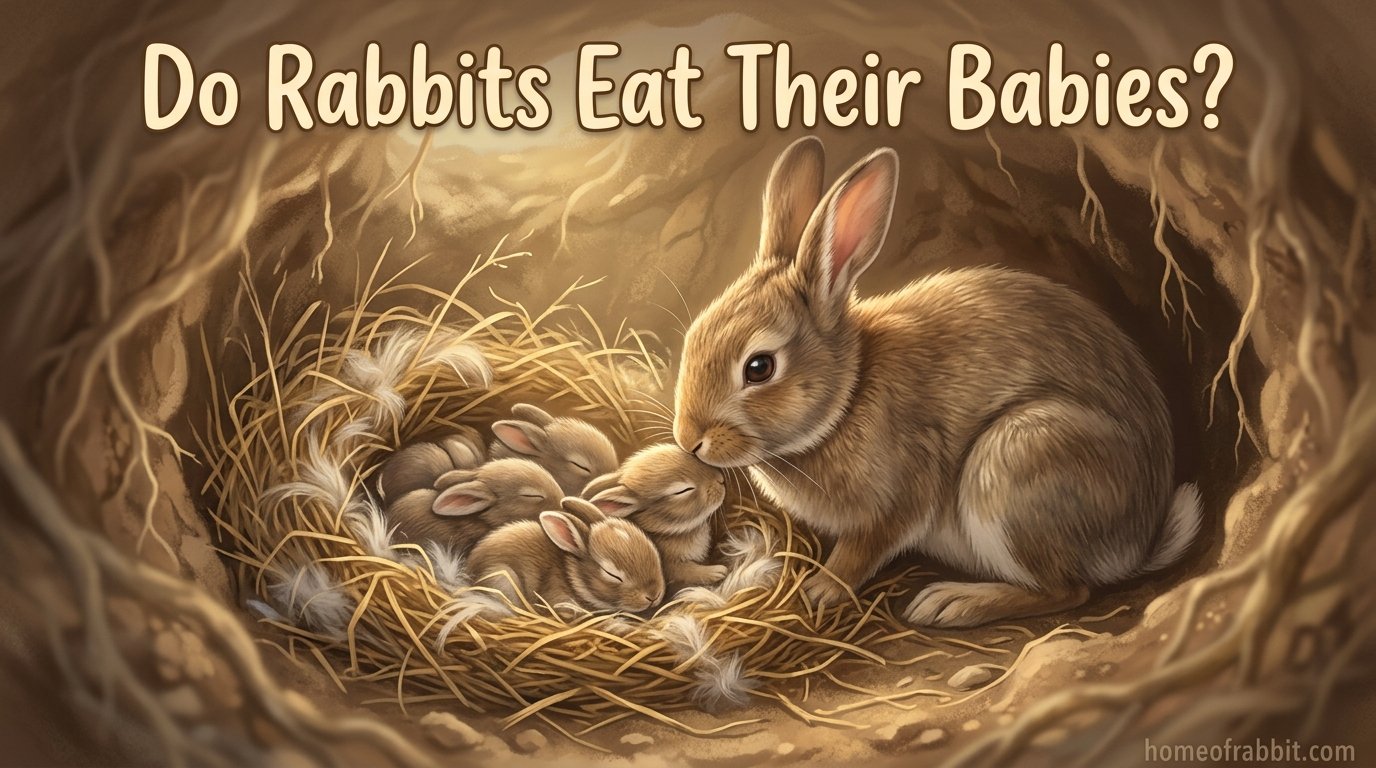
Yes, mother rabbits (does) sometimes eat their babies (kits). It is uncommon in well-managed rabbits, but it happens, and it is more disturbing than it is mysterious. In most cases it has a cause you can identify, and often something you can change.
The most common situation is also the least alarming. A doe may eat kits that were already dead, which is a nest-cleaning instinct. The harder situation is when a doe harms or eats live kits, usually because of stress, inexperience, or something wrong with the doe or the litter.
This guide explains the reasons, how to tell what actually happened, and what to do next.
Why Do Mother Rabbits Eat Their Babies?
Rabbits are herbivores, so this behavior surprises people. It is not hunger in the usual sense. It is driven by instinct, stress, or health.
Nest-cleaning instinct
According to the Merck Veterinary Manual, cannibalism of dead young occurs as a natural nest-cleaning instinct. A doe removes anything that could attract predators or spread disease, including stillborn kits and afterbirth. If a kit died, the doe may eat it. This is the most common explanation and usually does not mean she was a bad mother.
Stress and disturbance
Does are easily upset around kindling (giving birth). Common triggers include:
- loud noise, barking dogs, or heavy foot traffic near the cage
- a nest box that is handled too often
- moving the cage or changing the environment close to the birth date
- other animals nearby, including predators or pets
Stressed does may scatter kits outside the nest, ignore them, or harm them.
Weak, sick, or chilled kits
Kits are born naked, blind, and deaf, so they depend completely on the nest for warmth. A kit that is weak, malformed, or cold may not survive, and the doe may remove it. Kits that end up outside the nest chill quickly.
Inexperience and poor nest preparation
A published study of neonatal cannibalism in cage-bred wild rabbits (González-Redondo and Zamora-Lozano) found that cannibalism was associated with does that did not bring hair or straw into the nest box, and with births that happened outside the nest box. That study involved a specific population of cage-bred wild rabbits, so it does not prove the same numbers apply to your pet or meat rabbits. It does support a practical point: a doe that doesn’t build a proper nest is a warning sign.
First-time mothers are generally considered more likely to have problems, though a single bad litter does not predict future ones.
Nutrition and health problems
Poor diet during pregnancy, pain from a difficult birth, mastitis (infected mammary glands), or retained fetal tissue can all disrupt mothering. A doe in pain may refuse to nurse or may behave abnormally around the nest. Exact nutritional requirements vary, so confirm feed and protein levels for pregnant does with an exotics vet or your feed supplier.
Is It Cannibalism or Did the Kit Just Disappear?
Don’t assume the worst. Look at the evidence first.
| What you see | Likely explanation |
|---|---|
| Dead kit missing, no blood | Doe removed and ate it as nest cleaning |
| Blood, injuries, or partly eaten kit | Possible attack or chewing, or a stressed doe |
| Kits scattered outside the nest | Doe stressed, nest poorly built, or birth happened outside the box |
| Kit missing and nest area is accessible | Check for gaps where a kit could fall out, or for rodents or predators |
| Kits look thin, wrinkled, and cold | Not nursing enough, not cannibalism |
Count the litter at each daily check and write the number down. A missing kit with no body is hard to interpret, so rule out gaps in the cage, escape routes, and pests before blaming the doe.
What To Do If Your Rabbit Eats Her Babies
- Stay calm and avoid repeated disturbance. Constant handling usually makes things worse.
- Remove any dead kits promptly and dispose of them. This is also a hygiene step.
- Check the rest of the litter. Look for kits that are cold, scattered, or injured.
- Warm cold kits gently if they are outside the nest, then return them to a nest with fur. Do this quickly and quietly.
- Check the doe. Look for a swollen or hot belly area, discharge, refusal to eat, or lethargy.
- Call a vet if she seems ill or in pain.
- Consider fostering. If another doe of similar age has a small litter, the Merck Manual notes that kits can be fostered in the first 3 days by mixing them with the foster doe’s own litter and covering them with her fur. Moving the larger kits increases the chance of success.
- If the doe keeps harming live kits, separating her from the litter may be necessary. Hand-rearing is possible but the death rate is high, so this is a last resort and best done with veterinary guidance. For general care, see how to take care of a baby bunny.
How To Reduce the Risk
Prevention starts well before the birth. Use this checklist:
- ☐ Breed only healthy, mature does (confirm a suitable age and condition with a vet)
- ☐ Feed a quality diet through pregnancy (confirm specifics with a vet)
- ☐ Provide a nest box about 28 to 29 days after breeding, as the Merck Manual recommends
- ☐ Supply clean straw or similar nesting material
- ☐ Keep the cage in a quiet, draft-free, low-traffic spot
- ☐ Keep dogs, cats, and noisy activity away
- ☐ Avoid changes to routine, location, or housing near kindling
- ☐ Check the nest once a day, calmly and briefly
- ☐ Watch for a doe that is pulling fur and building a nest (a good sign that labor is close)
- ☐ Keep fresh water available at all times
Common Mistakes
- Handling kits too much. Frequent touching can stress the doe.
- Moving the cage or changing setup right before birth.
- Providing the nest box too late. Without a prepared nest, kits may be born on the floor.
- Assuming a missing kit was eaten alive. Check for dead kits and for other causes first.
- Breeding an unprepared or unhealthy doe.
- Skipping the vet when the doe seems unwell.
When To Call a Vet
Contact a veterinarian who treats rabbits if:
- the doe is not eating, is lethargic, or seems in pain
- she has discharge, swelling, or hot, red mammary glands
- multiple kits are injured or missing
- you suspect retained tissue after birth
- the doe repeatedly harms litters
Infection can become serious quickly, and a sick doe cannot care for her kits.
Conclusion
So, do rabbits eat their babies? Sometimes, yes. Most often it is the cleanup of kits that were already dead, but stress, inexperience, illness, or poor nest conditions can also lead to harm. A quiet environment, a proper nest, good nutrition, and a healthy doe lower the risk, though nothing eliminates it entirely. If it happens, don’t panic: check the doe, protect surviving kits, and get veterinary advice if anything seems off.
FAQ
Do rabbits eat their babies if you touch them?
There is no guaranteed scent-based rule. Gentle, brief nest checks are generally fine. The bigger risk is repeated disturbance and stress.
Do first-time mothers eat their babies more often?
Inexperience is commonly cited as a risk, but I can’t point to a verified rate for pet rabbits. Prepare a first-time doe carefully and monitor her.
Will a rabbit that ate her kits do it again?
Not necessarily. If the cause was stress, a missing nest, or a health issue that you fix, the next litter may go fine. Repeated problems warrant a vet check and a conversation about whether to breed her again.
What should I do with kits the mother rejects?
Fostering to another lactating doe works best. Hand-rearing is possible but has a high death rate, so seek veterinary guidance.
