
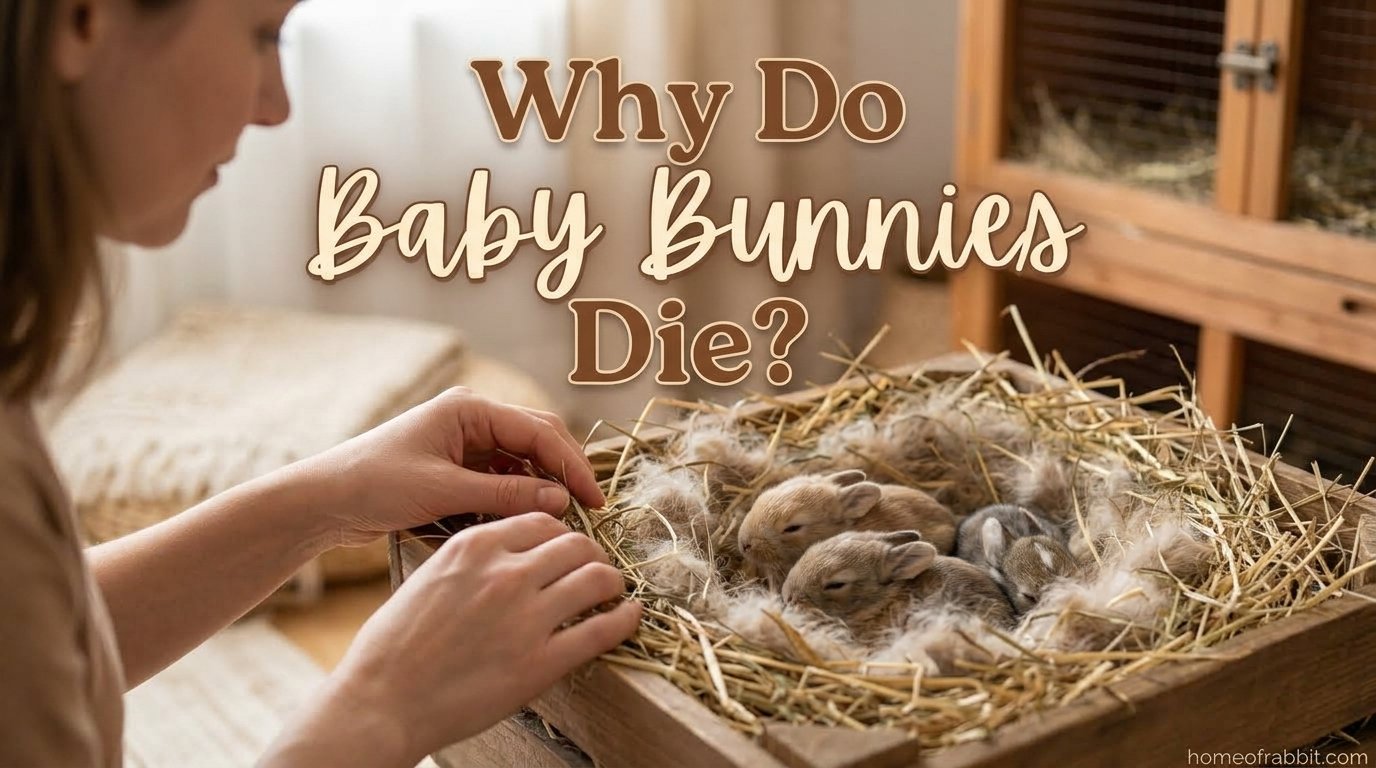
Baby bunnies, called kits, usually die from a short list of problems: getting cold, not getting enough milk, stress, digestive trouble, and poor timing around weaning. Heat and household hazards also take their toll. Kits are born hairless, blind, and completely dependent, so small problems become fatal quickly.
If you’ve lost a kit, it’s rarely because of one dramatic mistake. This guide explains the common causes, which signs to watch for, and what to do if kits are still alive but struggling.
The Short Answer
| Cause | When it usually happens | Early warning sign |
|---|---|---|
| Cold | First days of life | Kits scattered or cold to the touch |
| Not enough milk | First week | Flat, wrinkled bellies; weight loss |
| Heat | Warm weather, poor ventilation | Kits sprawled apart; doe stressed |
| Stress/disturbance | Any time | Doe nervous, nest abandoned or scattered |
| Weak or stillborn kits | Birth | Runts, very large litters |
| Diarrhea/dehydration | Any age, common near weaning | Loose or yellow stool, lethargy |
| Weaning problems | Around the switch to solid food | Kit stops eating, bloated belly |
| Hand-feeding errors | Orphaned kits | Milk bubbling from nose, bloating |
| Predators/hazards | Outdoors or in homes with pets | Missing or injured kits |
The Most Common Reasons Baby Bunnies Die
Cold
Chilling is one of the earliest and most common killers. Kits chilled because the doe didn’t pull enough fur, or because the room got too cold, can die within hours. furrycritter
Adult rabbits tolerate cold far better than newborns do, so set the room temperature for the kits, not the mother. Wire-bottomed nest boxes with thin bedding are a particular risk, since cold air can reach kits from below even when they’re huddled together.
Not Enough Milk
Kits may not get enough milk because the doe’s supply is low, because bigger siblings crowd out the smaller ones, or because one short daily nursing isn’t enough for the whole litter. Runts often fade slowly, losing weight each day until they’re too weak to nurse. furrycritter
A doe who nurses only once or twice a day is normal. According to the House Rabbit Society, mother rabbits return to the nest to nurse only once or twice a day, staying away as much as possible so as not to attract predators. The real question is whether the kits look fed. Signs that nursing isn’t happening include flat, wrinkled bellies, kits that feel cold even in the nest, and kits that are weaker or less active than they should be. indianahrsfurrycritter
First-time mothers sometimes take a day or two to get the routine right. Milk may also take a few days to come in fully, so don’t panic on day one if the kits look thin.
Heat
Cold gets the attention, but heat kills too. Extreme heat is especially dangerous for nursing does and young kits. In warm weather, keep the space shaded with good airflow, and make sure the doe always has plenty of fresh water. A nursing doe may drink two to three times her normal amount. furrycritterfurrycritter
Stress and Disturbance
Rabbits are prey animals, and stress affects them physically. Loud noise, frequent handling, other pets nearby, a new cage, or a move can all upset a doe and disrupt nursing. Stress in kits themselves can contribute to sudden death as well. Stress is described as a significant factor in baby rabbit mortality, affecting almost every body system. pangovet
Keep nest checks quick, calm, and ideally once a day. Return kits to the nest promptly if you handle them.
Stillbirths and Weak Kits
Some kits are born dead or too weak to survive, and that’s not something anyone caused. Stillbirths are more common in very large litters, with first-time mothers, and when the doe was under significant stress late in pregnancy. Kits that miss their first nursing in the first half day or so rarely survive without intervention. furrycritterfurrycritter
Diarrhea and Dehydration
Digestive illness is dangerous for young rabbits. A kit with diarrhea can dehydrate fast. In cases of diarrhea, dehydration can occur overnight, and baby rabbits can die by morning. Yellow diarrhea in kits that are still nursing is a red flag. pangovet
This is an emergency. Don’t wait to see if it passes. Contact a rabbit-savvy vet the same day.
Problems Around Weaning
The shift from milk to hay and pellets is a delicate stage. Kits begin nibbling solid food around three weeks old, and gut problems can appear as their digestive systems adapt. Sudden diet changes, stress, and moving kits away from the doe too early are commonly blamed by breeders and vets. (Exact weaning ages and protocols vary. Confirm with a rabbit-experienced vet.)
If you’re managing a doe and growing kits, a tool like the rabbit feeding calculator can help you check that pellet, hay, and fresh food amounts are in a sensible range for each stage.
Hand-Feeding Mistakes
Raising orphaned kits is hard, and many don’t make it. Common errors include overfeeding, feeding too fast, and using the wrong milk. Cow’s milk is not recommended for baby rabbits, and hand-reared kits can easily inhale milk, which can be fatal. Ask a rabbit vet for a formula and feeding schedule suited to the kits’ age. thewrappangovet
Predators, Pets, and Hazards
Outdoors, cats, dogs, and mowers are major threats to wild nests. Domestic housecats are a particular risk, as they maul and torment their prey, and even a kit that escapes may die of infection or shock. Lawn chemicals can cause convulsing death in baby rabbits. rabbitrabbit
Indoors, keep other pets away from the nest area, and check that the enclosure has no gaps a kit can fall through.
Is the Mother Neglecting Her Babies?
Usually, no. This is the most common misunderstanding.
- Normal: She barely visits the nest and spends little time with the kits. She feeds them once or twice a day for a few minutes, often at night or around dawn and dusk.
- Not normal: Kits are repeatedly dragged out of the nest, are persistently cold, have sunken bellies, or cry constantly.
Cannibalism and killing kits do happen occasionally, often after stress or disturbance. They’re less common than people fear, and not a sign you’ve done something unforgivable.
Warning Signs a Kit Is in Trouble
- Cold ears and feet, or a body that feels cool to the touch
- Wandering away from the nest or huddle
- Flat, wrinkled, or sunken belly
- A belly that looks tight and swollen (bloat)
- Weight loss or no weight gain, since healthy kits should gain weight every day during the first two weeks furrycritter
- Wet or yellow stool, or a dirty bottom
- Weakness, limpness, or constant squeaking
Weighing kits at the same time each day on a kitchen scale is the most reliable early-warning system, if your doe tolerates gentle handling.
What to Do If a Baby Bunny Is Cold or Weak
- Warm the kit slowly. Hold it gently against your body, or place it on a warm (not hot) water bottle wrapped in a towel. Return the kit to the nest once it’s moving and responsive. furrycritter
- Don’t assume a cold kit is dead. Chilled kits can look lifeless and still recover, so try warming before giving up.
- Check the nest. Add more fur or soft bedding, and cover the wire bottom if there is one.
- Offer the kit back to the doe. Don’t hand-feed unless a vet advises it. Hand-raising has a low success rate.
- Call a rabbit-experienced vet if a kit has diarrhea, a swollen belly, labored breathing, or hasn’t improved after warming. Find one through resources like Rabbit Vets USA or the House Rabbit Society’s vet referral.
What not to do: Don’t force-feed a cold kit, since a chilled gut can’t process milk. Don’t use heat lamps without a safe temperature gradient. Don’t keep opening the nest to “check.”
How to Lower the Risk Next Time
- Provide a nest box with soft hay or straw, and let the doe pull her own fur.
- Keep the room stable. Avoid drafts, direct sun, and wide temperature swings. (Ideal temperature ranges differ by source, so ask your vet for a range suited to your climate.)
- Feed the doe well. A healthy, well-fed mother produces better milk. Offer unlimited hay and plenty of water.
- Keep the area quiet. Limit visitors, other pets, and noise.
- Check once a day. Count the kits, look at their bellies, and remove any that have died.
- Wean gradually. Don’t separate kits abruptly or change diet suddenly.
Quick Checklist
- Nest box with enough fur and bedding
- Doe has fresh water at all times
- Room is neither cold nor hot
- Kits have round, warm bellies
- Daily weight check (if safe)
- Vet contact saved in advance
If You Found a Wild Nest
Most wild baby rabbits are not orphaned. Wild does feed their young only briefly. One wildlife organization notes that babies can go as long as 24 hours between feedings, and the Virginia Department of Wildlife Resources advises checking back briefly once a day for two days, and leaving the nest alone if the kits look plump and healthy. spcatampabayvirginia
Taking wild kits home is risky. According to the SPCA of Tampa Bay, fewer than 10% of orphaned wild rabbits survive a week. If you’re truly worried, contact a licensed wildlife rehabilitator. The House Rabbit Society has a helpful guide on orphaned wild rabbits. spcatampabay
Conclusion
So why do baby bunnies die? Most often it’s cold, too little milk, stress, or digestive trouble. These risks are highest in the first week and again around weaning. Many causes can be reduced with a warm, quiet nest, a well-fed mother, and calm, minimal handling. Others, like stillbirths and weak runts, are outside anyone’s control.
If you’ve lost a kit, it doesn’t mean you failed. Knowing the warning signs gives the rest of the litter the best chance.
FAQ
Why did my baby bunnies die overnight?
Cold, dehydration from diarrhea, and a lack of milk are the usual suspects. Kits can decline quickly, so a litter that looked fine in the evening may have been in trouble for hours. A necropsy through a vet is the only way to be certain.
Is it normal for a mother rabbit to leave her babies alone?
Yes. She typically feeds once or twice a day, briefly, and stays away otherwise.
Can a cold baby bunny be revived?
Sometimes. Warm the kit slowly against your body or on a wrapped warm water bottle. If it doesn’t respond or move, it may have died.
How long can newborn rabbits go without nursing?
Some sources say as long as about 24 hours between feedings is normal, and a kit that misses its first nursing may struggle. If kits show sunken bellies or constant crying, call a vet.
Should I hand-feed a baby bunny that isn’t nursing?
Only with a vet’s guidance. Hand-raised kits often die, and formula errors can cause fatal aspiration or digestive upset.
Can stress really kill a baby rabbit?
Yes, stress is considered a significant contributor to sudden death in young rabbits, and it can also stop a doe from nursing properly.
