
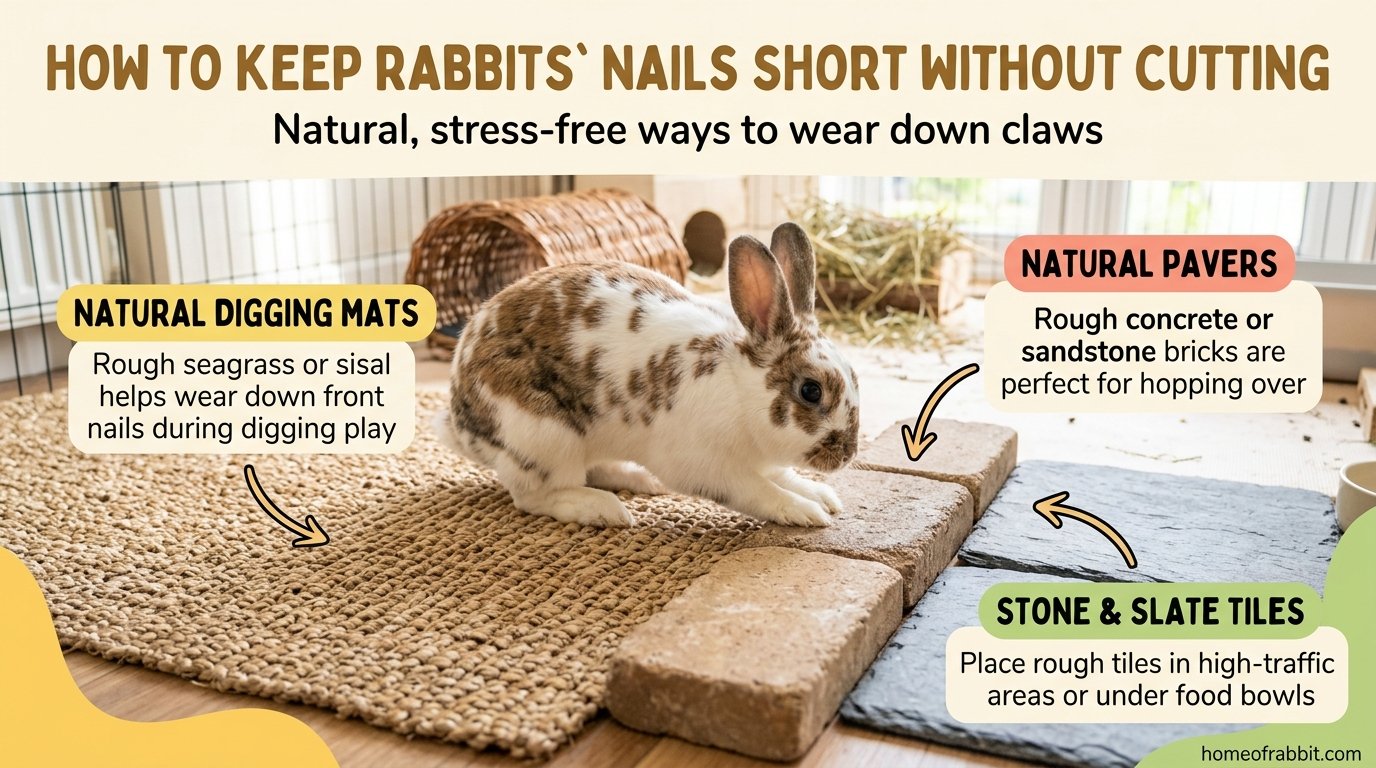
You can slow down how fast your rabbit’s nails get long, and you can swap clippers for a file or hand the job to a professional. What you usually can’t do is skip nail care entirely. Indoor rabbits don’t get the rough, varied ground that wears nails down in the wild, so most of them eventually need something done.
This guide covers the no-cut methods that genuinely help, how much to expect from each, and how to handle nails safely if your rabbit still needs a little help.
Can rabbits keep their nails short on their own?
Usually not. Rabbit nails grow continuously, and a house rabbit living on carpet, flooring, or soft bedding doesn’t have much to grind them down. Care organizations say the same thing: pet rabbits generally need regular nail upkeep because nothing wears their nails down for them (see House Rabbit Network’s guide to nail trimming).
Some rabbits, especially very active diggers on varied surfaces, may need trims less often than others. How often varies a lot from rabbit to rabbit. The House Rabbit Network notes it can range from one to six months depending on the animal, so check your own rabbit’s nails regularly rather than following a fixed calendar.
Long nails aren’t just cosmetic. They can snag on carpet or fabric, and a snagged nail can tear or break, which can hurt and become infected.
No-cut ways to help keep nails shorter
Think of these as ways to reduce how often you need to trim, not as a full replacement.
Give them safe things to dig
Digging is natural rabbit behavior and puts friction on the nails. A few easy setups:
- A sturdy box filled with shredded paper or hay
- A large cardboard box with the sides cut open
- A purpose-made digging box with a rabbit-safe filling
Avoid fillings that are dusty, scented, or treated with chemicals. If you’re unsure about a material, ask your vet.
Realistic expectation: digging usually keeps nails from growing out of control, but soft fillings like paper rarely wear nails down enough to remove the need for trims.
Offer varied, firm surfaces
A rabbit that only walks on thick carpet or plush bedding gets almost no natural filing. Letting them spend part of the day on firmer, textured surfaces can help, such as a flat piece of natural stone, tile, or untreated wood in their play area.
Two cautions:
- Keep surfaces non-slip but not harshly abrasive. Rough surfaces over long periods can irritate the soles of a rabbit’s feet.
- Never replace solid flooring with wire. Wire flooring is a separate foot-health risk.
There’s no reliable data I can point to showing exactly how much a particular surface slows growth, so treat this as a small helper, not a fix.
Encourage plenty of movement
A rabbit with room to run, hop, and dig wears nails more than one confined to a small space. Daily exercise time in a safe, rabbit-proofed area helps their general health too. If you’re not sure your rabbit’s enclosure is big enough, our rabbit cage size calculator is a good starting point.
Filing instead of clipping
If your concern is the cutting itself, whether it’s the sound, the fear of hitting the quick, or the way clippers restrain your rabbit, filing is the closest real alternative.
- A metal or emery nail file, or an emery board, can take off the sharp tip a little at a time.
- It’s slower, but it carries less risk of cutting the quick.
- Filing is also used to smooth rough edges after a trim.
Some owners use a small rotary nail grinder. This is a judgment call, not something I can call universally recommended: the noise and vibration frighten many rabbits, and friction can make the nail warm. If you try one, test the sound first, use very short touches, and ask your vet whether it suits your rabbit.
Letting a vet or technician handle it
If you’d rather never cut nails yourself, that’s a completely valid choice. Many vet clinics trim nails, and some offer a quicker, cheaper visit with a veterinary technician than a full exam. Rabbit rescues and adoption events sometimes offer trims too. Prices and availability vary, so call ahead.
Which method works best?
| Method | Helps slow nail growth? | Risk of cutting the quick | Best for |
|---|---|---|---|
| Digging box | Slightly | None | Enrichment and prevention |
| Firm, varied surfaces | Slightly | None | Rabbits on plush floors |
| More exercise space | Slightly | None | Overall health |
| Filing | Yes, directly | Low | Owners afraid of clippers |
| Rotary grinder | Yes, directly | Low to moderate | Calm rabbits, careful owners |
| Clippers | Yes, directly | Moderate | Quick, regular maintenance |
| Vet or technician trim | Yes, directly | Handled by a professional | Nervous owners or tricky rabbits |
How to tell when your rabbit’s nails are too long
Check about once a month, or more often for rabbits whose nails seem to grow quickly. Warning signs:
- You can hear clicking on hard floors
- Nails curl sideways or in a hook shape
- Nails catch on carpet or fabric
- Toes look splayed or the foot sits oddly
- A nail is cracked or torn
Place your rabbit on a flat surface and look at the nails from the side. The nail shouldn’t push the toe up off the ground or curve far past the toe.
A typical rabbit has four nails on each front foot plus a dewclaw on the inside of each front foot, and four on each back foot with no dewclaw. Don’t forget the dewclaws, since they’re easy to miss.
Making trims or filing less stressful
If you do need to trim or file, these steps keep it calmer:
- Prepare first. Have your tools, a towel, and styptic powder or cornstarch ready before you pick up your rabbit.
- Pick a quiet, well-lit spot. Good light helps you see the quick.
- Support the whole body. Rabbits can kick hard, and a struggling rabbit can hurt its own back. Never let the hind legs dangle. Wrapping the body in a towel and leaving one foot out works for many rabbits. If your rabbit panics, stop.
- Find the quick. On light nails it shows as a pink line. On dark nails, shine a small flashlight from behind the nail. This helps, but isn’t always clear.
- Go small. Take off a tiny piece at a time and stay well clear of the quick. If you’re unsure, trim less or file instead.
- Stop bleeding if it happens. Press styptic powder or cornstarch on the nail tip and hold gentle pressure. If bleeding doesn’t stop, call your vet.
- Finish with a treat. A favorite herb or a bit of fresh leafy greens helps your rabbit associate handling with something good.
Do one or two feet per session if needed. Finishing over several days is fine.
Common mistakes
- Waiting too long. The quick grows longer with the nail, so overgrown nails become harder to shorten safely. Regular small trims keep the quick from growing out too far.
- Using dull clippers. They can crush or split the nail. Use sharp clippers designed for small animals or cats.
- Holding the rabbit on its back with no support. This can be dangerous and frightening. Ask a vet or experienced rabbit keeper to show you safe handling.
- Assuming a digging box replaces trimming. It helps, but don’t skip the nail checks.
- Forcing a long session. A stressed rabbit gets harder to handle every time.
When to see a vet
Call your vet if:
- A nail has torn, is bleeding heavily, or looks infected (red, swollen, oozing)
- Nails have curled into the toe or foot pad
- Your rabbit is limping or reluctant to move
- Nails are so overgrown that you can’t safely trim them
- Your rabbit is extremely stressed or aggressive when handled
For general advice on exotic pet care, look for a vet who treats rabbits specifically.
Quick checklist
- Check nails monthly
- Provide a digging box
- Offer some firm, non-slip floor space
- Give daily exercise time
- Keep a nail file and styptic powder or cornstarch at home
- Ask a vet or technician to demonstrate technique
- Book a professional trim if you aren’t comfortable
Conclusion
If you’re looking for how to keep rabbit nails short without cutting, the most realistic plan combines prevention and a gentler alternative: dig boxes, firm surfaces, and exercise to slow growth, then filing or a professional trim when nails get long. You don’t have to use clippers, but most indoor rabbits will still need some nail care along the way.
FAQ
Can I stop trimming my rabbit’s nails completely? For most house rabbits, no. Enrichment can slow growth, but it rarely eliminates the need for upkeep.
Are human nail clippers okay for rabbits? Sources disagree. Some say they work in a pinch, while others say they’re too flat and can crush rounded rabbit nails. Clippers made for cats or small animals are usually the safer choice.
How often should rabbit nails be trimmed? It varies. The House Rabbit Network says anywhere from one to six months depending on the rabbit. Check monthly and trim when needed.
Does a rabbit’s activity level change how often they need trims? Yes. More active rabbits with varied surfaces may need fewer trims, but they still need checks.
What should I do if I cut the quick? Apply styptic powder or cornstarch with gentle pressure. If bleeding continues, contact a vet.
