
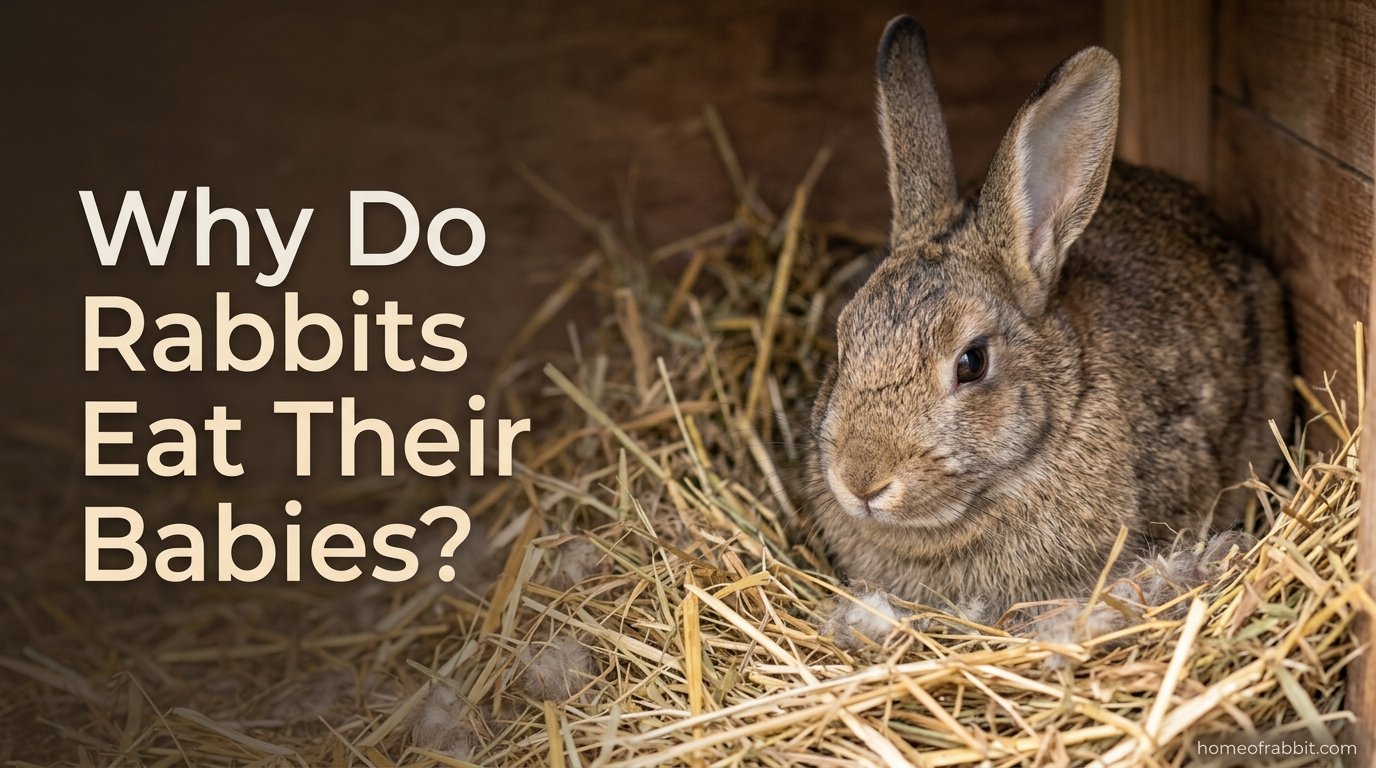
Most of the time, a doe that eats a kit is cleaning up a baby that was already dead or dying. Sometimes, though, a stressed, ill, or inexperienced mother does harm healthy kits. It’s disturbing to see, but it isn’t a sign that your rabbit is “evil,” and it’s often preventable.
This guide covers why it happens, which behaviors only look like neglect, and what to do before and after the litter arrives.
Is it normal for a mother rabbit to eat her kits?
It happens, but it’s not typical, and there’s no reliable published figure for how often. Most does raise their litters without problems.
Two situations are easy to confuse:
- Removing dead kits. This is routine. The Merck Veterinary Manual notes that eating dead young is a natural nest-cleaning instinct. merckvetmanual
- Killing or eating live, healthy kits. This is the real problem. It’s less common and usually points to stress, health, or management issues.
The main reasons a doe eats her babies
Nest-cleaning instinct
In the wild, a dead kit in the nest can attract predators and spread disease. A doe may remove it by eating it. If you find fewer kits than you counted, a stillborn or weak kit may be the explanation rather than anything you did wrong.
Stress and feeling unsafe
Rabbits are prey animals, and the nest is the most vulnerable spot in her territory. Popular vet-reviewed pet sites say a doe who feels threatened may eat her kits to avoid attracting predators. This is a widely repeated explanation among breeders, but it isn’t well proven by formal studies. Likely triggers include:
- Loud noise, dogs, cats, or lots of foot traffic near the hutch
- Moving her or the nest shortly before or after kindling (giving birth)
- Another rabbit in the enclosure
- Frequent handling of the kits
Illness, weak kits, or not enough milk
A doe who is sick, or who can’t make enough milk for a large litter, may stop caring for weaker kits. Breeders commonly report that kits that are deformed, cold, or failing to thrive are the ones she’s most likely to remove.
Inexperience or breeding too young
Breeder and homesteading sources frequently list breeding a doe before she’s fully mature as a risk factor, and first-time mothers are often mentioned. Treat this as experience-based guidance rather than proven fact. Even so, waiting until a doe is fully grown is sound practice.
Diet and water
Pet-care sources often cite low protein as a possible factor. That claim is common but not firmly established. Poor nutrition does make it harder for a doe to recover from birth and produce milk, so feeding her well is cheap insurance. Always keep fresh water available, especially right after kindling.
Normal behavior that looks like neglect
Many first-time owners panic because they never see the doe with her babies. That’s normal.
Does nurse only once or twice a day, and the kits drink for less than three minutes at a time. She stays away the rest of the time, which is how wild does avoid pointing predators to the nest. merckvetmanual
| What you see | Usually normal? |
|---|---|
| Doe rarely sits in the nest box | Yes |
| Kits quiet and bundled in fur most of the day | Yes |
| Doe pulls fur and builds a nest before birth | Yes |
| Eats the placenta after birth | Yes |
| A dead kit disappears | Often, as nest cleaning |
| Kits scattered outside the nest, thin, wrinkled, or cold | No, investigate |
| Doe repeatedly attacks or bites kits | No, call a vet |
| Several healthy, full-bellied kits vanish | No, find the cause |
How to reduce the risk
Before the birth
- Add the nest box on time. Merck advises adding nest boxes 28 to 29 days after breeding, and a doe often pulls fur and builds her nest a day or so before giving birth. If you’re unsure of the due date, a rabbit pregnancy calculator can help you work out when to prepare. merckvetmanual
- Choose a quiet, low-traffic spot. Keep pets and children away from her.
- Make sure she’s mature and healthy before breeding her.
- Feed her well. Give unlimited hay, appropriate pellets, and fresh water through pregnancy and nursing.
- Keep other rabbits out of her space.
After the birth
- Leave her alone for the first day except to count kits and remove any that are clearly dead.
- Do a short daily check once she’s calm. Look for warm, round-bellied kits in the nest. Keep it brief and gentle.
- Remove dead kits promptly, so there’s less for her to deal with.
- Keep noise and activity low, especially around dawn and dusk when she’s likely nursing.
- Keep food and water full so she doesn’t have to leave the nest area for long.
What to do if she has already eaten a kit
- Stay calm and don’t punish her. It won’t teach her anything.
- Check the remaining kits. Look for warmth, full bellies, and normal movement.
- Look for stressors. Think about noise, pets, handling, or other changes.
- Call a rabbit-savvy vet if she’s hurting live kits or seems unwell herself.
- Consider fostering. Merck says kits can be fostered to another doe with a similar-age, smaller litter within the first 3 days, usually by mixing them with her own kits and covering them in her fur. This only works if you have a second nursing doe. merckvetmanual
- If no foster doe is available, kits can be given kitten milk replacer twice a day. Hand-raising newborn rabbits is difficult and often unsuccessful, so ask a vet for guidance first. merckvetmanual
- Plan ahead for future litters. A doe can become pregnant again about 24 hours after giving birth, so separate her from the buck right away unless you want a back-to-back litter. Some sources suggest not breeding her again if it keeps happening after a couple of litters. Treat that as a breeder’s rule of thumb rather than a vet-confirmed threshold. merckvetmanual
Common mistakes
- Assuming she’s neglecting kits because you never see her nurse them
- Handling the kits too often or for too long
- Moving the nest box late in pregnancy or after birth
- Breeding a young or underweight doe
- Ignoring a sick doe because the litter “looks fine”
- Waiting days to call a vet when kits are cold or thin
When to call a vet
Contact a rabbit-savvy or exotics vet if:
- The doe is lethargic, not eating, or has trouble giving birth
- She is attacking live kits repeatedly
- Kits are cold, scattered, or visibly losing weight
- You need help with fostering or hand-feeding
Conclusion
If you’re wondering why rabbits eat their babies, the answer is usually instinct combined with circumstances: nest cleaning, stress, illness, or inexperience. A calm setup, good nutrition, and a doe who’s ready to breed lower the risk, and checking kits briefly each day lets you catch problems early. If it does happen, focus on the surviving kits and the conditions that led to it.
FAQ
Do all mother rabbits eat their babies?
No. Most raise their litters normally. When it happens, it’s often tied to dead or weak kits, stress, or health problems.
Will touching the kits make the mother reject them?
Breeders commonly report that gentle, brief handling doesn’t cause rejection, but I couldn’t confirm this with a veterinary source. Keep checks short and calm, and ask your vet if you’re unsure.
Why does my rabbit never seem to feed her babies?
She probably is. Does nurse only once or twice daily for a few minutes, usually when things are quiet. merckvetmanual
Should I separate the buck before birth?
Many breeders do, to reduce stress and prevent immediate re-breeding. Check with a vet or experienced breeder for your setup.
