
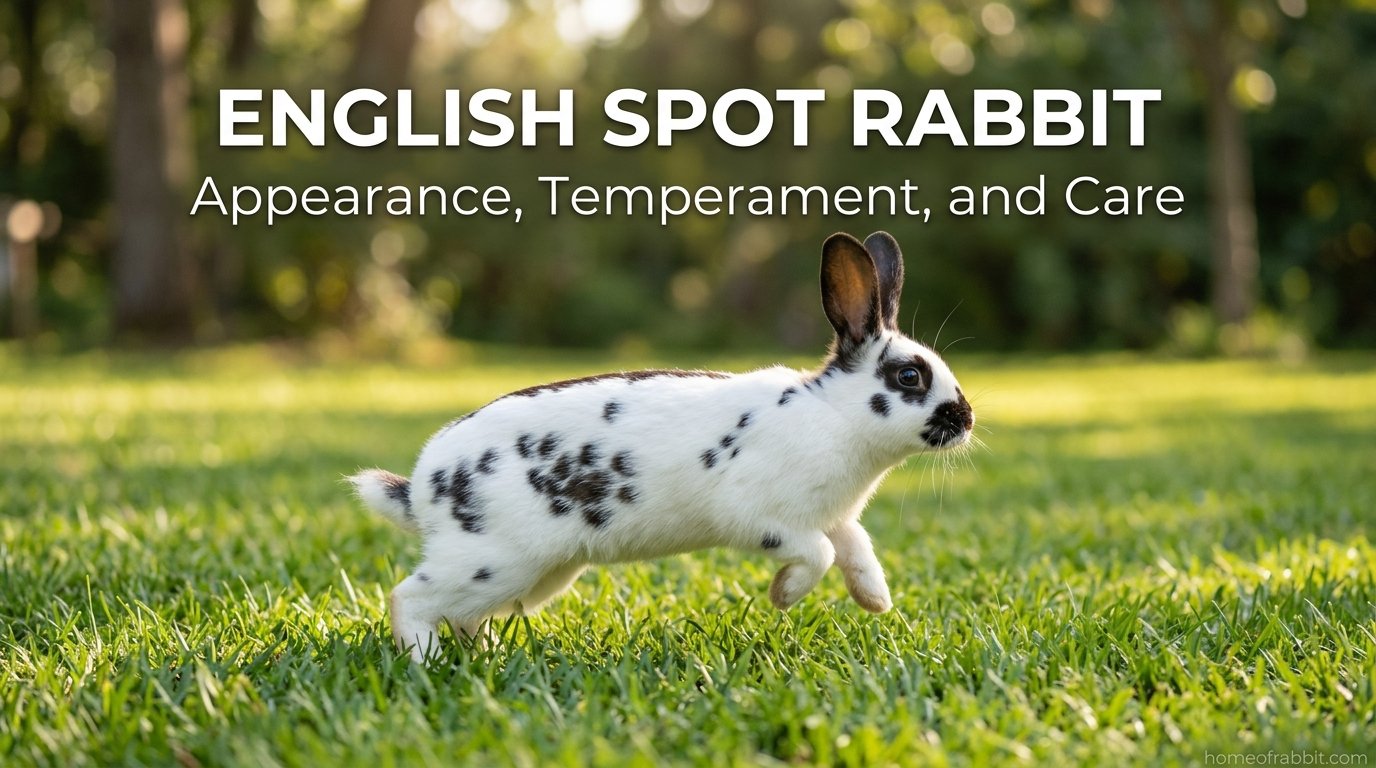
The English Spot rabbit is a small-to-medium, lively breed with a distinctive spotted pattern: a colored nose butterfly, eye circles, cheek spots, colored ears, a line down the spine, and a chain of spots along each side. It is energetic and curious, and it needs far more room to run than many people expect. If you want a calm lap rabbit, this is probably not the breed. If you want an active, good-looking rabbit with plenty of personality, read on.
English Spot rabbit quick facts
| Trait | What to expect |
|---|---|
| Size | Medium-small; roughly 5–8 lb |
| Coat | Short, glossy, easy to groom |
| Markings | Nose butterfly, eye circles, cheek spots, colored ears, spine line, side spots |
| Energy | High |
| Temperament | Alert, curious, playful; can be skittish if not handled gently |
| Typical lifespan | Commonly cited as 5–8 years with good care |
| Best for | Owners with space, time for daily exercise, and an interest in showing or breeding |
Where the breed comes from
The English Spot is an old breed, developed in England in the 1800s and later brought to the United States. It is a recognized breed with the American Rabbit Breeders Association (ARBA). Exact early history varies between sources, so confirm dates and breeding details with the breed club or ARBA before quoting them.
How to recognize an English Spot
The markings are the whole point of this breed. Show judges look for a specific pattern:
- Butterfly: a colored marking over the nose
- Eye circles: colored rings around each eye
- Cheek spots: one spot on each cheek
- Ears: fully colored
- Spine line: a colored stripe running from the ears to the tail
- Side markings: a chain of separate spots along each flank
The body also has an arch: the back curves up from the shoulders and peaks over the hips. This body shape is a defining feature of the breed and is judged along with the spots. The white base coat makes the pattern stand out.
Some rabbits are born with little or no spotting. These are often called “charlies” in the spotted breeds. They can make fine pets but can’t be shown.
English Spot rabbit colors
ARBA recognizes several colors for the breed, commonly including black, blue, chocolate, gold, gray, lilac, and tortoise. The color applies to the markings, while the rest of the coat is white.
Temperament and energy
English Spots are known for being active and curious. They tend to explore, run, and jump more than the average pet rabbit. Many are friendly but not especially cuddly. Individual personality matters more than breed, so spend time with a rabbit before committing.
Some tend to be wary of sudden movement. Handle them gently, approach from the front, and let them come to you. If you’re interested in how bonding works, see our piece on whether rabbits recognize their owners.
Is an English Spot a good pet?
Good fit if you:
- Can offer several hours of supervised out-of-cage time daily
- Enjoy an active, interactive rabbit
- Want a short, easy-care coat
- Might try rabbit shows
Probably not a good fit if you:
- Want a quiet, low-energy rabbit
- Have a small space and no room for a large pen or rabbit-proofed room
- Have very young children who may handle a rabbit roughly
Caring for an English Spot rabbit
Housing. Choose the largest enclosure you can manage and treat it as a base, not the rabbit’s whole world. A large exercise pen or a rabbit-proofed room works well. Use solid flooring or a resting mat to protect the feet, as wire floors can cause sore hocks.
Exercise. Active breeds get bored easily. Provide daily time to run and jump, plus tunnels, cardboard boxes, and chew toys.
Diet. The basics are the same for most rabbits:
- Unlimited hay (such as timothy) as the bulk of the diet
- A measured amount of quality pellets
- Fresh leafy greens daily
- Treats and fruit sparingly
- Fresh water always available
Check portion guidance with the House Rabbit Society or an exotic-pet vet.
Grooming. The short coat needs only a weekly brush, more often during shedding. Check nails, teeth, and ears regularly.
Health. Like all rabbits, English Spots can suffer from dental problems, gut stasis, and parasites. Watch for appetite changes, small or no droppings, drooling, or lethargy. A rabbit that stops eating needs a vet quickly. Find an exotic-savvy vet before you need one. Spaying or neutering is generally recommended for pets; ask your vet.
Choosing a healthy rabbit
- Buy from a breeder who lets you meet the parents and see living conditions.
- Check for clean eyes, nose, and ears, and a dry bottom.
- Make sure the teeth line up and the rabbit eats and moves normally.
- If you want to show, ask the breeder about markings, arch, and show potential.
- Ask about the rabbit’s age, diet, and any health history.
Common mistakes
- Underestimating space needs. A small hutch isn’t enough for an active breed.
- Skimping on hay. Hay supports teeth and digestion.
- Expecting a lap rabbit. Many English Spots prefer to explore.
- Not rabbit-proofing. Cables and furniture legs are tempting.
- Buying only for the spots. Health and temperament matter more than markings.
English Spot rabbit care checklist
- Large enclosure plus daily exercise space
- Solid, comfortable flooring
- Unlimited hay and fresh water
- Measured pellets and daily greens
- Toys, tunnels, and chew items
- Rabbit-proofed play area
- Exotic-pet vet identified
- Weekly grooming and health check
Conclusion
The English Spot rabbit is a striking, energetic breed that rewards owners who can give it space and attention. Its markings are distinctive, its coat is easy to care for, and its personality is lively. If you’re ready for an active rabbit, it can be a rewarding companion or show animal. Meet a few in person, ask plenty of questions, and prepare the space before you bring one home.
FAQ
How big does an English Spot rabbit get?
Typically around 5–8 lb.
How long do English Spot rabbits live?
Commonly cited at about 5–8 years with good care. Diet, housing, and vet care all matter.
Are English Spot rabbits friendly?
Many are friendly and curious, but they are active rather than cuddly. Gentle, consistent handling helps.
Can an English Spot live indoors?
Yes. Indoor housing with a large exercise area is a good option, as long as the space is rabbit-proofed.
Do all English Spots have full markings?
No. Some have reduced or no spotting. These can be good pets but aren’t show quality.
