
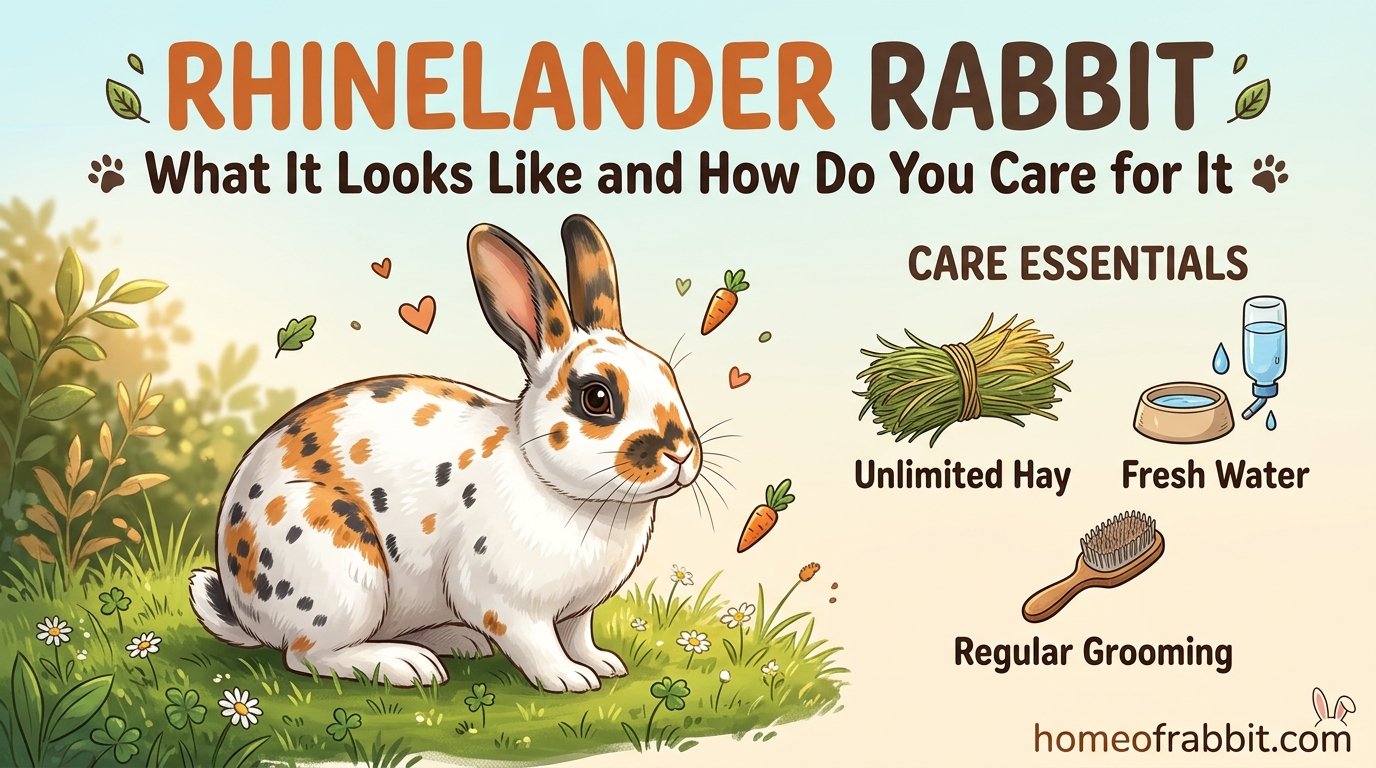
The Rhinelander is a medium-sized, white rabbit with black and bright orange markings, and it is the only tri-colored breed in the American Rabbit Breeders Association (ARBA) standard. It is lively, built more like an athlete than a lap pet, and rare in the United States. Care is the same as for most rabbits: unlimited hay, indoor housing and plenty of daily exercise. The difference is that this breed needs more room to move than most.
Rhinelander rabbit at a glance
| Trait | Details |
|---|---|
| Origin | Germany, first shown in 1902 |
| Adult weight | About 6.5 to 10 lbs (the figure varies by source and standard; confirm against the current ARBA Standard of Perfection) |
| Colors (ARBA) | White with black and orange markings, or white with blue and fawn markings |
| Body type | Arched, “running” type, with light visible under the body |
| Temperament | Active, intelligent, generally docile |
| Rarity | Listed as “Recovering” by The Livestock Conservancy |
What a Rhinelander Rabbit Looks Like
Butterfly markings and colors
The coat is white, marked with black and bright golden orange. The markings are meant to be carried to the skin. The pattern includes:
- A “butterfly” shape on the nose
- Colored ears
- Cheek spots
- A stripe along the spine
- Side markings, with spots that are black on one side of the body and orange on the other in the original foundation animal
In show standards, the color and markings carry equal weight, and the patterns are hard to get right. ARBA judges also look for a head free of stray spots, and more than one stray spot on the head is a disqualification.
A second ARBA-accepted variety is white with blue and fawn markings. It is less commonly seen.
Body shape and size
The Rhinelander has an arched body, so you can see light between the belly and the ground when it sits or moves. It is a medium rabbit, not a giant breed. Weight standards differ slightly between the US and Britain, so ask a breeder what the parents weighed rather than relying on one number.
Rhinelander vs. Checkered Giant
The two are often confused because both are white with dark markings. The easiest ways to tell them apart:
- Colors: A Rhinelander has two marking colors on a white base (black and orange). Checkered Giants carry one marking color (such as black or blue).
- Size: Checkered Giants are larger.
- Pattern: Checkered Giants have a full-length spine line and a different side pattern.
Where the Breed Comes From
Josef Heintz, a postman and rabbit fancier in Grevenbroich, Germany, developed the Rhinelander. He crossed a Japanese (Harlequin) buck with a gray checkered doe. One buck from the litter had the black and orange markings that define the breed. Germany gave the breed a standard in 1905 under the name Rheinische Schecke.
The breed reached the US in the early 20th century, then faded because the color pattern was difficult to breed consistently. By 1932 no Rhinelanders remained in the US. Imports in 1972 revived it, the Rhinelander Rabbit Club of America formed in 1974, and ARBA recognized the breed again in 1975.
Temperament and Activity Level
The Livestock Conservancy describes the breed as active, docile and intelligent. It is one of the five “running breeds” in the ARBA Standard of Perfection, so expect a rabbit that wants to move, explore and use its legs. Show owners train them to run and pose on the show table.
What that means at home:
- Expect energy and curiosity. A bored Rhinelander will chew and dig.
- Temperament varies by individual. Meet the rabbit and its parents before you commit.
- Like most rabbits, they usually prefer having all four feet on the ground, so handle gently and support their hindquarters.
How to Care for a Rhinelander Rabbit
No breed-specific medical or feeding guidelines exist beyond standard rabbit care, so the recommendations below follow general guidance from rabbit welfare organizations such as the House Rabbit Society. Your exotic-animal vet is the final word on your rabbit’s needs.
Diet
A balanced rabbit diet has three parts:
- Unlimited grass hay. Hay is the most important food, because the fiber keeps the digestive tract and teeth healthy. Timothy and other grass hays suit adults. Alfalfa is richer in calcium and protein and is generally reserved for young rabbits.
- Fresh leafy greens. Offer a variety daily, washed and fresh.
- A measured amount of plain pellets. Rabbit organizations suggest limiting pellets for adults. Recommendations vary, from about 1/8 cup per 5 lbs of body weight to about 1/8 to 1/2 cup daily, so ask your vet what suits your rabbit. Avoid muesli-style mixes with seeds and colorful treats.
Treat fruit and sugary vegetables like carrots as occasional extras. Fresh water should always be available.
Housing
- Rabbit welfare groups recommend keeping pet rabbits indoors, which protects against predators, parasites and extreme temperatures.
- An exercise pen (x-pen) or a large enclosure works better than a small pet-store cage.
- Avoid wire floors, which can injure feet.
- Provide a litter box with hay, and a hiding space.
- Keep the space clean. Our guide on keeping a rabbit hutch clean covers cleaning routines that apply to most setups.
Exercise
This is where a running breed differs most. House Rabbit Society guidance calls for at least four hours of out-of-enclosure time per day, and some rescue guides say more. For a Rhinelander, treat that as the minimum. Give it a safe, rabbit-proofed area where it can run, with tunnels, boxes and chew toys.
Grooming and health
- Brush regularly with a soft brush, especially during shedding. Their short, dense coat is easy to maintain.
- Check nails, teeth and ears routinely.
- Find a rabbit-savvy vet before you need one, and plan annual checkups.
- Spaying or neutering is recommended by rabbit organizations for pets and reduces hormone-driven behaviors.
- Emergency sign: If a rabbit stops eating or producing droppings for 12 hours or longer, or has watery diarrhea, get veterinary care immediately.
Common Mistakes
- Too little space. An active rabbit confined to a small cage becomes bored and destructive.
- Too many pellets, too little hay. It leads to obesity and poor gut health.
- Choosing for looks alone. The pattern is striking, but temperament and health matter more for a pet.
- Skipping the rabbit-savvy vet. Many general vets lack rabbit experience.
- Expecting a lap rabbit. Many rabbits tolerate cuddling poorly, and this breed is more of a runner.
Is a Rhinelander Right for You?
Good fit if you:
- Can offer hours of daily exercise time and a rabbit-proofed space
- Like an alert, active animal
- Are patient with finding a breeder
Probably not if you:
- Want a quiet, low-maintenance pet
- Need a rabbit for very young children without close adult supervision
- Have only a small cage and little floor space
Finding a Rhinelander Rabbit
The breed is uncommon in the US. Start with the Rhinelander Rabbit Club of America or ARBA to find breeders. Ask to see the parents, ask about health and temperament, and expect a wait. One breed guide lists prices around $40 to $60, but treat that as unverified, since price varies by breeder, location and pedigree.
Also check local rabbit rescues. Rabbits of many breeds are often available for adoption.
Quick Care Checklist
- Unlimited grass hay, every day
- Fresh leafy greens daily
- Plain pellets in a measured amount
- Fresh water
- Indoor, solid-floored enclosure or pen
- At least four hours of exercise outside the enclosure daily
- Litter box with hay
- Rabbit-savvy vet identified
- Spay/neuter discussed with vet
Conclusion
The Rhinelander rabbit stands out for its black and orange butterfly markings and its energetic personality. Care is straightforward but demands commitment: lots of hay, a safe indoor space and generous exercise time. If you can provide that, and you are willing to look for a reputable breeder, it can be a rewarding and unusual companion.
FAQ
How big does a Rhinelander rabbit get? Usually around 6.5 to 10 pounds as an adult, depending on the standard and the individual rabbit.
What colors do Rhinelander rabbits come in? ARBA accepts two varieties: white with black and orange markings, and white with blue and fawn markings.
Are Rhinelander rabbits good pets? They can be, for owners who want an active, intelligent rabbit and can give it plenty of space and exercise. They are not ideal for people wanting a calm lap pet.
Are Rhinelander rabbits rare? Yes. The Livestock Conservancy lists the breed as “Recovering,” and breeders are few.
How long do Rhinelander rabbits live? No reliable breed-specific figure was verified for this article. Ask a breeder or an exotic-animal vet, and check before publishing a number.
