
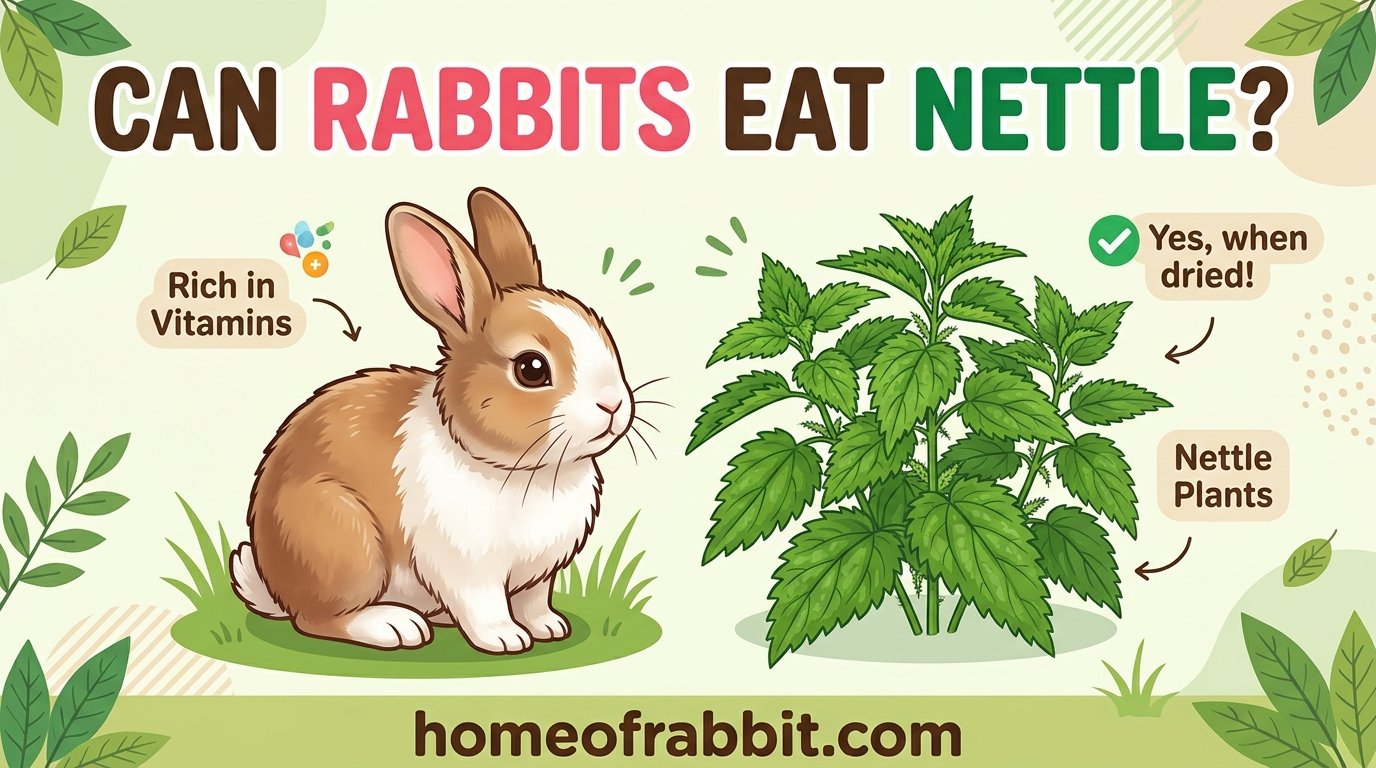
Yes, rabbits can eat nettle. Common stinging nettle (Urtica dioica) is widely listed by rabbit keepers as a safe wild green, and the leaves, stems and flowers are all considered edible. Dead nettle is also generally regarded as safe.
The real risks are not the nettle itself. They are mistaking a toxic plant for nettle, picking from sprayed or polluted spots, and feeding too much too fast. This guide covers how to avoid all three.
Which nettles are safe for rabbits?
“Nettle” is a name shared by several unrelated plants, and one of them is poisonous. Here is how they compare.
| Plant | Latin name | Safe for rabbits? | How to recognize it |
|---|---|---|---|
| Stinging nettle | Urtica dioica | Yes, in moderation | Toothed leaves growing in opposite pairs; stings bare skin |
| Purple dead nettle | Lamium purpureum | Generally yes | Soft, fuzzy, purplish top leaves; no sting; belongs to the mint family |
| Horse nettle (Carolina horsenettle, bull nettle) | Solanum carolinense | No, toxic | Alternate leaves, sharp prickles on stems, star-shaped purple or white flowers, yellow berries |
Horse nettle is a nightshade relative and contains solanine, a toxic compound found in the whole plant. It is common across much of the eastern and central US, so US foragers should take the lookalike warning seriously. If you cannot identify a plant with confidence, leave it out.
Does the sting hurt rabbits?
Rabbit keepers generally report that rabbits eat stinging nettle without seeming to notice the sting. That is anecdotal rather than something confirmed by veterinary research, so treat it as a common observation, not a guarantee.
Your hands are another matter. Wear gloves when picking and handling fresh nettle. Many keepers also wilt or dry the leaves first, which takes the sting out and makes them easier to handle.
Fresh or dried nettle
Both are used by rabbit keepers.
- Fresh: Counts as one of your rabbit’s daily leafy greens. Wash it well and let it wilt a little before serving if you want to reduce the sting.
- Dried: Leaves dry well, so some keepers store them for winter. Dry them in a well-ventilated spot until fully crisp, and discard anything damp or moldy.
One note for breeders: farm studies have fed nettle hay to meat rabbits as a small share of coarse fodder. That research is about production feeding, not pet diets, so don’t use it to set quantities for a house rabbit.
How much nettle can a rabbit eat?
I could not find a nettle-specific serving size from a veterinary or rabbit-welfare organization, so treat any number you see online as a rough guide. What is well established is the overall pattern:
- Unlimited grass hay should make up most of the diet.
- The House Rabbit Society recommends roughly 1 packed cup of leafy greens per 2 pounds of body weight per day, spread across at least three different types.
- New foods should be introduced slowly.
In practice, that means nettle should be one green in a rotation, not the whole salad. For a first try, offer a few leaves alongside the greens your rabbit already eats, then watch droppings and appetite for a day or two before offering more.
How to forage and prepare nettle safely
- Pick the right spot. Avoid roadsides, sprayed lawns, and areas where dogs or wild animals toilet. Pesticides and herbicides are the biggest hidden risk of foraging.
- Identify the plant. Check for opposite, toothed leaves, and compare against the table above. Use a field guide or a reliable plant ID app if unsure.
- Gloves on. Pick the tender tops and leaves.
- Wash thoroughly. Rinse as you would any fresh green.
- Wilt or dry. Leave leaves to wilt for a few hours, or hang them to dry fully.
- Serve a small portion. Mix with familiar greens and keep hay available at all times.
Common mistakes
- Assuming every plant called “nettle” is safe
- Picking from a verge or a lawn treated with weedkiller
- Making nettle a large share of the daily greens in one go
- Storing damp dried nettle, where mold can develop
- Offering several new foods on the same day, which makes it impossible to tell what upset your rabbit
Signs something is wrong
Soft or loose droppings, a drop in appetite, or a rabbit that seems bloated or lethargic after trying a new food should prompt you to stop feeding it. A rabbit that stops eating or stops producing droppings needs an exotics vet promptly, because gut slowdown can become serious fast. If you suspect your rabbit ate horse nettle or another toxic plant, call a vet right away and bring a sample of the plant.
Quick checklist
- Plant identified as stinging nettle or dead nettle, not horse nettle
- Picked away from roads, sprays, and animal waste
- Washed and wilted or dried
- Small first portion, mixed with familiar greens
- Hay still available at all times
- Droppings and appetite checked over the next day or two
The bottom line
So, can rabbits eat nettle? Yes. Stinging nettle and dead nettle can be a free, varied addition to a rabbit’s diet when they are correctly identified, cleanly sourced, and fed in moderation. If you are expanding your rabbit’s menu beyond greens, our guide on whether rabbits can eat oats covers another common question. For the basics of a balanced rabbit diet, see the House Rabbit Society’s care guidance.
FAQ
Can rabbits eat stinging nettle raw? Yes. Keepers commonly feed it fresh, usually washed and often wilted first. Wear gloves when handling it.
Can baby rabbits eat nettle? I could not verify age-specific guidance. Ask a vet before offering new greens to young rabbits, as their digestion is more sensitive.
Is nettle good for rabbits nutritionally? It is a leafy plant commonly used as forage, and some animal-feed studies have used nettle hay. I did not find a verified nutrient breakdown specific to pet rabbits, so describe it as a variety green rather than making health claims.
Can rabbits eat nettle tea? Some sites mention it, but I found no authoritative support. Fresh water and hay are better priorities.
Are horse nettle and stinging nettle the same? No. Horse nettle is a nightshade relative containing solanine and is toxic. Stinging nettle is a different plant.
