
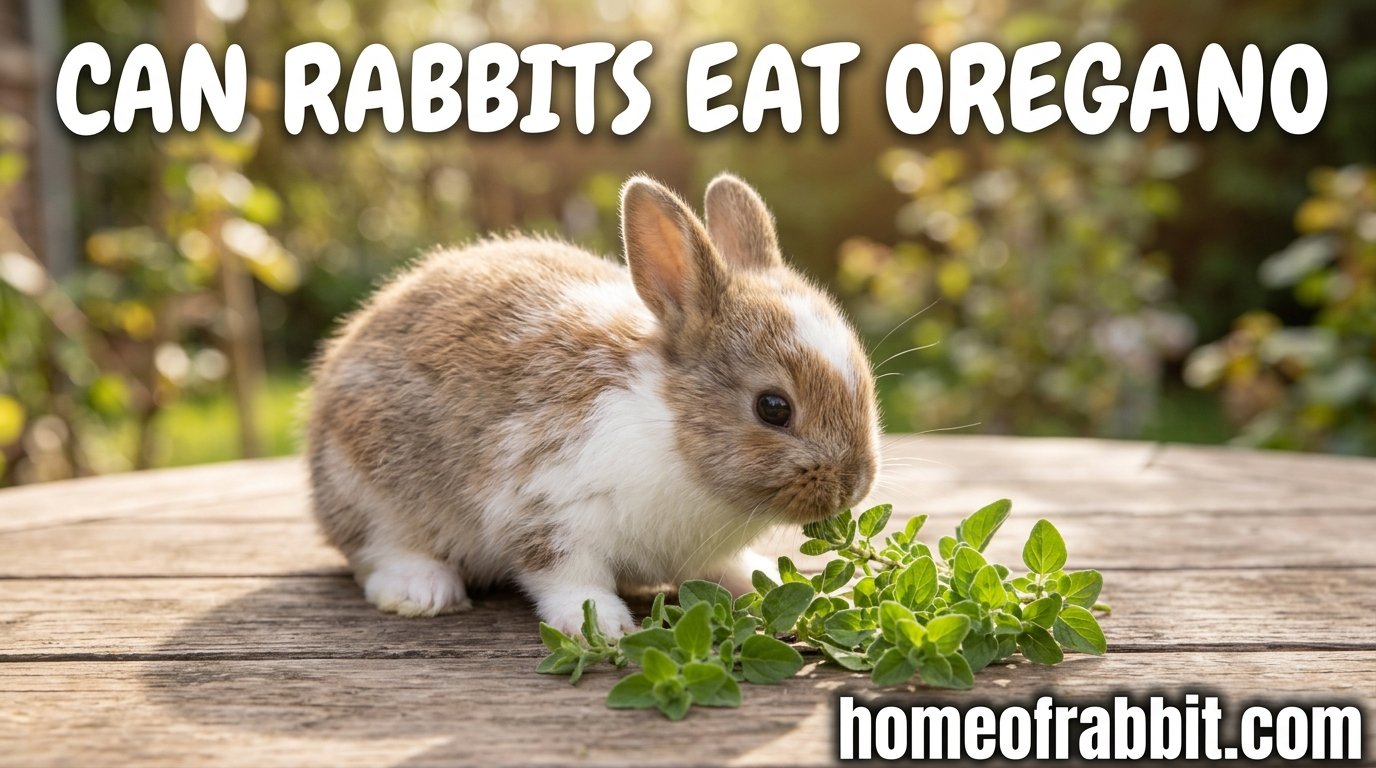
Yes, rabbits can eat oregano. It is on the herb lists published by veterinary and rabbit-care sources, and most healthy rabbits can nibble a few leaves without trouble. The catch is that oregano is a flavoring-type extra, not a staple. It should sit on top of a diet built mainly on hay, introduced slowly, and offered in small amounts.
If you want to know exactly how much to give and what to watch for, read on.
Is oregano safe for rabbits?
For a healthy adult rabbit, oregano is generally considered safe. The Royal Veterinary College’s rabbit feeding guidelines list oregano among the herbs rabbits can eat, and note that herbs often have powerful tastes that rabbits may need time to get used to. Pet-care publishers such as Chewy’s education pages also list it as a rabbit-safe herb.
Two things are worth knowing:
- Safe does not mean unlimited. Rabbit digestive systems are built for high-fiber, low-fat food. A strong, aromatic herb is a small extra, not a meal.
- Not every rabbit likes it. Oregano has a strong smell and taste. Some rabbits dive in; others walk away. A refusal is normal and not a problem.
Does oregano have health benefits for rabbits?
You will see websites claim oregano helps with inflammation, arthritis, or energy. I could not find solid veterinary evidence for those claims in rabbits, so treat them as unproven. The honest benefit is simpler: variety and enrichment. A new smell and flavor gives your rabbit something to investigate, and herbs add variety alongside the leafy greens in the House Rabbit Society’s recommended diet.
How much oregano can a rabbit eat?
I could not find an official, vet-published serving size for oregano specifically, so the guidance below is a cautious practical approach, not a rule from a named authority.
- First time: one or two small sprigs (a few leaves), offered on their own with their normal food.
- Once tolerated: a small sprig or two as part of a mixed bowl of greens, a few times a week at most.
- Overall limit: think of herbs as one ingredient in the “fresh food” part of the diet, not a large portion of it.
For context, the House Rabbit Society recommends that a variety of leafy greens make up about 10-15% of a rabbit’s diet, alongside roughly 80% hay and about 10% pellets, and it advises going slowly when introducing new foods. Oregano belongs inside that small greens-and-herbs slice, not on top of it.
Smaller rabbits and rabbits with sensitive stomachs should start with even less.
Fresh vs. dried oregano
Fresh oregano is the better choice. It is plain, washable, and easy to portion. Leaves and thin stems are fine to offer.
Dried oregano is more concentrated by weight, so it is easy to overdo. Some blog sources recommend fresh over dried for rabbits, but I did not find an authoritative source on the reason, so use this simple rule: if you offer dried, check the ingredient list and keep it to a pinch mixed into other food, not a spoonful. Skip any dried “seasoning blend,” which may contain salt, garlic, onion, or other ingredients not meant for rabbits.
| Form | Good for rabbits? | Notes |
|---|---|---|
| Fresh leaves | Yes, in small amounts | Wash first; best default |
| Thin fresh stems | Yes, in small amounts | Fine if the rabbit chews them |
| Plain dried oregano | Use sparingly | Concentrated; only a pinch |
| Seasoning blends | No | May include onion, garlic, salt |
| Oregano essential oil | No | Not a food; see FAQ |
How to introduce oregano step by step
Rabbit guts do best with consistency, so even safe foods should be added gradually. Iowa State’s veterinary diagnostic lab advises changing diets and introducing new items slowly, over a period of several days, and watching stool carefully. The House Rabbit Society makes the same point about new greens.
- Pick a calm day. Start when your rabbit is eating and pooping normally. Do not introduce anything new when they are unwell or recovering.
- Wash the oregano. Rinse fresh leaves and shake off excess water. Skip anything grown with pesticides or bought from a source you are unsure about.
- Offer a tiny amount. One or two small sprigs, alongside their normal hay and greens.
- Add only one new food at a time. If you start oregano the same day as a new vegetable, you will not know which one caused a problem.
- Watch for 24 to 48 hours. Look at appetite, energy, and droppings.
- Increase slowly. If everything is normal, you can include it in a mixed greens bowl now and then.
Signs your rabbit is not tolerating it
- Soft or mushy droppings, or diarrhea
- Fewer droppings than usual or smaller droppings
- Bloated or gassy belly, teeth grinding, or hunching
- Refusing food or hay
Stop offering oregano if you see any of these. If your rabbit stops eating or stops pooping, treat it as urgent and call an exotic-pet vet. Rabbits can decline quickly when their gut slows down.
Common mistakes
- Treating herbs as a main food. Hay is the foundation. Herbs are a small extra.
- Offering too much at once. Strongly flavored foods are easy to overfeed because they seem “healthy.”
- Giving oregano oil or supplements. These are concentrated and not the same as a leaf.
- Feeding spice blends. Pizza seasoning, Italian seasoning, and similar mixes often contain other ingredients.
- Changing several foods at once. This makes it impossible to find the cause of a stomach upset.
- Skipping the wash. Store-bought herbs and garden plants can carry dirt or residue.
When to skip oregano
Hold off, or ask your vet first, if your rabbit:
- is under about 12 weeks old (the House Rabbit Society advises waiting until then before introducing fresh vegetables and greens)
- has had recent soft stools, gut slowdown, or is on antibiotics or recovering from illness
- has a medical condition that requires a restricted diet
- simply dislikes it, which is fine, since many other safe herbs and greens are available
Oregano compared with other common herbs
The RVC guidelines list oregano alongside basil, coriander (cilantro), dill, mint, parsley, and rosemary as herbs rabbits can have, and the Chewy rabbit-care pages list a similar group.
| Herb | Listed as rabbit-safe? | Practical note |
|---|---|---|
| Oregano | Yes | Strong flavor; start small |
| Basil | Yes | Strong aroma; a few leaves are plenty |
| Mint | Yes | Often popular with rabbits |
| Dill | Yes | Soft and easy to offer |
| Rosemary | Yes | Some rabbits refuse it at first |
| Parsley | Yes | Do not overfeed; some sources flag oxalates, so rotate rather than feeding it daily |
A variety rotation is better than the same herb every day. The House Rabbit Society advises avoiding a mono diet and offering a wide variety of greens.
If you are working out what else belongs in the fresh-food bowl, our guide on whether rabbits can eat cabbage covers another common question.
Quick oregano checklist
- Hay is available at all times
- Rabbit is healthy and eating normally
- Oregano is fresh, washed, and plain
- Starting with one or two small sprigs
- Only one new food this week
- Checking droppings and appetite for the next day or two
- Stop if stools soften or appetite drops
Conclusion
So, can rabbits eat oregano? Yes. Most healthy adult rabbits can have a few fresh leaves now and then, as long as it is introduced slowly, washed, and kept as a small extra on top of plenty of hay. If your rabbit ignores it or has a stomach reaction, simply drop it and try another herb from the safe list.
FAQ
Can rabbits eat dried oregano?
A pinch of plain dried oregano mixed into other food is unlikely to be a problem for a healthy rabbit, but it is concentrated and easy to overdo. Fresh is the easier choice. Avoid blends with salt, garlic, or onion.
Can baby rabbits eat oregano?
Not while they are very young. The House Rabbit Society advises waiting until about 12 weeks before introducing fresh greens, and starting with simple leafy greens. Ask your vet before adding herbs to a young rabbit’s diet.
Is oregano oil safe for rabbits?
I could not verify that oregano essential oil is safe for rabbits, and it is not a normal food. Do not give it unless a veterinarian who knows rabbits has specifically advised it.
Can rabbits eat oregano from the garden?
Yes, if it is the plain herb and has not been treated with pesticides or other chemicals. Wash it first. Garden herbs are also sometimes described as plants wild rabbits tend to avoid, but reports are mixed and that is a gardening question rather than a feeding one.
Can meat or farm rabbits eat oregano?
The same basic diet rules apply: hay first, new foods slowly. A study titled “Dietary Supplementation of Oregano and Sage Dried Leaves on Performances and Meat Quality of Rabbits” exists, but I have not been able to verify its findings, so check the original paper before making any claim about growth or meat quality.
What herbs should rabbits avoid?
The common culinary herbs listed above are generally fine, but some plants are toxic to rabbits. If you are not sure about a plant, check a rabbit-specific safe and toxic plant list, such as the one linked from the House Rabbit Society, before offering it.
