
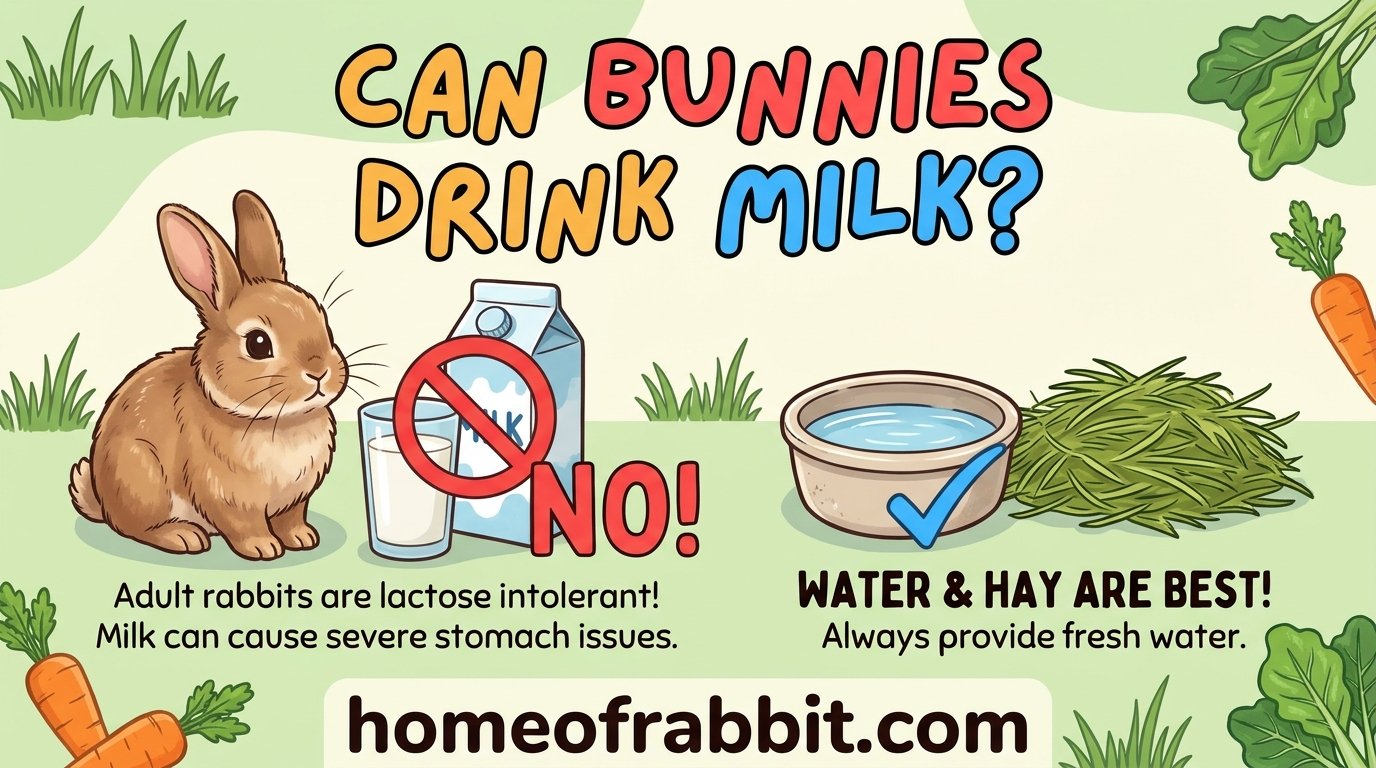
No, bunnies should not drink cow’s milk, whether they’re newborns or adults. Baby rabbits need their mother’s milk, and if she can’t provide it, the usual stopgaps are kitten milk replacer (KMR) or plain goat’s milk, ideally with a rabbit-savvy vet guiding you. Adult rabbits don’t need milk at all.
If you’re looking at a hungry baby bunny right now, skip to the section on what orphaned baby bunnies can drink instead.
The Short Answer by Age
| Situation | Can they drink milk? |
|---|---|
| Newborn kit with a healthy mother | Mother’s milk only |
| Orphaned domestic kit | Not cow’s milk. KMR or plain goat’s milk as a stopgap, plus a vet call |
| Orphaned wild baby rabbit | Contact a wildlife rehabilitator first. KMR or goat’s milk only until you reach one |
| Adult rabbit | No. Hay, pellets, greens and water |
Why Cow’s Milk Isn’t Right for Bunnies
Rabbit milk and cow’s milk are different foods. A veterinarian answering an owner’s question on Petco’s pet-care site said low-fat cow’s milk doesn’t have the right nutrition profile for baby mammals and recommended kitten milk replacer instead (Jenna Beyer, DVM, as published by Petco).
Several rabbit-care sources also warn that kits can get digestive trouble from cow’s milk, and that rabbits can’t vomit, so a bad reaction has nowhere to go. Digestive upset in a tiny kit can turn serious fast.
The specific reasons often listed online (lactose, hormones, antibiotic residues) come mostly from pet blogs rather than veterinary or university sources. VERIFY those individual claims before repeating them. The safe takeaway doesn’t depend on them: cow’s milk isn’t formulated for rabbits, and better stopgaps exist.
How Mother Rabbits Feed Their Babies
This surprises many people: a mother rabbit usually nurses her litter just once a day, often in the middle of the night, and only for a few minutes. Rabbit milk is very rich, which is why such short feedings are enough.
Because of that, a doe who is never seen nursing is not necessarily neglecting her babies. Rabbit.org Foundation suggests checking the kits in the morning: round bellies and warm bodies mean she is feeding them.
See our guide on how often baby bunnies eat for what a normal feeding schedule looks like before you decide the babies are orphaned.
What Can Orphaned Baby Bunnies Drink Instead?
Truly orphaned kits are rare, but it happens: a doe may be sick, may refuse her litter, or may not return to a wild nest.
Domestic kits
For domestic orphans, Rabbit.org Foundation’s orphan-feeding guide recommends KMR (kitten milk replacer, sold at most pet stores) or regular goat’s milk from the grocery carton. It describes these as stopgaps and urges you to get a rabbit-savvy vet involved.
Key points from that guide:
- Domestic kits with closed eyes are fed roughly 2 to 3 times a day, with feedings gradually reduced until weaning at about 6 weeks.
- Overfeeding is described as a leading cause of death in orphans, causing fatal intestinal disease. Bloat is commonly linked to feeding too often.
- Eyes open around 10 days. From then, hay, plain pellets and water can be introduced.
- Young kits that can’t yet eliminate on their own need gentle stimulation with a warm, damp cotton ball after each feeding.
The guide also gives daily formula amounts by weight and age (for example, up to about 5 cc a day for a newborn). Because tiny differences matter, confirm amounts with a rabbit vet based on your kit’s actual weight rather than copying a chart.
Wild baby rabbits
If you found the nest outdoors, the best step is to call a wildlife rehabilitator. Rabbit.org Foundation notes that home-raising wild bunnies leads to more deaths, and that wild mothers also feed only about once a night, so a “deserted” nest often isn’t. Find help through the National Wildlife Rehabilitators Association directory or your local humane society.
If you must feed a wild baby until you reach a rehabber, the same source says to use KMR kitten formula, or plain goat’s milk if KMR isn’t available, and not puppy formula or Esbilac.
Safe feeding technique
- Use a 3 cc syringe or eyedropper.
- Hold the kit upright, never on its back.
- Aim the syringe toward the side or bottom of the mouth so milk doesn’t go down the windpipe.
- Offer only a few drops at first if the kit is stressed.
- Stop when the kit stops taking it. Don’t push more in.
Common mistakes
- Using cow’s milk because it’s already in the fridge.
- Feeding too often or too much because the kit “seems hungry.”
- Feeding a kit lying on its back.
- Using puppy formula for a wild rabbit.
- Assuming the mother has abandoned the litter without checking the bellies.
- Raising a wild baby at home instead of calling a rehabber.
Can Adult Rabbits Drink Milk?
No. Adult rabbit diets are built around grass hay, with some greens and a limited amount of pellets. Rabbit-care sources broadly advise against milk and other dairy for adults because they can’t digest it well, and report diarrhea and gut upset. Most of those claims come from pet-care sites, so VERIFY with Rabbit.org Foundation’s diet pages or your vet if you want a primary source to cite.
A rabbit that has eaten dairy and has soft stool, a bloated belly, or has stopped eating or pooping needs prompt veterinary attention. Not eating is an emergency in rabbits.
What adult rabbits should drink: fresh water, available all the time.
When to Call a Vet
Contact a rabbit-savvy or exotic vet the same day if:
- A baby bunny won’t take formula, seems limp or cold, or has a hard, swollen belly.
- A kit has diarrhea or you suspect it aspirated formula (coughing, bubbles at the nose).
- Babies haven’t been fed and you’re unsure whether the doe is nursing.
- A rabbit of any age has had milk or dairy and then stops eating or pooping.
Rabbit.org Foundation lists rabbit-savvy vets at rabbit.org/care/rabbit-vets-near-me.
Quick Checklist
- Is the mother present? Check bellies and warmth before assuming the kits are orphaned.
- Wild nest? Call a wildlife rehabilitator first.
- Truly orphaned domestic kit? KMR or plain goat’s milk, not cow’s milk, and call a vet.
- Feed upright, small amounts, and don’t overfeed.
- Adult rabbit? Water and hay, no dairy.
Conclusion
So, can bunnies drink milk? Not cow’s milk, at any age. Baby rabbits need their mother’s milk, and an orphan needs a carefully measured stopgap and expert help. Adult rabbits don’t need milk at all. When in doubt, call a rabbit-savvy vet before you feed anything.
FAQ
Can baby bunnies drink cow’s milk? No. It isn’t suitable for rabbits, and kitten milk replacer or plain goat’s milk are the commonly recommended stopgaps for orphans.
Can bunnies drink goat milk? Plain goat’s milk from the carton is listed by Rabbit.org Foundation as an option for orphaned kits until proper care is arranged. It isn’t a long-term plan.
How often do baby rabbits nurse? About once a day, usually overnight, for both domestic and wild mothers.
When can baby bunnies drink water? Around the time their eyes open (about 10 days), they can be introduced to water along with hay and pellets, per Rabbit.org Foundation.
Can bunnies have plant milks like almond or oat? Adult rabbits don’t need any milk, so skip them.
