
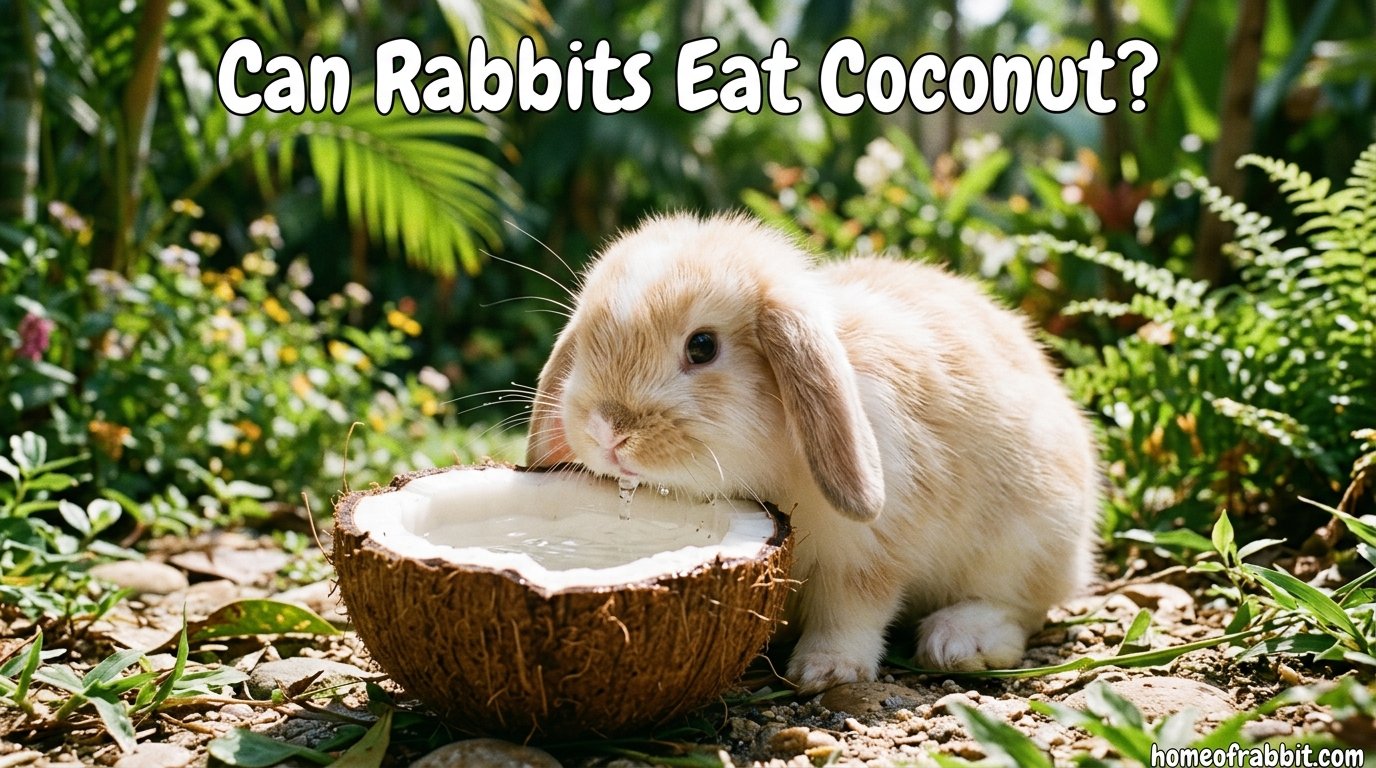
Short answer: a rabbit can eat coconut without being poisoned, but it isn’t a good food for them. It is very fatty, it adds nothing a rabbit needs, and safer treats are easy to find. If your healthy adult rabbit swiped a flake or two, there’s no need to panic. As a regular snack, though, coconut should stay off the menu.
Why coconut isn’t a good fit for rabbits
Rabbits are built for fiber, not fat. Their digestive system runs on grass hay. The House Rabbit Society notes that the National Research Council recommends domestic rabbits get no more than about 1.5% of their calories from fat. rabbit
Fresh coconut flesh is far above that. USDA data puts raw coconut meat at roughly a third fat by weight, mostly saturated. Check the exact figures on USDA FoodData Central before you publish or quote them.
It doesn’t fill a nutritional gap. A healthy diet is built on unlimited hay, fresh leafy vegetables, and treats given only sparingly. Rabbit-savvy sources agree that treats are unnecessary when the rabbit already gets hay, leafy greens, and a measured portion of good pellets. Coconut isn’t on the usual lists of recommended rabbit foods. That absence isn’t a formal ban, but it is a reason to be cautious. houserabbitwisconsinhrs
New, rich foods can upset the gut. Rabbits have sensitive digestion. A sudden fatty food can lead to soft stool or diarrhea, and any change in droppings deserves attention.
Rabbits can’t judge this for you. Rabbits love sweet and rich foods, so a rabbit that gobbles coconut isn’t telling you it’s good for them.
Coconut forms compared
| Form | Verdict | Why |
|---|---|---|
| Fresh flesh (meat) | Avoid; at most a tiny taste | High in fat |
| Dried or shredded | Avoid | Concentrated fat, often sweetened |
| Coconut milk or cream | Avoid | Very fatty |
| Coconut water | Not needed; a few sips at most | Low in fat but sugary and adds nothing; check the label for added sugar |
| Coconut oil | Avoid | Pure fat; not a supplement for rabbits |
| Husk or shell | Skip | Hard and sharp pieces; unknown treatment or mold; opinions online conflict |
On husks: some sites call them safe chew material and others warn against them. I couldn’t find a reliable veterinary source either way. Untreated willow, apple twigs, and cardboard are safer chew options.
If you still want to offer a taste
A tiny taste is unlikely to harm a healthy adult, but it carries more risk than benefit. If you decide to offer it, be conservative. These steps are practical guidance rather than a published standard.
- Check your rabbit’s situation. Skip coconut entirely for babies, rabbits that are overweight or have a history of diarrhea or gut stasis, and rabbits being treated for liver or digestive problems.
- Use plain, fresh flesh only. No sweetened flakes, no candy, no baked goods, and no coconut-flavored products.
- Keep it small. A piece about the size of a fingernail, once, is plenty.
- Wait before offering anything else new. Watch for 24 hours. Healthy droppings should stay round and firm, and your rabbit should keep eating hay.
- Don’t make it a habit. There’s no benefit that justifies a routine.
Common mistakes
- Treating coconut as “healthy” because it’s natural. Natural and rabbit-appropriate aren’t the same thing.
- Offering shredded coconut from a baking bag. It is often sweetened and sticky.
- Using coconut oil on food or fur as a remedy. There’s no good evidence it helps rabbits, and rabbits groom themselves, so anything on the fur gets swallowed.
- Giving several new foods on the same day. If something upsets your rabbit, you won’t know which food caused it.
- Stacking coconut on top of other treats. Fruit, carrots, and coconut together add up fast.
What to do if your rabbit already ate coconut
A small nibble from a healthy adult is usually fine. Remove the rest and watch your rabbit.
Call a rabbit-savvy vet promptly if you see:
- fewer or smaller droppings, or none
- diarrhea or mushy stool
- a bloated or hard belly
- refusing hay or pellets
- lethargy or hunching in a corner
Rabbits can go downhill quickly when their gut slows, so don’t wait it out. If your rabbit ate a large amount, call your vet even if it seems fine.
Better treat choices
If you want to give your rabbit something special, pick treats built around the diet they already thrive on:
- a small piece of fresh herb, such as cilantro or basil
- a leaf of romaine or a small handful of a mixed leafy salad
- a small slice of apple (no seeds) or a few blueberries, given sparingly because of the sugar
- hay-based treats without added sugar or seeds
Treats can also build trust. If you’re curious how rabbits come to know their people, do rabbits recognize their owners covers it, and hand-feeding a safe herb leaf is a good place to start. Rabbit organizations also advise introducing any new vegetable slowly. The House Rabbit Society’s guide to treat foods explains why vegetables, hay, and chewable wood beat most store-bought treats. houserabbit
The bottom line
So, can a rabbit eat coconut? A tiny taste of plain flesh probably won’t hurt a healthy adult. It isn’t worth offering, though, because the fat is high and the benefit is nil. Hay, leafy greens, and a few rabbit-safe treats are a better use of your rabbit’s appetite.
FAQ
Can baby rabbits eat coconut?
No. Young rabbits have delicate digestion and need a consistent diet of hay, rabbit-appropriate pellets, and milk if still nursing. Ask a vet before introducing anything new.
Is coconut oil good for rabbit fur or skin?
I found no reliable evidence that it helps. Rabbits groom constantly, so oil on the fur gets swallowed. Ask a vet about skin problems instead.
Can rabbits drink coconut water?
It isn’t necessary. Fresh water and hydrating greens do the job. If your rabbit ever gets a sip, make sure it’s unsweetened.
Can rabbits eat coconut shells or husks?
I’d skip them. Sources disagree, and hard or sharp fragments, mold, and chemical treatment are real concerns. Untreated wood chews are safer.
