
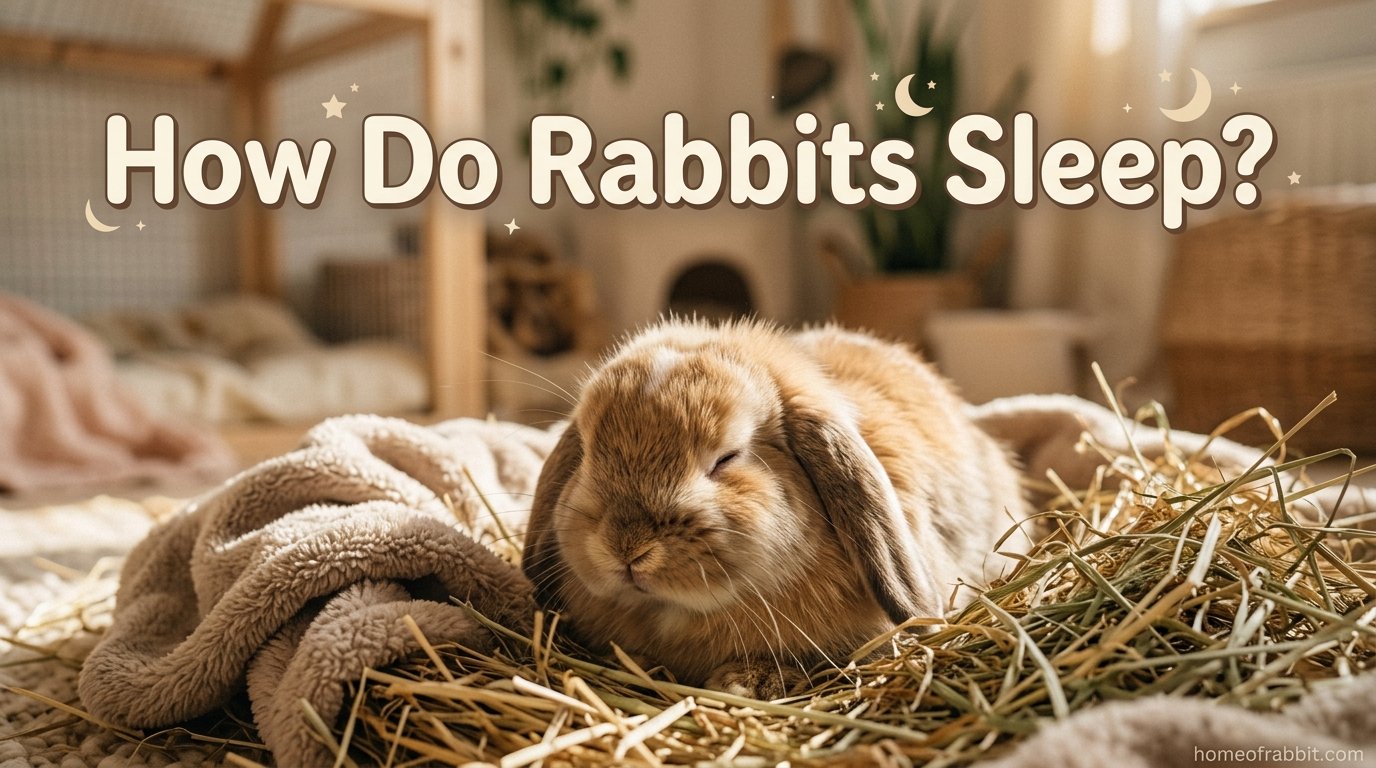
Rabbits sleep in many short stretches spread across the day and night, not in one long block like people. Their eyes are often open or half open, even when they are resting deeply. They doze in a loaf position, stretched out, or flopped on their side, and they wake instantly at a sudden noise.
That surprises many owners, so here is how rabbit sleep works, what is normal, and what is not.
When Do Rabbits Sleep?
Rabbits are crepuscular, not nocturnal. All rabbits, wild and domestic, are most active around twilight, near sunrise and sunset. This is why a rabbit may look sleepy at midday and lively at 6 a.m. or 7 p.m. pdsa
Crepuscular does not mean “only active at dawn and dusk.” Most rabbits have smaller bursts of activity throughout the day and night. So a rabbit zooming around at 2 a.m. is not unusual. pdsa
In practice, a typical day looks like this:
- Active and playful around dawn and dusk
- Napping through midday and much of the night
- Short bursts of activity in between
How Many Hours Do Rabbits Sleep?
Sources disagree on a single number, so treat it as a range. One UK veterinary charity says most rabbits sleep about six to eight hours in 24, and a relaxed house rabbit may reach ten. Another veterinary resource puts it at about eight to twelve hours a day. pdsapangovet
A reasonable working range is roughly 6 to 12 hours per day, broken into many naps. Individual rabbits vary with age, health, temperature, and how safe they feel. No authoritative figure for “the right amount” was found, so use your own rabbit’s normal pattern as the baseline.
Do Rabbits Sleep With Their Eyes Open?
Yes, often. Rabbits may sleep with their eyes fully open, half closed, or fully closed. Some rabbits close their eyes completely, some never do, and even usually closed-eye sleepers will keep them open if they don’t feel safe. rabbitcaretips
The most commonly given reason is predator awareness. Rabbits are prey animals, so staying visually alert while resting is a useful safety habit.
A rabbit that is relaxed and comfortable is more likely to close its eyes. A rabbit that sleeps with its eyes open is not necessarily stressed. Look at its overall body language, not just its eyes.
Rabbit Sleeping Positions and What They Mean
| Position | What it looks like | What it usually means |
|---|---|---|
| Loaf | Tucked in, paws under the body, upright | Resting but ready to bolt. Eyes are often open. |
| Lying on belly, legs stretched out | Flat on the stomach, back legs extended | Comfortable and fairly relaxed |
| Side flop | Fully on one side, legs out | Feels secure and relaxed, and may be cooling off on a warm day pangovet |
A side flop can look alarming, as if the rabbit has collapsed. If it happens after a binky or a meal, a rabbit that wakes easily and moves normally is just very comfortable.
Light Sleep, Deep Sleep, and Twitching
Rabbit sleep alternates between alert resting and deeper sleep. During deeper sleep a rabbit may breathe irregularly and its eyes may move rapidly, similar to REM sleep in people, but a rabbit can still wake in an instant and be fully alert. pangovet
You may also see:
- Twitching whiskers or ears
- Small leg or body jerks
- Soft, deep breathing
Occasional twitching or jerking during sleep is generally nothing to worry about. Whether rabbits “dream” is not something to state as fact, so that part is best left open. pangovet
Where Do Rabbits Like to Sleep?
Rabbits prefer a spot that feels enclosed and sheltered, a bit like a burrow. Veterinary guidance recommends housing with at least two compartments, one dark, quiet, and draught-free for sleeping, and another for eating and relaxing. For indoor rabbits, one US rescue group recommends keeping housing away from heaters and loud TVs or sound equipment. pdsasandiegorabbits
Quick sleep-area checklist
- A quiet, dim hiding or sleeping area
- Dry, clean bedding. Soft hay works well, and a hay calculator helps you plan how much to stock, see the rabbit hay calculator
- Away from drafts, direct sun, and heat sources
- Out of the busiest part of the house
- Space to retreat and stretch out
- Pairs or groups can take turns watching while others rest. With a companion rabbit, one can keep watch while the other sleeps. petsradar
Common Mistakes That Disrupt Rabbit Sleep
- Constant noise and foot traffic. A cage next to a TV or door keeps a rabbit on edge.
- No hiding place. An open pen with nowhere to retreat makes deep rest harder.
- Forcing a “bedtime.” Rabbits will not match a human sleep schedule. Plan play and feeding around dawn and dusk instead.
- Handling a sleeping rabbit. Waking a rabbit suddenly can frighten it.
- Poor heat control. Rabbits are sensitive to heat, so keep sleeping areas cool and ventilated. Ask a rabbit-savvy vet for temperature limits that fit your climate and breed.
When Sleep Behavior Is a Warning Sign
Most sleep oddities are normal, but get veterinary advice if your rabbit:
- Barely moves even when disturbed
- Is lethargic and not eating or not passing droppings
- Has labored or noisy breathing while resting
- Suddenly sleeps far more or far less than usual
- Hides constantly and no longer comes out at its usual active times
A rabbit that stops eating can deteriorate quickly, so treat that as urgent and contact a vet experienced with rabbits.
Conclusion
So, how do rabbits sleep? In short naps, mostly through the day and night, with extra activity at dawn and dusk. They stay light and alert, often with eyes open, and relax fully only when they feel safe. Learn your own rabbit’s normal habits, give it a quiet, sheltered place to rest, and call a vet if the pattern changes sharply.
FAQ
Are rabbits nocturnal?
No. They are crepuscular, meaning most active around dawn and dusk. Many rodents and deer share this pattern. pdsa
Do rabbits sleep at night?
Yes, but not in one long stretch. They nap through the night and have short active periods, which is why some rabbits are noisy in the early morning.
How can I tell if my rabbit is asleep or just resting?
Look for slow breathing, a relaxed body, and lack of reaction to small sounds. An open-eyed rabbit may still be asleep. If unsure, watch for a few minutes.
Do baby rabbits sleep more than adults?
Likely, but figures vary by source. One consumer site claims up to 20 hours for very young rabbits. This needs verification before publishing, so confirm with a veterinary or university source.
Is it normal for a rabbit to flop on its side?
Usually yes. It tends to signal comfort and security.
