
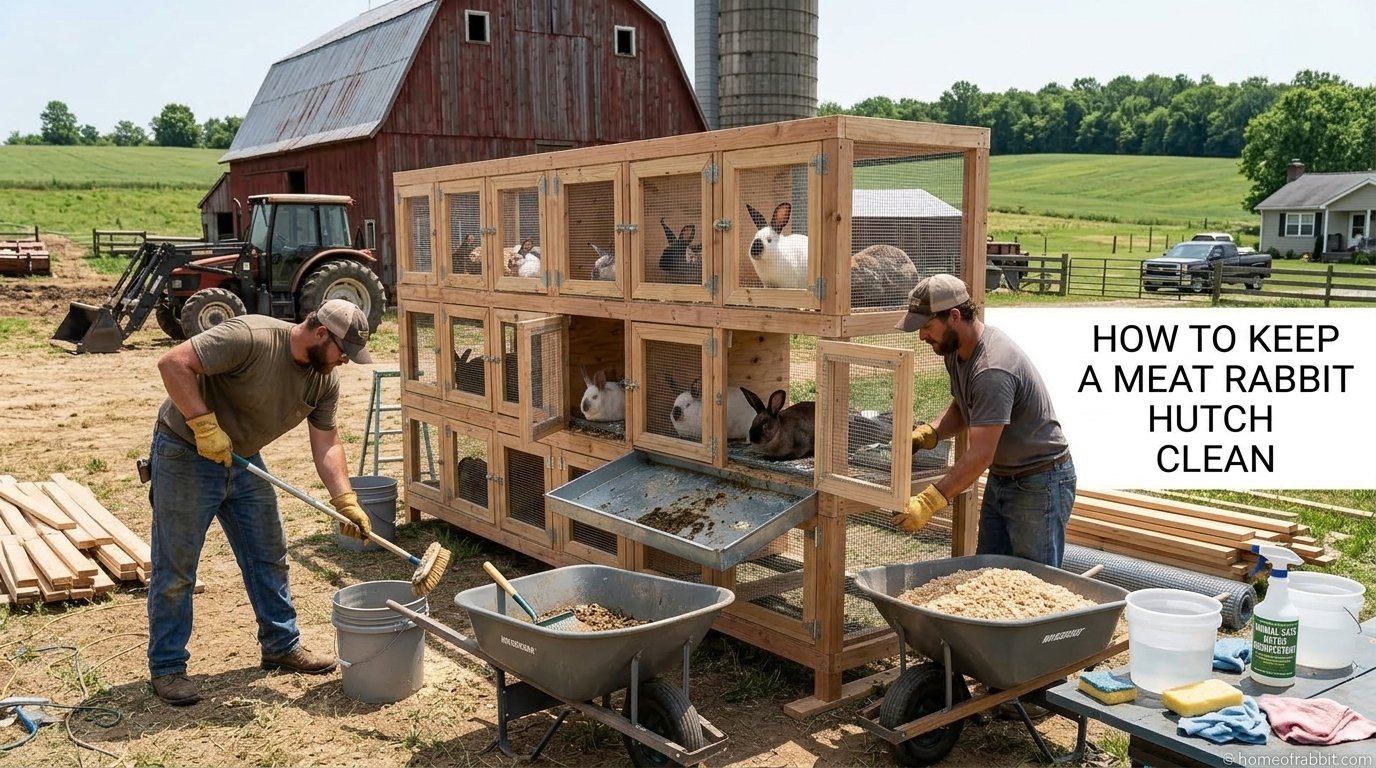
The short answer: remove droppings and wet spots every day or two, wash feeders and water crocks often, and do a full scrape-wash-disinfect-dry cycle between litters and whenever buildup shows. Keep everything dry, because moisture is what turns a hutch smelly and unhealthy.
If you’re wondering how to keep a meat rabbit hutch clean without it taking over your week, this routine is built for small rabbitries and backyard setups.
Why a Clean Hutch Matters
Cleanliness in a rabbitry is a health issue first and a smell issue second. Merck Veterinary Manual notes that droppings that pile up produce toxic levels of ammonia, which can irritate the respiratory tract and contribute to infection. It also states that poor sanitation leads to disease and deaths, so cleaning and sanitizing must be done regularly. merckvetmanualmerckvetmanual
For meat rabbits, that matters even more. Sick or stressed does, and kits raised in dirty nest boxes, don’t grow or breed the way you need them to.
A Realistic Cleaning Schedule
Merck notes that cleaning frequency depends on the type of cage and the number of rabbits. The schedule below is a practical starting point, not a rule. Adjust it to your climate, housing style, and herd size. merckvetmanual
| Task | How often | Notes |
|---|---|---|
| Check water and refill, rinse crock or bottle | Daily | Dirty water is a common problem |
| Remove wet or soiled spots, check for stuck droppings | Daily to every other day | Rabbits usually pick one corner as a toilet |
| Empty or scrape dropping trays or the ground below | Weekly (more often in heat or with many rabbits) | Don’t let it pile up under the hutch |
| Wash feeders and hay racks | Weekly | Remove old feed and dust |
| Wire brush the floor and scrub urine scale | Every 1–2 weeks | Frequency depends on how fast scale builds |
| Full deep clean and disinfect | Between litters and when a new rabbit moves in | Merck recommends a complete cleaning before housing new rabbits |
| Nest box clean and disinfect | After every litter, again before reuse | Merck advises disinfecting after cleaning and again just before use |
How to Deep Clean a Rabbit Hutch, Step by Step
- Move the rabbits. Put them in a clean, secure holding cage or a safe spot. Never wash a hutch with a rabbit inside.
- Remove everything. Take out feeders, crocks, hay racks, nest boxes, and any bedding.
- Scrape and sweep. Remove droppings, hair, spilled feed, and debris before using any water. Disinfectant works poorly on top of dirt.
- Scrub. Use a stiff brush and soapy water on floors, walls, and corners. Use a wire brush on wire floors.
- Disinfect. Apply your chosen disinfectant and let it sit for the contact time on its label.
- Rinse well. Residue can irritate rabbits.
- Dry completely. Let the hutch air-dry in sun and wind if possible. Don’t put rabbits back into a damp hutch.
- Refill and return. Add clean feeders, water, and bedding or nesting material, then put the rabbit back.
Cleaning Wire Floors and Removing Urine Scale
Wire floors let droppings fall through, which keeps daily cleaning light. Urine, though, leaves a crusty, whitish mineral buildup on wire and nearby surfaces over time.
- Use a wire brush to knock off dried buildup.
- Many breeders burn off hair and dust from wire with a handheld torch. If you do, keep it away from wood, hay, nesting material, and plastic, and never use it with rabbits present. If your hutch frame or tray is flammable, skip this method.
- White vinegar can help loosen mineral buildup. Rinse and dry afterward.
- Check floors for sharp wire ends and rust. A rough or damaged floor causes foot problems, not just cleaning headaches.
Keeping Nest Boxes Clean
Kits are the most vulnerable animals in your rabbitry. Merck advises making nest boxes removable so you can clean and disinfect between litters, and disinfecting again just before they go back into the cage. merckvetmanual
- Remove soiled nesting material promptly, and check for wet spots.
- After the litter leaves the box, scrub, disinfect, rinse, and dry it fully before storing.
- Wood boxes absorb moisture and are harder to sanitize than metal or plastic. If you’re building your own, our guide on how to make a nesting box for rabbits covers materials and design.
What to Use to Disinfect (and What to Avoid)
- Soap and hot water handle most routine cleaning.
- Diluted bleach is a common disinfectant in rabbitries. The correct dilution and contact time depend on the product, so follow the label and verify the ratio before using it.
- Never mix bleach with vinegar or ammonia-based cleaners. The combinations can release dangerous fumes.
- Avoid strongly scented cleaners and aerosol sprays. Rabbits have sensitive respiratory systems.
- Rinse and dry thoroughly, whatever you use.
If you’re unsure which disinfectant suits your setup, ask your veterinarian or a local cooperative extension office.
How to Control Odor and Moisture
A hutch that smells strongly of ammonia is already past due for cleaning, and the smell is a warning sign for your rabbits’ lungs as well as a nuisance.
- Keep air moving. Good ventilation without cold drafts matters most.
- Fix leaks. Check water bottles, crocks, and roofs for drips.
- Clean the area under the hutch. If droppings and urine pile up beneath wire floors, the smell builds there.
- Watch summer heat and humidity. Wet, warm conditions encourage bacteria and flies.
- Compost droppings. Rabbit manure is popular in gardens. If you use it on food crops, composting it first is a sensible precaution.
Common Mistakes
- Skipping the scrape step and spraying disinfectant on dirty surfaces
- Putting rabbits back into a damp hutch
- Cleaning only the cage and ignoring the area underneath
- Using wood nest boxes for years without replacing or sealing them
- Leaving old feed and wet hay in feeders and racks
- Waiting until the smell is obvious
- Forgetting water crocks and bottles, where algae and slime can form
Quick Cleaning Checklist
Daily:
- Fresh water; check bottles and crocks
- Spot-clean wet areas and stuck droppings
- Look for sick or off-feed rabbits
Weekly:
- Scrape trays or the area under hutches
- Wash feeders and hay racks
- Check for urine scale and wire damage
Between litters or new rabbits:
- Empty, scrape, scrub, disinfect, rinse, dry
- Clean and disinfect nest boxes twice (after the litter and before reuse)
Conclusion
Keeping a meat rabbit hutch clean comes down to consistency. Do small daily checks, scrape and scrub weekly, and run a full disinfect cycle between litters. Keep everything dry, and your rabbits will stay healthier and your rabbitry easier to manage.
FAQ
How often should I clean a meat rabbit hutch?
Spot-clean daily or every other day, and deep clean between litters or when you notice buildup. Frequency depends on housing type and rabbit count.
Can I use bleach to clean a rabbit hutch?
Many breeders do, but follow the product label for dilution and contact time, rinse thoroughly, and dry completely. Never mix it with vinegar or ammonia products.
How do I get rid of the ammonia smell in a rabbit hutch?
Remove droppings and urine more often, scrub urine scale, improve ventilation, and make sure the hutch and the ground beneath it stay dry.
Do wire-bottom hutches stay cleaner?
They reduce daily cleaning because droppings fall through, but you still need to clean trays or the ground underneath and brush off urine scale.
Can I wash the hutch with the rabbit inside?
No. Move the rabbit first to avoid stress, injury, and exposure to cleaning products.

1 Comment
Pingback: What Determines the Cost of Rabbit Meat? - homeofrabbit