
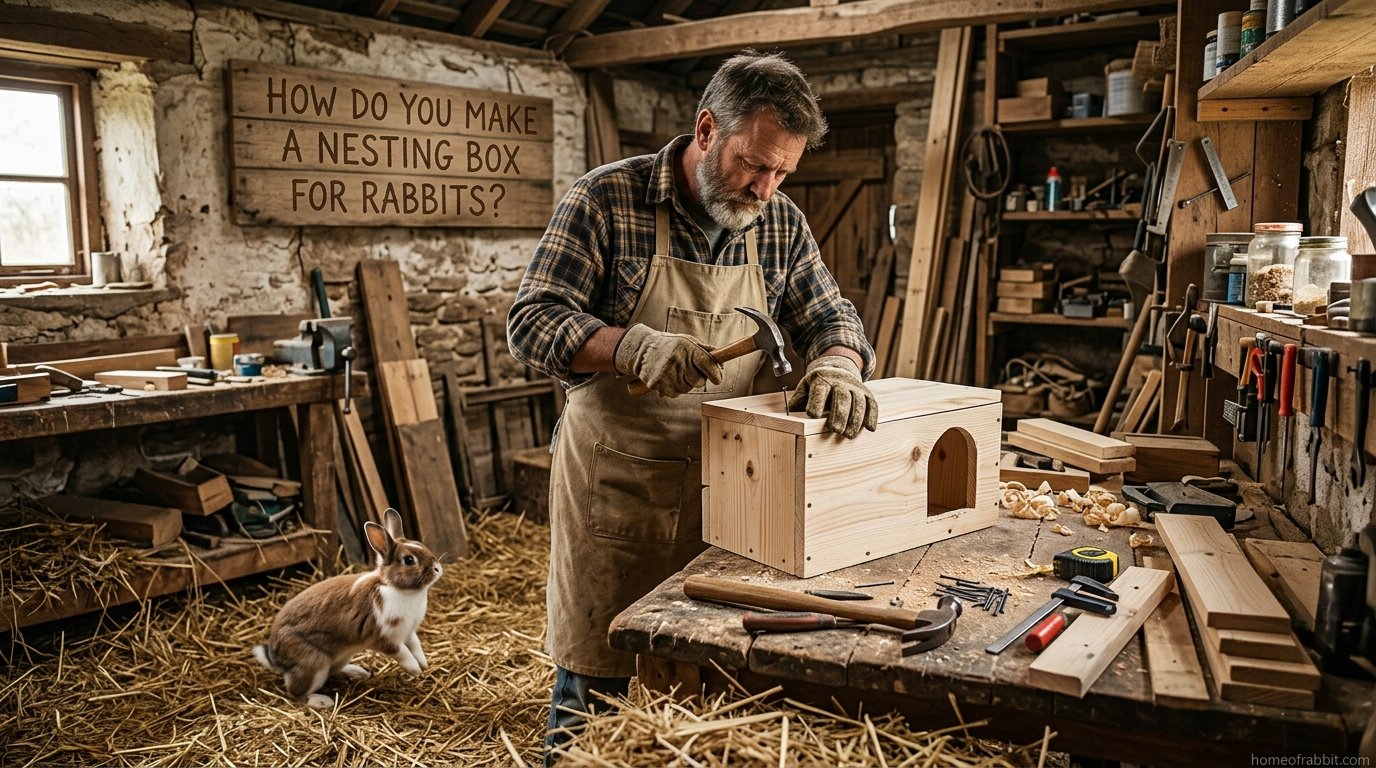
If your doe is due to kindle soon, the short answer is this: build or buy a box roughly 1.5 times her body length, with solid sides high enough to hold in bedding and kits but low enough for her to hop over, no top needed for most home setups, and get it into her cage about 3 days before her due date — day 28 of a typical 31-day pregnancy. Line it with a couple inches of untreated pine or aspen shavings, then pack it with soft hay or straw so she can dig in and rearrange it herself.
That’s the version you need in a hurry. The rest of this guide covers sizing by breed, materials to use and avoid, a simple step-by-step build, and the timing and management details that actually decide whether the kits survive their first week.
Why the Nest Box Matters So Much
Kits are born blind, deaf, and completely without fur. They can’t regulate their own body temperature for the first week or two of life, so they depend entirely on being bundled together in a warm, insulated space. A nest box exists to recreate the burrow a wild doe would dig — small enough to hold heat, contained enough to keep kits from being kicked out of the nest and separated from their littermates, and lined with enough material that the doe can build the kind of dense, fur-insulated nest that keeps a litter alive overnight.
Without a box, does will often kindle directly on the wire or wood floor of the cage. Kits born this way can scatter, get chilled within minutes, and die — a loss that’s almost always preventable with a box that’s ready on time.
What Size Nest Box Does a Rabbit Need?
Size depends on your rabbit’s breed and adult weight. The general rule breeders use: the box needs to be big enough for the doe to comfortably turn around and lie flat inside it, but not so roomy that kits can wander to a corner away from the body heat of the litter.
| Rabbit size | Example breeds | Approximate box size (L x W x H) |
|---|---|---|
| Small (2–5 lbs) | Netherland Dwarf, Mini Lop, Dutch, Polish | 14″ x 9″ x 8″ |
| Medium (6–10 lbs) | Rex, English/French Angora, American Sable | 16″ x 10″ x 8″ |
| Large (9–12 lbs) | New Zealand, Californian | 18–20″ x 11–12″ x 9″ |
| Giant (12+ lbs) | Flemish Giant, Checkered Giant | 20–23″ x 12″ x 10–12″ |
These figures are drawn from university extension building plans and veterinary housing guidance, and they’re meant as a starting range rather than an exact spec — a bit of extra room is fine, but oversized boxes tend to get soiled in one corner and used for nesting in another, which defeats the purpose. If you’re unsure which category your rabbit falls into, size up slightly rather than down. A large rabbit cannot kindle comfortably in a small box, but a small rabbit does fine in a slightly larger one.
Front-entry height matters too. A common design uses a lower front wall (around 5–7 inches) that the doe can step over easily, and a taller back wall (9–12 inches) to keep bedding and kits from being kicked out the back.
Materials: What to Build a Nest Box From
You have three realistic options, each with trade-offs.
Untreated wood (plywood or pine board) This is the traditional choice and what most extension building plans use.
- Pros: sturdy, holds up over multiple litters, good insulation.
- Cons: absorbs urine and moisture over time, needs regular cleaning and occasional replacement, more effort to build.
- Only use untreated, unpainted wood. Treated lumber and most paints/sealants can be toxic to newborn kits.
Plastic storage bins or purpose-made plastic nest boxes
- Pros: easy to clean and disinfect, doesn’t absorb moisture or odor, widely available.
- Cons: less insulating than wood in cold weather, can crack if a doe is a hard chewer, may need a cut-down entry added by hand.
Heavy corrugated cardboard box
- Pros: cheap, works fine in an emergency or for a single litter, disposable.
- Cons: not durable, absorbs moisture quickly, needs replacing between litters, not a long-term solution.
Whichever material you choose, avoid metal boxes with no liner — bare metal conducts heat away from kits and can become dangerously cold in an unheated barn or shed.
What Bedding to Use (and What to Avoid)
Layer the bedding rather than using just one material:
- Base layer: A cut-to-fit piece of cardboard or a thin layer of pine or aspen shavings (about 1–2 inches) on the bottom of the box for absorbency.
- Nesting layer: Fill the rest of the box generously with soft grass hay or clean straw. Leave some extra piled outside or beside the box too — most does will carry mouthfuls in themselves and build the nest exactly how they want it.
Avoid:
- Cedar shavings — the aromatic oils are linked to respiratory irritation in small mammals.
- Newspaper — retains moisture and can transfer ink onto kits.
- Fabric, towels, or loose string/yarn — kits can become tangled or a doe’s nails can catch in the loops.
- Scented or clumping bedding of any kind.
Close to kindling, the doe will pull fur from her own dewlap and belly and work it into the hay to insulate the nest further. This is normal, healthy behavior — not a sign of stress — and it’s one of the clearest signs that kindling is close. Some first-time does pull very little fur; if the nest looks thin, you can supplement gently with a little extra hay, but avoid handling the nest more than necessary.
Step-by-Step: How to Build a Simple Wooden Nest Box
This follows the basic approach used in university extension building plans, sized for a small-to-medium breed. Adjust dimensions using the size table above for your breed.
- Cut the base. A rectangle roughly 14–15″ x 9″ for small/medium breeds (or 20″ x 11–12″ for large/giant breeds), from ½”–¾” plywood.
- Cut the two side panels to match the base’s length, at your target back-wall height (around 9″ for small/medium, up to 12″ for giant breeds).
- Cut the front and back panels. Make the front lower (5–7″) so the doe can step over it easily, and the back full height to contain bedding.
- Assemble the box using wood screws or finishing nails, square at the corners. A staple gun works for adding a piece of hardware cloth or wire mesh to the floor if you want extra drainage and airflow — common in warmer climates.
- Sand any rough edges or exposed screw points so nothing can scratch the doe or catch a kit’s skin.
- Skip the lid for most home setups. An open-top box is easier to monitor and lets the doe come and go freely. A hinged lid is only really necessary in outdoor hutches where you need extra weatherproofing or protection from other animals.
- Line the box with shavings and hay as described above, then place it in the cage.
If you don’t have time or tools to build one, a heavy-duty cardboard box with one side cut down to a low entry, or a plastic storage bin with a doorway cut into one end, will do the job for a single litter.
When to Put the Nest Box In
Timing is one of the most common places new breeders get it wrong in either direction.
- Too early, and the doe may treat the box as a litter box before her nesting instinct kicks in, soiling the bedding.
- Too late, and she may kindle on the bare cage floor overnight, which risks chilled or scattered kits.
The generally recommended window is around day 28 of gestation, or roughly 3 days before the expected due date, since rabbit gestation averages 31 days and typically ranges from 28 to 33 days. Watch for nesting behavior — restlessness, pulling fur, carrying hay, digging at the corner of the cage — as your cue that kindling is close, and have the box in place before those signs appear rather than after.
If you bred your doe on a known date, count forward 28 days to know when to add the box. If the breeding date is uncertain — for example, with an unplanned litter — get a box in as soon as you suspect pregnancy rather than waiting for certainty.
Where to Place the Box in the Cage
Put the box in the quietest, most sheltered corner of the cage or hutch, away from the food and water dishes and away from wherever the rabbit normally goes to the bathroom. If the doe chooses a different corner to nest in on her own, it’s usually easier to move the box to her chosen spot (and move her nesting material into it) than to try to convince her to switch corners.
Keep the surrounding area calm in the days around kindling. Loud noises, unfamiliar handling, or the presence of a dog or cat nearby can stress a doe enough to disrupt nesting or, in some cases, cause her to neglect the litter.
Common Mistakes to Avoid
- Using a box that’s too large. It feels generous, but kits can spread out and lose body heat, and does are more likely to use one corner as a toilet.
- Skipping the shavings layer and using loose hay directly on a wood or wire floor, which soaks through and leaves kits sitting in a damp nest.
- Putting the box in too early without checking on it, so the doe has already soiled it by the time she’s ready to kindle.
- Disturbing the nest too much. Frequent handling of newborn kits or excessive rearranging of the nest in the first few days can stress the doe. A quick daily check for warmth and movement is enough; you don’t need to unpack the nest each time.
- Reusing a dirty box between litters. Clean and disinfect the box after each use to reduce the risk of disease being passed to the next litter.
- Using cedar shavings or scented bedding, which can irritate a newborn’s respiratory system.
Quick Checklist Before Kindling
- [ ] Box sized appropriately for your rabbit’s breed/weight
- [ ] Built from untreated wood, food-safe plastic, or sturdy cardboard
- [ ] Base layer of pine or aspen shavings (1–2 inches)
- [ ] Packed generously with hay or straw, with extra available nearby
- [ ] No cedar shavings, newspaper, fabric, or loose string
- [ ] Front wall low enough for the doe to step over easily
- [ ] Placed in a quiet, draft-free corner away from food/water and the litter area
- [ ] In the cage by around day 28 of gestation
- [ ] Cleaned and disinfected if reused from a previous litter
After Kindling: What to Check
Once the doe has kindled, do a brief, calm check of the nest — ideally later in the day rather than immediately, to avoid disturbing her right after birth. Look for:
- All kits gathered together in the nest, not scattered around the cage
- Kits that look round-bellied (a sign they’re nursing) rather than wrinkled and thin
- No stillborn or deceased kits left in the nest, which should be removed
- The nest still adequately insulated with fur and hay
Leave the nest box in place for roughly 3–4 weeks as the kits grow, removing it once they’re mobile enough to climb in and out on their own and no longer need the concentrated warmth of a tight nest — sooner in hot weather, a little later if it’s cold.
Conclusion
A rabbit nest box doesn’t need to be fancy — plywood, plastic, or even a well-built cardboard box all work — but it does need to be the right size, made from safe materials, and in place at the right time. Get those three things right, add clean bedding your doe can burrow into, and you’ve covered the part of kindling that’s actually within your control. The rest, for the most part, comes down to letting the doe do what rabbits have done in burrows for thousands of years.
FAQ
How many days before kindling should I put in the nest box? Around 3 days before the due date, which is typically day 28 of a 31-day pregnancy. Watch for nesting behavior as a backup signal in case your breeding date isn’t exact.
Can I use a cardboard box as a rabbit nest box? Yes, for a single litter or in an emergency. Cut a low entry into one side, line it the same way you would a wooden box, and plan to replace it before the next litter since cardboard breaks down once it’s wet or chewed.
What bedding is safe for a rabbit nest box? Pine or aspen shavings as a base layer, topped with plenty of soft hay or clean straw. Avoid cedar shavings, newspaper, and any loose fabric or string.
Does the nest box need a lid? Not usually, for an indoor cage. An open top makes it easier to check on the litter and lets the doe move freely. A lid is mainly useful for outdoor hutches that need extra weatherproofing.
What if my rabbit won’t use the nest box? Some does build a nest in a different corner of the cage instead. If that happens, move the box (with her nesting material) to the spot she’s chosen rather than trying to relocate her to the box.

6 Comments
Pingback: Best Breed for Meat Rabbits: How to Choose the Right One - homeofrabbit
Pingback: When Do Baby Bunnies Get Fur? A Day-by-Day Timeline - homeofrabbit
Pingback: How Much Does It Cost to Build a Rabbitry? - homeofrabbit
Pingback: How to Keep a Meat Rabbit Hutch Clean - homeofrabbit
Pingback: How Often Do Baby Bunnies Eat? What's Normal (and What Isn't) - homeofrabbit
Pingback: Can Brother and Sister Rabbits Breed? What Every Owner Should Know - homeofrabbit