
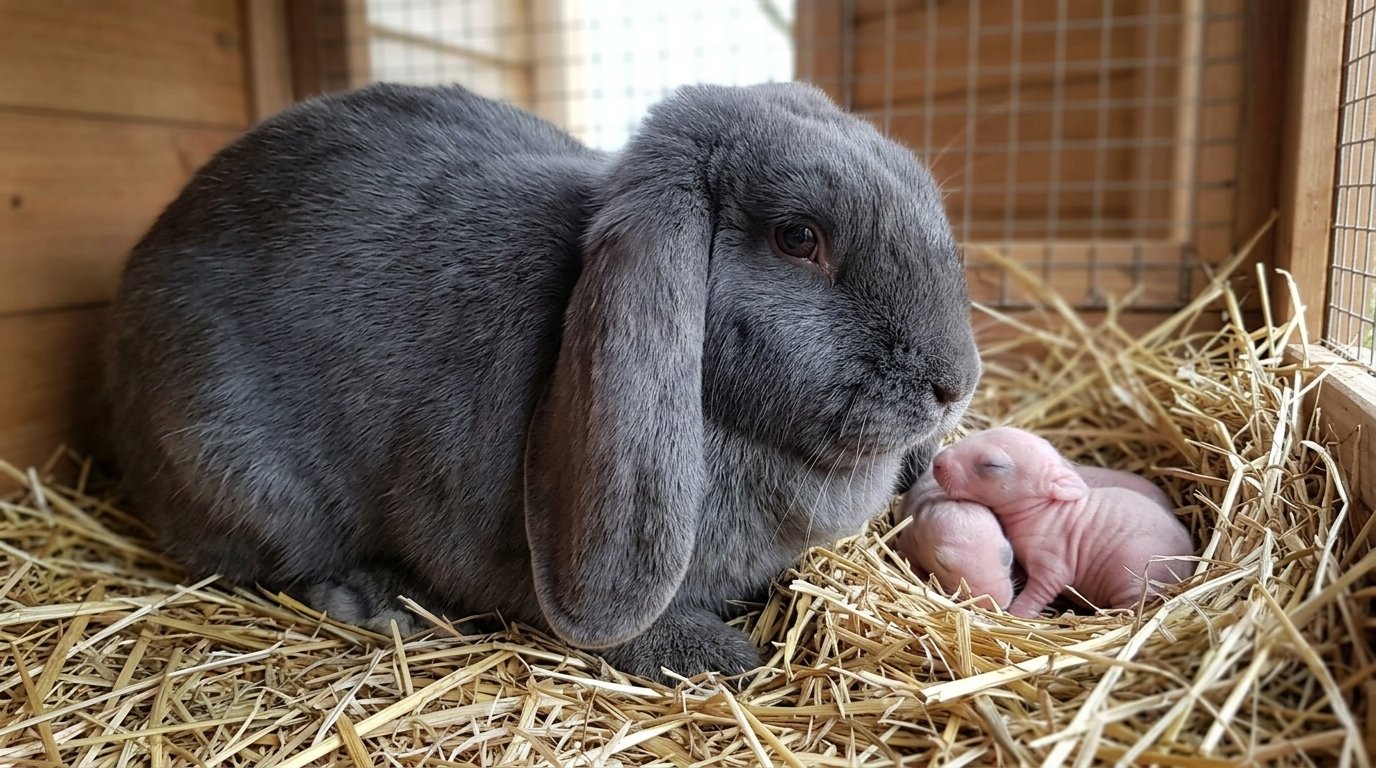
The French Lop is the giant of the lop-eared rabbits. It is big, usually calm, and affectionate once it trusts you. Adults typically weigh around 10–15 pounds. That size is what makes the breed appealing, and it is also what makes it harder to keep than a small pet lop. Wikipedia
If you are deciding whether a French Lop rabbit fits your home, the short answer is this. They suit people with real floor space, a decent food budget, and a vet who treats rabbits. They are a poor fit for a small cage or a tight apartment.
French Lop Rabbit at a Glance
| Trait | What to expect |
|---|---|
| Size | Giant. Commonly 10–15 lb (about 4.5–6.8 kg) |
| Ears | Lopped, thick and short for a lop breed |
| Temperament | Placid, relaxed, sociable |
| Lifespan | Commonly cited as roughly 5–8 years (see below) |
| Coat | Dense, soft; solid or broken colors |
| Care level | Moderate to high, mostly because of size |
| Origin | France, 19th century |
How Big Does a French Lop Get?
Most French Lops weigh around 10–15 pounds, and the show standard has no maximum weight. The American Rabbit Breeders Association (ARBA) describes the breed as massive and heavy-boned, with a wide, sturdy head. Wikipediaarba
The show standard sets minimum weights for adults. One breeder site lists senior bucks at 11 pounds and over, and senior does at 11.5 pounds and over. Treat those figures as a guide and check the current ARBA Standard of Perfection if you plan to show. threelittleladiesrabbitry
For a pet owner, the important point is how much rabbit you are taking on. A French Lop eats more, produces more waste, needs a bigger litter box, and takes up more floor than a Holland Lop or Mini Lop. A fully grown one can be heavier than a small cat or dog.
Appearance, Coat and Colors
Besides size, a French Lop is recognizable by its thick body and broad head. The ears hang beside the face but are not extravagantly long. It resembles the English Lop but is heavier and lacks that breed’s exaggerated ear length. Wikipedia
The coat is dense and soft, in two color varieties: solid and broken. Broken means a white base with patches of color. A white base with patches is often what people picture when they think of a spotted rabbit. Wikipedia
French Lop Temperament: Are They Good Pets?
Breed descriptions consistently call the French Lop placid and relaxed. Many owners find them easygoing, and they are reported to get along with cats, dogs and children. arbaWikipedia
Some cautions apply:
- Calm does not mean tough. They can still be startled and frightened, so supervise any meeting with other pets. Wikipedia
- Children should never lift or carry one. A struggling 11-pound rabbit can hurt itself, or the child, with its powerful back legs. Teach children to sit on the floor and let the rabbit come to them.
- Individuals vary. Temperament is a tendency, not a guarantee. An unneutered rabbit, a frightened one or a bored one can behave very differently from the textbook description.
French Lop vs Other Lop Breeds
| Breed | Size | Notes |
|---|---|---|
| French Lop | Giant (10–15 lb typical) | Heavy-boned, calm, needs the most space |
| English Lop | Large | Famous for very long ears, which need extra care |
| Holland Lop | Small. ARBA caps it at about 4 lb | Popular pet; much less space needed |
| Mini Lop | Small to medium | Descended in part from French Lop stock Wikipedia |
A rabbit with “French” in its name is not automatically a French Lop. If you are buying, ask for the breed’s parentage and expected adult weight, and meet the parents if you can. A small, cheap “lop” is very unlikely to grow into a French Lop.
French Lop Rabbit Care
Housing and space
This is where most problems start. A typical pet-store hutch is too small for this breed. Give a French Lop enough room to stretch out fully, hop several times in a row and turn around easily. In practice that usually means a large indoor pen or a rabbit-proofed room, plus a secure outdoor run if you have a garden. Check minimum space recommendations from a rabbit welfare organization in your country, since I could not verify one standard figure that applies everywhere.
Flooring matters for heavy rabbits. Sore hocks mostly affect heavyweight rabbits (over about 9 lb) kept on wire floors or soiled solid floors. Choose solid, dry flooring with soft bedding or a mat, and clean it often. Our guide on <a href=”https://homeofrabbit.com/do-rabbits-smell/”>whether rabbits smell</a> explains how to keep the area fresh. A damp, dirty floor also harms the feet. Wikipedia
Diet
- Hay first. Unlimited grass hay (such as timothy) should make up the bulk of the diet. It keeps the gut moving and helps wear down teeth, which grow continuously.
- Fresh greens daily. Introduce new greens gradually.
- Pellets in measured amounts. Large breeds are prone to overeating, and obesity is a recognized risk. Follow your vet’s guidance on quantity, and keep treats occasional. a-z-animals
Some web sources quote a single hay percentage (one says at least 70%). Ask a rabbit-savvy vet for a target that suits your individual rabbit.
Grooming and hygiene
The coat is easy to care for, but you will need to brush more often during shedding to avoid knots and hairballs. Do not bathe a rabbit. Spot-clean with a damp cloth if needed, and check the hocks, the rear end and the ears each week. everypaw
Exercise and enrichment
Several hours of supervised free time most days help control weight and keep joints and muscles in shape. Offer cardboard boxes, willow toys, tunnels, and safe things to chew. A bored large rabbit will find its own furniture to chew.
Common French Lop Health Problems
- Sore hocks (pododermatitis). Painful sores on the back feet caused by weight pressure and poor flooring.
- Dental disease. Malocclusion means teeth don’t align and become overgrown, so the rabbit struggles to eat or drink, and may need regular dental treatment at the vet. Lop-eared rabbits as a group seem to be at higher risk. everypaw
- Ear infections. Lop-eared rabbits are at greater risk of ear infections than erect-eared rabbits. Look for head shaking, discharge, odor or pain when touched. Wikipedia
- Obesity and arthritis. Extra weight on a giant frame strains joints. Arthritis is listed among the breed’s health issues. Wikipedia
- Gut stasis. Low fiber or stress can slow the digestive system. A rabbit that stops eating or pooping is an emergency and needs a vet the same day.
Find an exotics or rabbit-experienced vet before you need one, and ask about vaccination and neutering locally.
How Long Do French Lop Rabbits Live?
Sources disagree. Several breed guides give 5 to 7 years. Another says around 8 years if weight is kept in check. A few websites claim 7–12 years, but I could not find good support for that range. A realistic expectation for a giant breed is somewhere in the mid single digits to about 8 years. Healthy weight, good flooring, dental care and neutering all help. The French Lop – Complete Guide & Facts – Animal Corner +2
Is a French Lop Right for You?
A French Lop suits you if:
- You have room for a big pen or a rabbit-proofed room.
- You can afford a large rabbit’s food, bedding and vet bills.
- You can keep to a daily routine of hay, greens, cleaning and exercise.
- You have, or can find, a rabbit-savvy vet.
Think twice if:
- You live in a very small space or can only keep the rabbit in a small cage.
- You want a small, easily carried pet.
- Young children will be the main carers.
Quick pre-purchase checklist
- Space ready before bringing the rabbit home
- Solid flooring with soft bedding
- Large litter box, hay feeder, heavy ceramic bowl
- Vet identified
- Plan for a companion rabbit (many welfare groups recommend bonded pairs) and neutering
- Budget for food and vet costs
Common Mistakes New Owners Make
- Buying a cage designed for small breeds. Check the adult size, not the baby size.
- Leaving a heavy rabbit on wire. This is a major cause of sore hocks.
- Overfeeding pellets and treats. Weight gain shortens a giant breed’s life.
- Ignoring the teeth and ears. Check both regularly.
- Waiting to see if “not eating” improves. In rabbits it is urgent.
Conclusion
The French Lop rabbit is a gentle giant, but a giant all the same. Its calm nature is a big part of the appeal. Its size, weight-related health risks and space needs are the main challenges. If you can provide room, soft solid flooring, a hay-based diet and a good vet, the breed can be a rewarding companion. For breed-standard details, see the <a href=”https://arba.net/french-lop/”>ARBA French Lop page</a>.
FAQ
Is a French Lop the biggest lop rabbit?
Generally yes. It is usually regarded as the largest lop-eared breed. threelittleladiesrabbitry
How much does a French Lop weigh?
Typically 10–15 lb as an adult. The ARBA show standard has no maximum weight. arba
Are French Lops good for beginners?
They can be, because many are calm. But their space, diet and vet needs are bigger than those of small breeds, so beginners should be prepared to learn.
Do French Lops get along with other pets?
Often, with careful introductions. Always supervise.
Where do French Lops come from?
The breed was first shown around 1850 in France, and is thought to descend from English Lop and Butterfly stock. The first French Lops reached the United States in 1970–71.
