
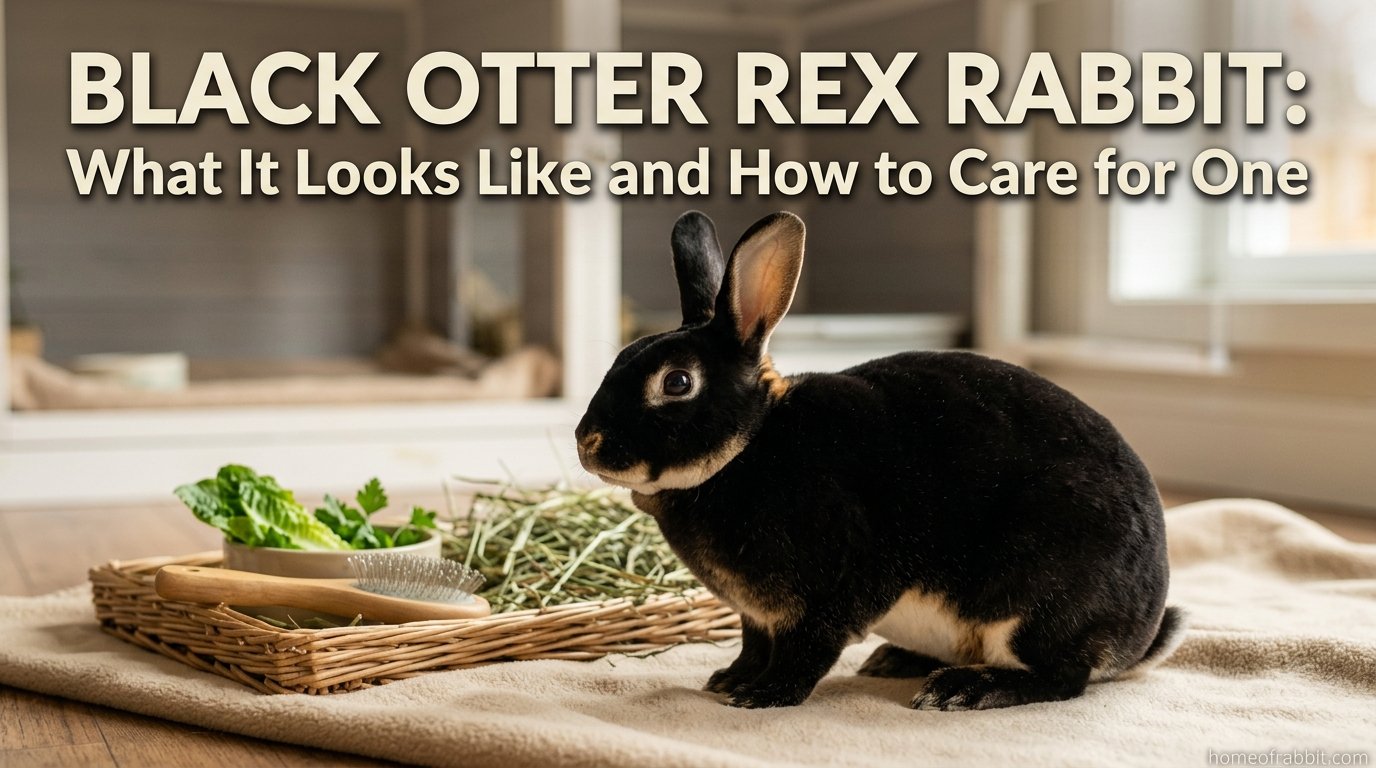
A black otter Rex rabbit is a Rex rabbit in the black otter color pattern: a mostly black body with a cream-to-tan belly, tan edging along the sides, and lighter markings around the eyes, nose and inside the ears. It has the short, dense, plush fur that defines every Rex. It is a color variety, not a separate breed.
This article covers how to recognize one, how big it gets, what its coat means for daily care, and what to check before you bring one home.
What is a black otter Rex rabbit?
“Rex” is the breed. “Black otter” is one of its colors. The American Rabbit Breeders Association (ARBA) recognizes 16 color varieties of the Rex, and the otter group is one of them.
Per the National Rex Rabbit Club, the Black Otter was accepted in 1988. The Otter group grew to four varieties (black, blue, chocolate and lilac) when the other three were accepted in 2008, becoming showable in 2009. The black remains the original and, by most accounts, the best known.
The Rex itself first appeared in France in the early 1900s. The coat comes from a natural mutation that makes the guard hairs the same length as the undercoat, which is why the fur feels like velvet instead of having the usual coarse top layer.
How to recognize the otter pattern
The otter pattern is easiest to spot on the underside and face. The body color is black, and the contrast is where the pattern shows.
According to the NRRC’s variety description for black and chocolate otters:
| Area | What it should look like |
|---|---|
| Belly, underside of chin and tail | Pale cream |
| Border between belly and body | A distinct band of tan |
| Nostrils and the triangle near the nose | Tan |
| Eye circles and inside of ears | Fawn |
| Chest | An even mix of tan and black, blending into the body color |
A few quick tips when you are looking at a rabbit:
- Check the belly line. A sharp, even tan border is the hallmark. A muddy or smeared line is a flaw for showing, though it does not affect the rabbit as a pet.
- Look at the face. Tan on the nose and fawn eye rings make an otter look “masked.”
- Don’t confuse it with other black-and-tan rabbits. A Tan rabbit or a Silver Marten also has black above and lighter color below, but those are different breeds with different markings and body types.
A plain black Rex has no tan or cream pattern. If the rabbit is solid black all over, it is a Black Rex, not an otter.
Size and weight
The ARBA ideal weight range for the Rex is 7.5 to 10.5 pounds (about 3.4 to 4.8 kg), and it has a commercial-type body: round, well filled out, and medium-sized.
That makes a Rex noticeably bigger than a Mini Rex, which is bred to be a smaller version of the same animal.
Pet rabbits will not always match show weights. A rabbit from pet-quality stock can be a little under or over. What matters most for a pet is that it is a healthy weight, not that it hits a number.
The Rex coat
The coat is the main reason people want this rabbit. It is short and dense and stands upright, so it feels like plush when you stroke it in either direction.
What that means in practice:
- Grooming is simple. Rex fur does not tangle the way Angora wool does. A light brushing or a rub with a damp hand during shedding is usually enough. Use a soft brush, since the coat is easy to over-groom.
- Whiskers and guard hairs can be curly or brittle. This is normal for the breed.
- Foot padding is thinner. Rex rabbits are often said to be more prone to sore hocks because the fur on the feet gives less cushioning. Housing matters here (see below).
Temperament
Rex rabbits are generally described as calm, curious and people-oriented, and many owners and breeders describe them as easygoing. That said, temperament depends far more on the individual rabbit and how it was handled when young than on its color. A black otter from a breeder who handles kits daily will usually be friendlier than one raised with little contact.
Expect a rabbit that likes routine, enjoys exploring, and is happiest when it has company and space to move. Like any rabbit, it may not enjoy being picked up and held. Sitting on the floor and letting it come to you tends to work better.
Black otter Rex vs black otter Mini Rex
Both breeds come in the otter pattern, which causes a lot of confusion.
| Black otter Rex | Black otter Mini Rex | |
|---|---|---|
| Breed | Rex | Mini Rex (separate ARBA breed) |
| Size | Medium: 7.5 to 10.5 lb | Smaller; check the Mini Rex standard for exact limits |
| Coat | Rex plush | Rex plush |
| Pattern | Otter | Otter |
| Housing space | Needs more room | Needs less floor space, but still more than most small hutches offer |
If you want the otter look in a smaller rabbit, ask the seller which breed it actually is. “Mini” is sometimes used loosely.
Caring for a black otter Rex rabbit
Care is the same as for most medium pet rabbits, with a few Rex-specific points.
Housing and flooring
Give the rabbit as much space as you can. Hutches that are barely larger than the rabbit are not suitable for long-term living. You can use a rabbit cage size calculator to work out a minimum for your rabbit’s weight, and treat that number as a floor, not a target.
Because Rex feet have thin fur, avoid bare wire floors. Use a solid resting surface (a grass mat, fleece, or a smooth wooden board) so the rabbit is not standing on wire all day. Keep bedding clean and dry; wet, dirty flooring makes foot problems worse.
Diet
- Hay first. Unlimited grass hay (timothy, orchard, or similar) should make up the bulk of the diet. It keeps the gut moving and wears the teeth down.
- Fresh leafy greens daily, introduced gradually.
- A measured amount of plain pellets, following the feeding guide on the bag for your rabbit’s weight.
- Fresh water at all times.
- Treats such as fruit should be occasional and small.
Heat and comfort
Rabbits cope with cold better than with heat. In hot weather, keep the rabbit in the shade, make sure air moves through the enclosure, and watch for panting, lethargy or wet nostrils, which need a vet quickly.
Common health concerns
I could not find reliable breed-specific statistics for black otter Rex health, so treat the following as general rabbit health points, plus the sore hock risk noted above:
- Sore hocks: red, bald or scabbed patches on the back of the feet.
- Dental problems: drooling, dropping food, or eating less.
- Gut stasis: a rabbit that stops eating or passing droppings needs urgent veterinary care.
- Ear mites and fur mites, and respiratory problems.
Find an exotics or rabbit-savvy vet before you need one. Ordinary dog and cat clinics do not always treat rabbits.
Things to check before buying
- Confirm the breed and variety. Ask whether the rabbit is a Rex or a Mini Rex, and whether it is black otter or just black and tan.
- Ask about parentage and age. A reputable breeder can tell you.
- Look at the feet. The soles should have some fur and no sores.
- Check the coat. It should be dense and even, with no bald patches or crusts.
- Watch behavior. A healthy rabbit is alert and curious, with clean eyes, nose and rear end.
- Visit in person if possible, and ask to see where the rabbits live.
- Consider adoption. Rescues and shelters sometimes have Rex or Rex-mix rabbits, though you may not find an exact otter.
I could not verify current US prices, and they vary a lot by breeder, region and whether the rabbit is pet or show quality, so ask the seller directly.
Is a black otter Rex right for you?
It may suit you if you want a gentle, medium-sized rabbit, you can provide plenty of room, and you like the plush coat and striking markings.
It may not suit you if you only have room for a small hutch, you cannot give daily time and attention, or you want a very small rabbit (look at Mini Rex or other small breeds instead).
Conclusion
The black otter Rex rabbit is a Rex with a distinctive black body and tan-and-cream markings, a medium build, and a coat that feels like velvet. It is easy to groom, but it needs good flooring for its feet, plenty of space, and a hay-based diet. Confirm the breed and markings with the seller, check the feet and coat in person, and set up housing before the rabbit comes home. The National Rex Rabbit Club is a good place to see the official variety descriptions.
FAQ
Is a black otter Rex rabbit a separate breed? No. It is a color and pattern variety of the Rex breed.
Are black otter Rex rabbits rare? I could not find reliable data on how common or rare they are. Some sources call the black otter the best known of the otter group, but that is not a verified count.
How big do they get? The ARBA ideal range for Rex rabbits is 7.5 to 10.5 pounds. Mini Rex otters are smaller.
Are they good pets? Many owners describe Rex rabbits as calm and friendly, but individual personality and handling matter more than color.
Do Rex rabbits need special grooming? Not much. Light brushing during shedding is usually enough. Pay more attention to their feet than their fur.
How long do they live? I could not find a verified breed-specific lifespan. Well-cared-for pet rabbits generally live many years; ask a rabbit-savvy vet for a realistic expectation.
