
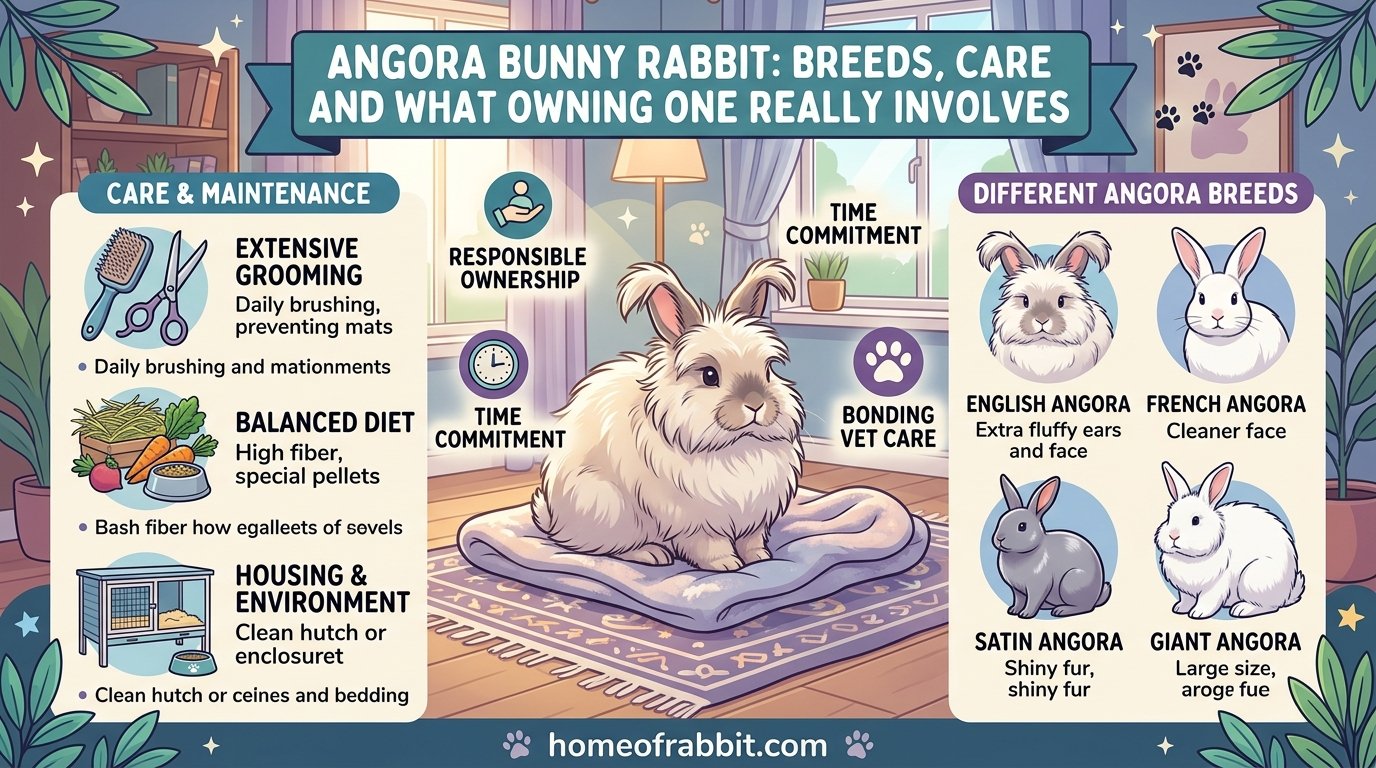
An angora bunny rabbit is a domestic rabbit bred for long, soft wool. It is rewarding for the right owner and hard on the wrong one. The coat needs grooming several times a week, the animal overheats easily, and wool swallowed during self-grooming can cause a serious digestive problem. If you can commit to that routine, an angora can be a gentle, interesting companion.
This guide covers the breeds, the real workload, the health risks, and how to decide whether an angora fits your life.
What is an angora bunny rabbit?
There are at least 11 distinct angora breeds worldwide, and four are recognized by the American Rabbit Breeders Association (ARBA): English, French, Giant and Satin. Angoras became fashionable pets among French royalty in the mid-1700s and spread across Europe by the end of that century. WikipediaWikipedia
Their wool grows continuously. A healthy adult’s coat grows roughly an inch a month, and the fiber can mat and felt on the animal without regular grooming, which is painful and can lead to infection. Wikipedia
The four angora breeds recognized in the US
The breeds differ in size, coat behavior and difficulty. These weights come from ARBA’s breed listings.
| Breed | ARBA weight | Coat notes | Best for |
|---|---|---|---|
| English Angora | Max 7.5 lbs | Fullest coat, including wool over the face | Experienced owners, show |
| French Angora | 7.5–10.5 lbs | Cleaner face, sheds naturally | Beginners, pets, fiber |
| Satin Angora | Max 9.5 lbs | Fine, glossy fiber | Fiber enthusiasts |
| Giant Angora | No maximum | Does not molt, must be shorn | Dedicated fiber producers |
ARBA lists the English Angora as the only compact angora, with a 7.5 lb maximum, and the French at 10.5 lbs. The Giant was developed for wool production and does not molt, so it has to be shorn. The English is the only angora with hair covering its eyes. Recognized Breeds +2
The German Angora is common but not currently recognized by ARBA. You may still see it sold by breeders. Wikipedia
Sources disagree on the Satin Angora’s maximum weight (9.5 lbs in the ARBA listing above versus 11 lbs for the separate Satin breed, which is not an angora). Check the current ARBA standard before you rely on a figure for showing.
Are angora rabbits good pets?
They can be, with caveats. Angoras are generally described as good pets for experienced rabbit owners who have time for their special grooming needs. They are intelligent, social animals. petmdpetmd
Pros
- Gentle, social temperament when handled early and often
- Soft wool you can use for spinning or felting
- Calm indoors, if you manage the coat
Cons
- Grooming is a routine commitment, not an occasional chore
- Prone to overheating
- Higher risk of digestive blockage than short-coated rabbits
- Wool from a neglected coat is often unusable
If you want a low-maintenance first rabbit, a short-coated breed will probably suit you better.
Grooming and wool harvesting
Grooming is the core of angora care, not an extra.
How often to groom
One breed-specific guide recommends brushing two to three times a week without exception. Some owners groom daily, especially for English Angoras or during a molt. Start young. Early grooming sessions mostly build trust and get the rabbit used to handling. angorabbitsthecapecoop
Mats form most often where the coat is rubbed or sat on, like the underside. Wool from that area is lower quality than the back and sides. thecapecoop
A basic routine:
- Work in short sessions, around 10 minutes for young rabbits.
- Use a wide-tooth comb or slicker, and detangle gently.
- Check the underbelly, hindquarters and behind the ears for mats.
- Cut out any mat you can’t comb through, using blunt-tipped scissors, and keep the blades away from the skin.
- Stop if the rabbit panics. Forcing a struggling rabbit risks injury.
Clipping or plucking every 3–4 months
Clipping or plucking every 90–120 days is described as necessary to prevent wool block. Most breeds molt on a cycle of about four months, and plucking only works on rabbits that actually molt, because non-molting breeds can’t be plucked. For a Giant, that means shearing. WikipediaWikipedia
Wool yield varies with the rabbit and your technique. One source puts a Giant Angora’s harvest at 340–510 g (12–18 oz). Another suggests a French Angora produces around a pound a year. Treat both as rough guides. Wikipediathevetdesk
If you’re new, ask an experienced breeder or a rabbit-savvy vet to show you how to shear safely. Rabbit skin tears easily.
Health risks to know about
Wool block and GI stasis
Rabbits swallow hair when they groom, and unlike cats they can’t vomit it up. Angoras’ long coats make them more prone to hair collecting in the gut, which can obstruct digestion and lead to GI stasis. A confirmed true hairball blockage requires veterinary surgery. petmdpetmd
Many vets now think much of the problem is reduced gut movement, not just a wool “ball.” Either way, prevention is the same: regular grooming and plenty of hay.
Warning signs of gut slowdown (see an exotics vet urgently):
- Eating less or stopping altogether
- Fewer, smaller or misshapen droppings
- Lethargy, hunched posture, tooth grinding
If a rabbit stops eating, passes fewer droppings or seems lethargic, vets advise getting help immediately because these conditions can be fatal. Don’t wait overnight. For more on why digestive trouble is such a danger, see our guide to the most common cause of death in rabbits. petopic
A note on papaya tablets: many angora keepers use them, and some guides claim the enzymes break up wool. I couldn’t find strong veterinary evidence for that, so don’t rely on them or use them as a substitute for hay, hydration and vet care. Ask your vet.
Overheating
Angoras are prone to hyperthermia because of their thick coats, and rabbits can’t pant to cool down as dogs do. Signs include rapid or open-mouth breathing, restlessness and loss of coordination, and overheating is an emergency. Move the rabbit somewhere cool and call a vet. everypaweverypaw
Housing and temperature
Indoor housing is the safest option. One angora care guide recommends keeping them in 50–75°F (10–24°C) and warns that heat stress becomes life-threatening above 80°F. If kept outdoors, the enclosure must sit out of direct sun in a cool, shaded spot. Wet fur can also invite skin infections and parasites, so protect against rain. angorabbitseverypaw
Practical tips:
- Provide a solid resting surface, not wire alone.
- Keep the enclosure ventilated and out of sunny rooms.
- In hot weather, options like ice water, fans and terracotta shelters can help. thevetdesk
- Take extra care with long car trips in summer.
Feeding
Hay should make up the bulk of the diet. Hay is especially important for angoras to support digestion and help avoid wool block and GI stasis. Fresh water must always be available. Because wool grows constantly, some keepers feed a diet higher in protein than average rabbit food. Ask your vet to help set pellet amounts for your rabbit’s size and age, since over-feeding pellets can reduce hay intake. petmdthecapecoop
Lifespan and costs
Lifespan. Sources vary widely. Wikipedia lists 7–12 years, while another guide says typical lifespan is 5–8 years and indoor rabbits live longer. Expect roughly 5–12 years depending on genetics, care and housing. Wikipediahepper
Cost. Purchase prices range from about $20 to $300+ in the sources I found, and show-quality rabbits cost more. Some owners underestimate the grooming demands and sell or give their rabbits away cheaply. Prices change by region and breeder, so verify locally. The ongoing costs matter more: housing, hay, pellets, grooming tools and exotic-vet visits. thevetdesk
Common mistakes
- Buying for looks without budgeting grooming time
- Letting mats build up under the coat
- Skimping on hay
- Housing in a warm room or sunny spot
- Assuming a poor appetite will “pass”
- Keeping a Giant on a plucking schedule when it doesn’t molt
Which angora breed should you choose?
- First-time angora owner: French Angora, since it sheds naturally and has a clear face.
- Small space or show interest: English Angora, if you accept the heavier grooming load.
- Fiber production focus: Giant Angora, if you’re prepared to shear.
- Fine, glossy fiber: Satin Angora.
Before buying, visit a breeder, ask to see the parents, and ask what a typical week of grooming looks like.
Conclusion
An angora bunny rabbit rewards consistent care with a gentle companion and beautiful wool. It punishes neglect with mats, overheating and digestive emergencies. If you can groom regularly, keep the room cool and feed plenty of hay, an angora may suit you well. If not, a shorter-coated breed is the kinder choice.
FAQ
How big do angora rabbits get?
ARBA lists maximums of 7.5 lbs for English, 10.5 lbs for French and 9.5 lbs for Satin. The Giant has no maximum weight. arba
Do angora rabbits need to be sheared?
Most need their coat removed every few months, by clipping or by plucking if they molt. Giants must be shorn.
Can angora rabbits live outside?
They can, but indoor housing is safer. Outdoor hutches must stay cool, shaded and dry.
Is angora wool harvested humanely?
It can be when the rabbit is plucked or clipped gently by its owner. Footage from French angora farms released in 2016 by an animal rights charity showed cruel practices. If you buy angora fiber, ask where it came from.
