
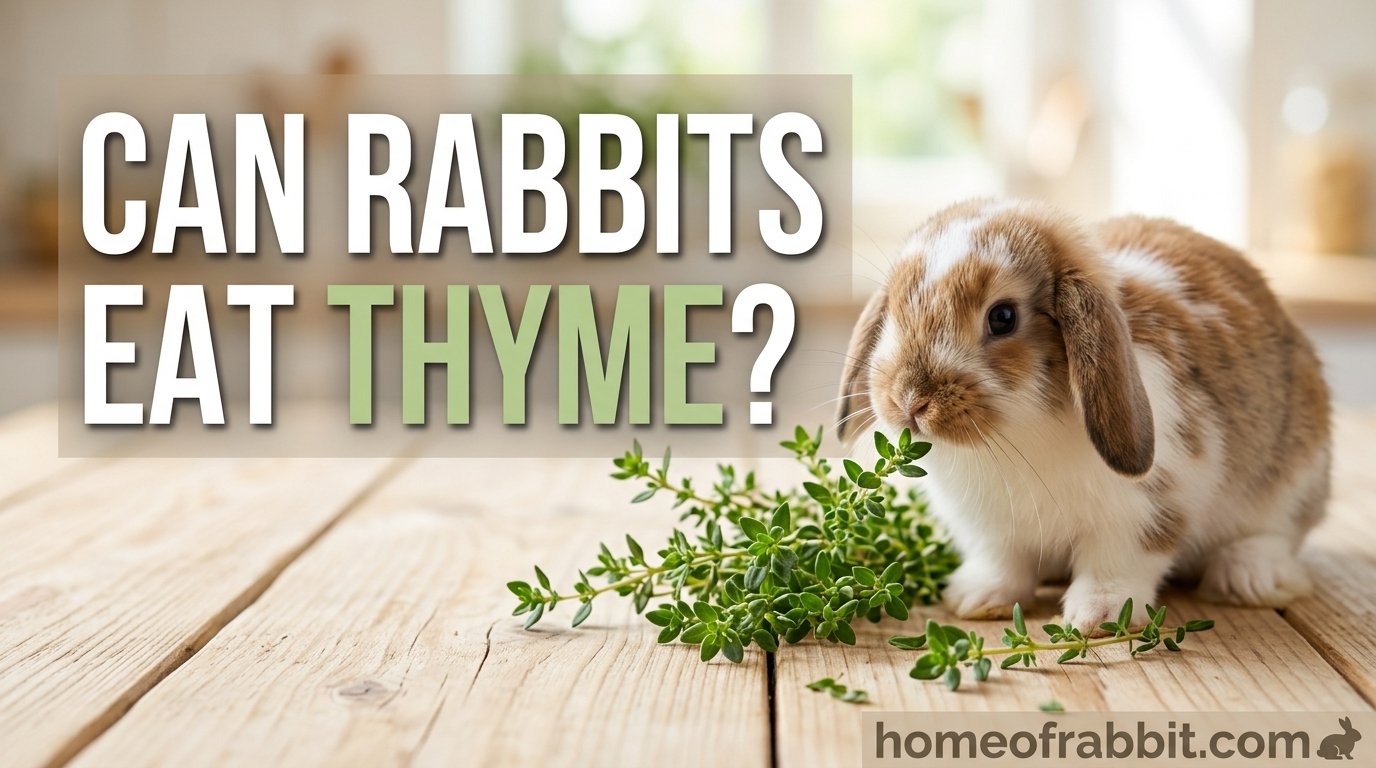
Yes, rabbits can eat thyme. It’s generally considered a safe herb, and many rabbits like it. The catch is amount. Thyme should be an occasional extra on top of a hay-based diet, not a staple.
This guide covers how much to offer, which forms are fine, and when to hold back.
Is Thyme Safe for Rabbits?
For most healthy rabbits, yes. One veterinary resource lists thyme among the safe herbs for rabbits, alongside basil, dill, fennel, mint, and parsley. Other rabbit-care sites say the same. firstvet
Every rabbit is different, though. Some rabbits simply don’t tolerate certain foods well, so if thyme seems to upset yours, stop offering it. Some rabbits also just refuse it, because the smell is strong. That’s normal. rabbitcaretips
How Much Thyme Can a Rabbit Have?
Think of thyme as seasoning for the meal, not the meal itself. A rabbit’s diet should be built on unlimited hay or grass. Herbs, other plants, and fresh vegetables together should make up only about 10% of daily intake. firstvet
A practical starting point is one or two small sprigs for an average-sized rabbit, mixed in with the leafy greens. Exact amounts vary with a rabbit’s size and overall diet, so ask your vet if you’re unsure.
How often: Thyme won’t necessarily hurt a rabbit if it’s offered regularly. Even so, variety is better, so rotating thyme with other safe herbs such as cilantro, parsley, dill, rosemary, and oregano makes sense. Offering it a few times a week is a reasonable approach. rabbitcaretips
Note: You’ll see “herbs should be no more than 5% of the diet” repeated online. It’s a common rule of thumb, but I couldn’t trace it to an authoritative source, so treat it as a rough guide and confirm with your vet.
Which Parts and Forms of Thyme Are Safe?
| Form | Safe? | Notes |
|---|---|---|
| Fresh leaves | Yes | Best option. Wash first. |
| Stems | Yes | Many rabbits enjoy chewing them. Soft, young stems are easiest. |
| Flowers | Generally yes | Some sources say all parts are fine. Offer a little at first. |
| Dried thyme | Yes, in small amounts | Dried herbs are generally considered safe for rabbits. Use plain, unseasoned thyme only. |
| Lemon thyme | Usually | Its stronger scent can put some rabbits off. Offer a small piece first. |
| Thyme essential oil or supplements | Not recommended | Concentrated products are a different matter. Ask a vet before using them. rabbitcaretips |
Fresh vs. dried: Fresh is better when you can get it. Dried thyme works if it’s all you have, but use less, since the flavor is more concentrated.
How to Introduce Thyme (Step by Step)
- Pick the right moment. Offer it when your rabbit is healthy and eating normally.
- Start tiny. Give one small sprig, or even a single leaf.
- Introduce one new food at a time. If you add several new foods at once, you won’t know which one caused a problem.
- Watch for 24 hours. Normal, well-formed droppings and normal appetite mean all is well.
- Increase gradually. Work up to the usual amount over several days.
- Stop if anything seems off. Soft stools, diarrhea, bloating, or reduced appetite mean stop. If symptoms continue, call your vet.
Does Thyme Treat Worms or Other Health Problems?
You may see claims that thyme helps with worms or acts as a natural remedy. Don’t rely on them. If you suspect worms, get proper medication from a vet instead of depending on herbs. rabbitcaretips
Thyme contains aromatic compounds, but there’s no good reason to feed it as medicine. Treat it as a flavorful snack.
When to Skip Thyme
Hold off if your rabbit:
- Has soft stools, diarrhea, or a recent change in appetite
- Is recovering from illness, particularly any digestive issue
- Has a history of reacting badly to new foods
- Has been told by a vet to stick to a restricted diet
Also skip any thyme that:
- Was sprayed with pesticides or other chemicals
- Comes from a store-bought mix with added seasonings or salt
- Has gone moldy or slimy
Common Mistakes
- Feeding too much because “it’s a healthy herb.” Healthy doesn’t mean unlimited.
- Replacing hay with fresh herbs. Hay stays the foundation of the diet.
- Skipping the wash. Even herbs from your own garden can carry dirt or residue.
- Giving a large amount the first time. A sudden change can upset a rabbit’s digestion.
- Assuming all herbs are safe. Plenty of common culinary herbs are fine, but some garden plants aren’t. Double-check before offering anything new. For more on introducing leafy foods safely, see our guide on can rabbits eat cabbage.
Quick Checklist Before Feeding Thyme
- Fresh, clean, pesticide-free thyme (or plain dried thyme)
- Rabbit is healthy and eating normally
- Small portion, one new food at a time
- Hay is still available at all times
- Droppings monitored over the next day
Conclusion
So, can rabbits eat thyme? Yes. Fresh or dried, leaves and stems, it’s a safe, enjoyable herb for most rabbits when fed in small amounts and rotated with other safe options. Introduce it slowly and keep hay as the main part of the diet. If your rabbit ignores it or reacts badly, skip it and try another herb. For general safe-plant guidance, the Royal Veterinary College’s rabbit feeding guidelines are a useful reference.
FAQ
Can rabbits eat thyme every day?
It’s best not to. Thyme isn’t harmful in itself, but variety matters, and herbs should stay a small part of the diet. A few times a week, rotated with other safe herbs, is a sensible approach.
Can baby rabbits eat thyme?
Young rabbits have sensitive digestive systems. Check with a vet before introducing herbs or any fresh foods to a young rabbit. I didn’t find a reliable source for a specific age, so I won’t give one.
Can rabbits eat thyme and rosemary together?
Both are commonly listed as safe herbs. If your rabbit hasn’t had either before, introduce them on separate days so you can spot any reaction.
My rabbit won’t eat thyme. Is that a problem?
No. Strong scents turn some rabbits off, and it’s not a nutritional need. Try parsley, cilantro, or dill instead.
