
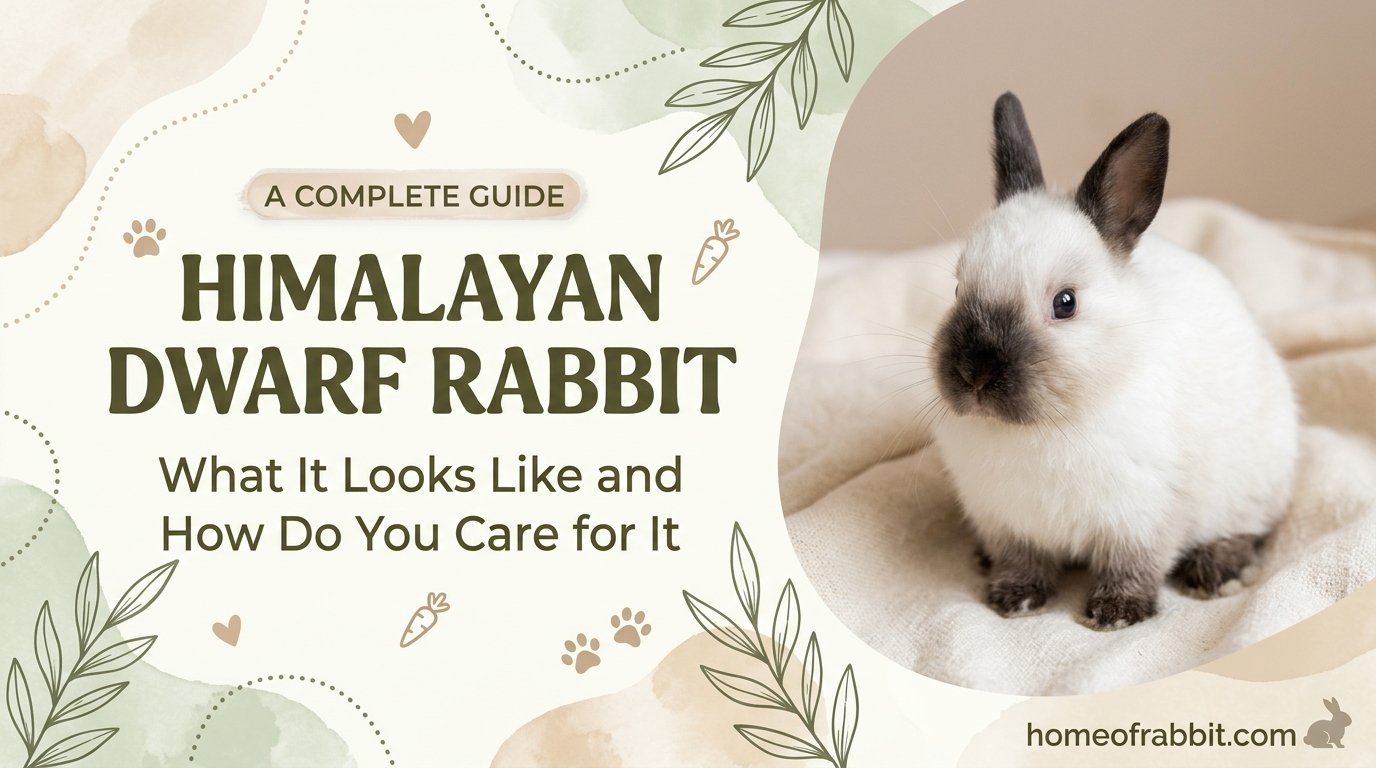
A Himalayan dwarf rabbit is a small white rabbit with dark “points” on the nose, ears, feet, and tail, a pattern similar to a Siamese cat. Adults are small. They need unlimited hay, a roomy indoor pen, and a rabbit-savvy vet, like any other rabbit.
One note on the name. “Himalayan dwarf” is how many people search for this rabbit, but the recognized breed is simply the Himalayan. It is small, though it isn’t a true dwarf breed like the Netherland Dwarf. This guide covers both the look and the care.
What Is a Himalayan Dwarf Rabbit?
The Himalayan is one of the oldest rabbit breeds. Breed guides describe it as one of the oldest breeds, often mistaken for the Californian. It was originally bred for fur in the U.S. but is now a popular pet and show rabbit. northernnesternorthernnester
The American Rabbit Breeders Association (ARBA) calls out one feature that sets it apart. It is the only cylindrical-type breed ARBA recognizes, and its laid-back demeanor makes it easy to handle. arba
What Does a Himalayan Rabbit Look Like?
Size and weight
Himalayans are small. ARBA lists a maximum weight of 4.5 pounds. Seniors typically weigh 2.5 to 4.5 pounds, with an ideal weight of about 3.5 pounds. Some pet-care sites quote slightly different ranges, so check your own rabbit’s weight with your vet. arbamb
Body shape
The breed is long and slim rather than compact and round. Himalayans are described as small rabbits with very long, trim bodies. A cylindrical shape means no pronounced arch or “shoulders.” The body looks like a tube. This is the quickest way to tell a Himalayan from a similar-looking Californian, which is a larger, commercial-type rabbit. thenaturetrail
Markings and colors
The body is white. The points are darker.
- The points are on the nose, ears, feet, and tail.
- Point colors can be black, blue, chocolate, or lilac. mb
Eyes and coat
Purebred Himalayans have pink irises, which should not be confused with red eyes. The coat is short and sleek, which makes grooming easy. northernnester
Himalayan Rabbit Quick Facts
| Trait | What to expect |
|---|---|
| Weight | About 2.5–4.5 lb (ARBA max is 4.5 lb) |
| Body type | Cylindrical, long and slim |
| Coat | Short, flyback |
| Colors | White body; black, blue, chocolate, or lilac points |
| Eyes | Pink |
| Temperament | Calm, easy to handle |
| Lifespan | Often cited as 7–10 years (one species guide lists 7–10 years); confirm with your vet |
| Experience level | Beginner-friendly in temperament; care is still a real commitment furrycritter |
How to Care for a Himalayan Dwarf Rabbit
Housing and space
A small cage isn’t enough. Aim for a base enclosure plus daily exercise space.
- One rescue recommends an indoor 4 ft × 4 ft exercise pen as the minimum for a single rabbit. southwesthumane
- The House Rabbit Society (HRS) frames housing as two zones, a sleeping enclosure and a larger exercise area. One guideline gives about 8 sq ft of enclosure plus roughly 24 sq ft of exercise space, with several hours of daily play. creatures
Put in a litter box, a hiding spot, a solid resting surface (not bare wire), and chew toys. Rabbit-proof any area where your rabbit runs free, especially cords.
A pen also gives you a place to put hay near the litter box. Many rabbits eat and use the litter box at the same time, so this helps with litter habits.
Temperature
Heat is the bigger risk for rabbits. A temperature range of 60–70°F is considered best for pet rabbits. HRS treats anything above 77°F as dangerous, and heat stroke can set in fast in the mid-80s, especially with humidity or direct sun. lafebercreatures
Keep the pen away from sunny windows and drafts. In hot weather, use air conditioning or at least a fan. Never leave your rabbit in a hot car or on a sunny porch.
Diet
Hay should be the core of the diet.
- Hay: Hay is essential for gut and dental health, should make up most of the diet, and should always be available. Timothy and other grass hays suit adults. Alfalfa is too high in calcium and protein for adults and is better for rabbits under six months. hrschicagohouserabbitga
- Greens: HRS suggests a minimum of 2 cups of chopped vegetables per 6 lb of body weight per day. Introduce new vegetables slowly. Because of RHDV2, HRS recommends washing vegetables for at least two minutes, changing the water several times. houserabbithouserabbit
- Pellets: HRS guidance is ¼ to ½ cup per 6 lb of body weight per day. Look for timothy-based pellets with high fiber. Too many pellets can make a rabbit ignore hay, which is bad for the gut. houserabbitmiami
Scaled for a Himalayan: these figures are my own arithmetic, not an official chart. For a 3.5-lb adult, that works out to roughly a bit over 1 cup of greens per day and about 2–4½ tablespoons of pellets. Treat that as a starting point and confirm portions with your vet.
Treats: keep them occasional and small. Excessive treats can lead to obesity and digestive problems. arlboston
Grooming, nails, and teeth
The short coat needs little work. Brush gently once a week, and more often during a shed. Don’t bathe your rabbit. Trim nails as needed (ask your vet to show you the first time). Low-fiber diets can lead to tooth overgrowth, so unlimited hay is also dental care. wikivet
Handling and temperament
Himalayans are known for being calm. But rabbits don’t like being carried around. Sit on the floor, let your rabbit come to you, and always support the hindquarters when lifting. (You can read more in our article on whether rabbits recognize their owners.)
Vet care and health warning signs
Find a rabbit-savvy (exotics) vet before you need one. Ask about spaying or neutering, vaccination options in your area (including for RHDV2), and annual checkups.
Know the emergencies. If your rabbit stops eating or defecating for 6–12 hours, call your vet, since this can be GI stasis, which is an emergency. Signs include reduced or absent droppings, less appetite, lethargy, and a hunched posture. Also watch for drooling, labored breathing, a head tilt, or diarrhea. southwesthumanehrschicago
Common Mistakes
- Treating hay as optional and pellets as the main meal
- Using a small cage with a wire floor as a full-time home
- Overheating the room, especially in summer
- Skipping the vet because the rabbit “looks fine” (rabbits hide illness)
- Buying a rabbit without confirming the breed. Ask for the breeder’s records, or ask your vet.
Is a Himalayan Rabbit Right for You?
Pros
- Small and calm
- Short coat, easy to groom
- Striking, recognizable markings
Cons
- Needs unlimited hay and daily out-of-pen time
- Long-lived commitment
- Vet care for rabbits can be harder to find
- Sensitive to heat
Himalayan Rabbit Care Checklist
- Unlimited timothy or grass hay, always available
- Fresh greens daily, washed well
- Measured pellets, not unlimited
- Fresh water daily
- Pen of at least 4×4 ft plus daily exercise
- Litter box, hide, chew toys
- Room kept at 60–70°F; air conditioning ready past 77°F
- A rabbit-savvy vet identified
- Weekly brushing and regular nail checks
- Daily check of appetite and droppings
Conclusion
A Himalayan dwarf rabbit is easy to spot: a long, slim white body with dark points and pink eyes, usually under 4.5 pounds. Care is mostly a matter of routine: hay first, a roomy indoor pen, a cool room, and a vet who knows rabbits. If you’re weighing the costs of keeping several rabbits, our guide to how much it costs to build a rabbitry is a good next step.
FAQ
How big does a Himalayan rabbit get?
Usually 2.5–4.5 pounds. ARBA’s maximum is 4.5 lb. arba
Is a Himalayan rabbit a dwarf breed?
No. It’s small but not a true dwarf like the Netherland Dwarf. “Himalayan dwarf” is a popular search phrase.
How long do Himalayan rabbits live?
Often cited as 7–10 years. That varies with diet, housing, and vet care. Verify with your vet.
What colors can Himalayan rabbits be?
White with black, blue, chocolate, or lilac points.
Are Himalayan rabbits good pets?
They’re known for being calm and easy to handle, which suits many households. They still need daily attention, space, and vet care.
