
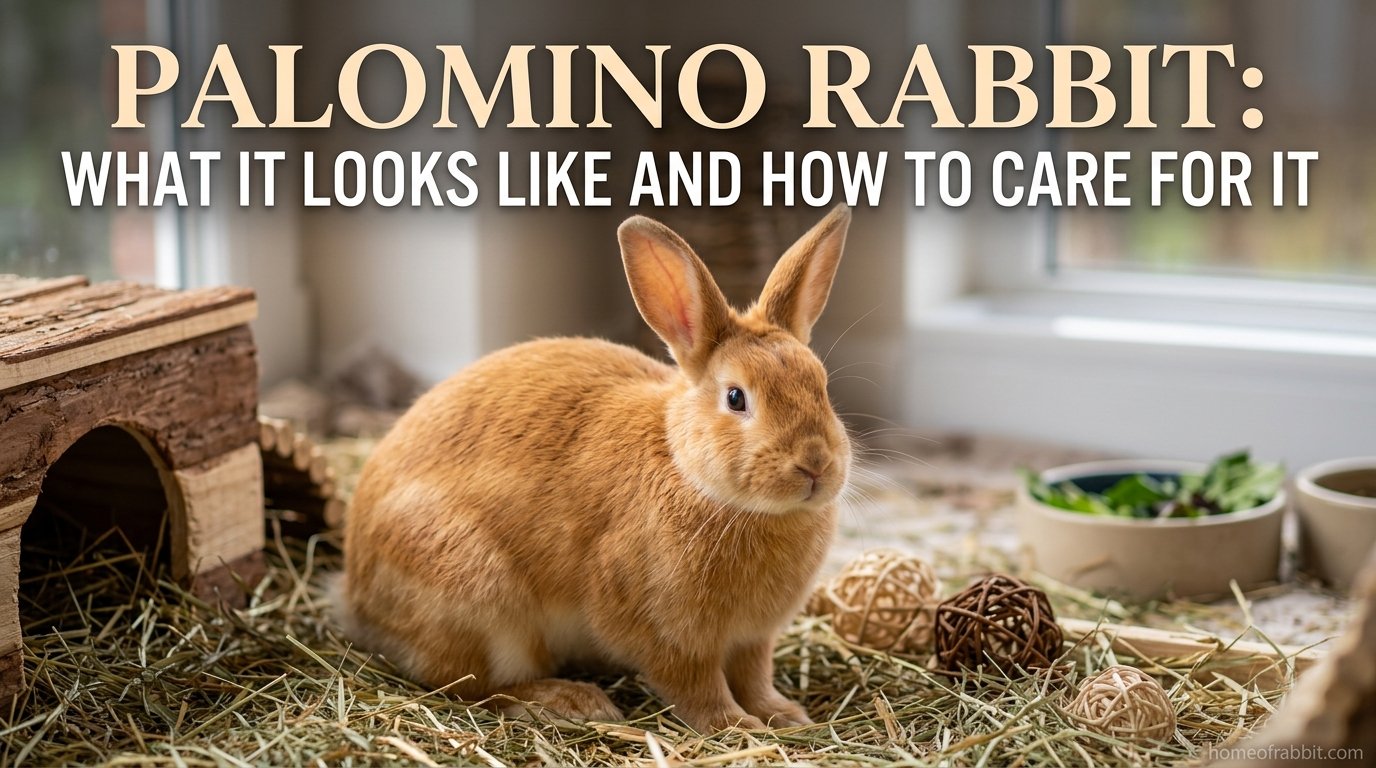
A palomino rabbit is a medium-to-large rabbit with a short, glossy coat in either golden or lynx (a soft pearl gray with an orange-beige wash). Adults typically weigh around 9 to 10 pounds, and the American Rabbit Breeders Association (ARBA) lists a maximum of 11 pounds.
Caring for a palomino rabbit comes down to the same fundamentals as any rabbit: unlimited grass hay, a measured amount of pellets, fresh greens, a roomy and safe living space, regular brushing, and a rabbit-savvy vet. Because palominos are sturdy, larger rabbits, they need more room than many pet-store cages offer.
What a Palomino Rabbit Looks Like
The breed is named after the palomino horse, and the resemblance is in the color. Palominos were developed in the United States and recognized by ARBA in 1957.
Golden vs. lynx
ARBA recognizes two varieties, golden and lynx.
| Golden | Lynx | |
|---|---|---|
| Overall look | Bright, glossy golden coat | Pearl gray softened with orange-beige |
| Underside and belly | Cream to white | Lighter shading (check the breed standard for specifics) |
| Official recognition | 1958 | 1957 |
| Popularity | The more common variety, according to The Livestock Conservancy | Less common |
A few points that help with identification:
- Show standards penalize a brassy or reddish golden, so a deep red rabbit is not an ideal golden.
- Lynx was named for the lilac tint in the fur.
- Color can vary slightly across the body surface even in good specimens.
If you need to confirm a rabbit’s variety for showing or registration, check the current ARBA Standard of Perfection or ask the Palomino Rabbit Co-Breeders Association rather than relying on photos alone.
Size and weight
Sources differ slightly, which is normal for a breed with a show ideal and a real-world range:
- The breed’s specialty club describes ideal weights of 9 to 10 pounds.
- ARBA lists a maximum weight of 11 pounds.
- General references commonly cite 8 to 12 pounds for the breed overall.
So expect a rabbit noticeably larger than a dwarf or mini breed, and plan space accordingly.
Body type and coat
Palominos have a commercial body type: a well-muscled, moderately long body suited to both meat and exhibition use. The coat is short, dense and glossy. It does not need the heavy grooming of a wool breed.
Palomino vs. similar-looking rabbits
The palomino is often compared to the New Zealand rabbit because the body shape is similar. The coat color is the clearest difference: a New Zealand is typically solid white, red or black, while the palomino is golden or lynx. If you are comparing candidate breeds for fiber or fur, see our guide to the Angora rabbit for a very different coat type.
Palomino Rabbit Temperament and Origin
Palominos are generally described by breeders and breed clubs as friendly, docile and easy to handle. Treat that as a tendency, not a guarantee. Individual personality depends on genetics, early handling and how the rabbit is housed.
Origin: Mark Youngs of Coulee Dam, Washington developed the breed, starting from tawny rabbits he selectively bred. He tried several names, including “Washingtonian,” before “Palomino” was chosen at the 1952 ARBA convention. The Palomino Rabbit Co-Breeders Association formed in 1955.
Palominos are used for meat, show and pets. The Livestock Conservancy lists the breed on its Watch list, meaning it is not abundant, so you may need to look for a breeder rather than find one at a general pet shop.
How to Care for a Palomino Rabbit
Diet
Diet is where most health problems start. The House Rabbit Society network recommends this rough structure for adult rabbits:
- About 85% grass hay, available unlimited at all times.
- About 10% fresh leafy greens.
- About 5% hay-based pellets.
- Fresh water, always.
Practical points:
- Choose timothy or other grass hay for adults. Alfalfa is a legume, not a grass hay, and is richer, so it is usually reserved for young or nursing rabbits.
- Pellets should be plain, not mixes with colorful seeds or treats. Growing young rabbits usually get more pellets; amounts are typically reduced as they reach adulthood.
- Introduce one new vegetable at a time so you can spot digestive upset.
- Keep fruit and sugary vegetables like carrots to occasional small treats.
- Do not feed anything from a recognized toxic foods list. The San Diego House Rabbit Society publishes one.
Because palominos are larger rabbits, their exact pellet portion varies by weight, age and body condition. Ask your vet for a portion rather than copying a number from the internet.
For a full, up-to-date breakdown, see the House Rabbit Society’s diet guidance.
Housing
Indoor housing is strongly recommended by rabbit welfare groups because it protects against predators, parasites and extreme temperatures.
What to provide:
- Space: A large exercise pen or a very large enclosure, not a standard small cage. Guidance for rabbits generally is that a cage should be about four times the rabbit’s size at minimum, and more is better. For a 9 to 10 pound rabbit, that adds up quickly.
- Solid flooring: Avoid wire floors, which can injure feet.
- A hiding spot: A box or shelter gives the rabbit a place to feel safe.
- A litter box with hay: Rabbits eat while they eliminate, so put fresh hay beside or over the litter.
- Cool placement: Keep the enclosure away from heat sources and drafts. Rabbits handle heat poorly.
- Daily out-of-enclosure time: Bunny-proof the area first, especially cords.
If you do keep a rabbit outdoors, which is more common with show and meat stock, you need predator-proof, weather-protected housing and careful attention to heat and cold. Exact safe temperature ranges should be confirmed with a rabbit vet in your region. If your interest is outdoor herd keeping, our post on how to keep a meat rabbit hutch clean is a better fit than this pet-focused section.
Grooming
The short coat is low-maintenance, but not no-maintenance.
- Brush weekly, and more often during shedding periods, to reduce swallowed fur.
- Trim nails regularly.
- Check ears, teeth and the skin under the hocks (back feet) for problems.
- Spot-clean as needed. Do not bathe a rabbit in water as a routine; it is stressful and risky.
Palominos are not especially smelly when the litter area is kept clean. If odor is a concern, our article on whether rabbits smell covers the causes.
Health and vet care
Find a rabbit-savvy (exotics) vet before you need one. Many general vets are not experienced with rabbits.
Emergency sign: A rabbit that stops eating or stops producing droppings for about 12 hours, or has watery diarrhea, needs urgent veterinary attention. Gut slowdown can become life-threatening quickly.
Other things to discuss with your vet:
- Spay or neuter for pets, which can reduce behavior and health problems.
- Vaccination against rabbit hemorrhagic disease (RHDV2). Availability and recommendations vary by state and over time, so verify current guidance with your vet and your state veterinary office.
- Dental checks, since rabbit teeth grow continuously and hay wears them down.
- Lifespan: published figures vary, so ask your vet what to expect for your individual rabbit rather than relying on a single number.
Exercise and enrichment
Rabbits need to move, dig, chew and explore. Offer:
- Safe chew items such as untreated wood and hay-filled cardboard boxes.
- Space to run and hop daily.
- Companionship. Rabbits are social, so plan time with them daily. If you want a pair, bond them carefully, ideally with guidance from a rescue.
Common Mistakes
- Buying a standard cage and calling it done. It is usually too small for this breed.
- Feeding mostly pellets, or a seed-and-treat mix, instead of hay.
- Switching foods suddenly.
- Assuming a rabbit is a low-maintenance child’s pet. It needs daily care.
- Waiting too long when a rabbit stops eating.
Is a Palomino Rabbit Right for You?
A good fit if you:
- Have space for a large rabbit.
- Want a calm, sturdy breed with an eye-catching coat.
- Can commit to daily feeding, cleaning and interaction.
Think twice if you:
- Live in a very small space.
- Want a rabbit that loves being picked up and cuddled. Many rabbits tolerate it rather than enjoy it.
- Cannot find a rabbit-savvy vet nearby.
Pros: attractive coat, short fur, generally mild temperament, hardy build. Cons: larger space and food needs than small breeds, may be harder to source than common pet breeds.
Daily and Weekly Care Checklist
Daily
- Fresh hay, water and greens
- Measured pellets
- Clean the litter box
- Supervised exercise time
- Check appetite, droppings and behavior
Weekly
- Brush the coat
- Full-enclosure cleaning
- Quick body check: nails, ears, teeth, feet
Ongoing
- Annual vet check-up with a rabbit-savvy vet
- Vaccination and spay/neuter planning with your vet
Conclusion
The palomino rabbit is easy to recognize once you know what to look for: a glossy golden or a pearl-gray-and-orange lynx coat on a sturdy, medium-large body. Caring for one is mostly about consistency: unlimited grass hay, a roomy and safe space, gentle handling and a vet who knows rabbits. Get those right and you have a calm, handsome companion.
FAQ
How big do palomino rabbits get? Most adults land around 9 to 10 pounds, with ARBA listing a maximum of 11 pounds.
What colors do palomino rabbits come in? Two recognized varieties: golden and lynx.
Are palomino rabbits good pets? Often, yes. They are commonly described as docile and friendly, but they need space and daily care. Personality varies by individual.
Are palomino rabbits rare? The Livestock Conservancy lists the breed as Watch, so it is less common than many pet breeds.
What do palomino rabbits eat? Mostly unlimited grass hay, with fresh leafy greens, a measured portion of plain hay-based pellets and fresh water.
Can palomino rabbits live outside? They can with proper protection, but welfare groups generally recommend indoor housing for pet rabbits. Confirm temperature limits for your area with a vet.
How long do palomino rabbits live? Verify with your vet or breeder; sources vary, and this article does not state a figure it could not confirm.
