
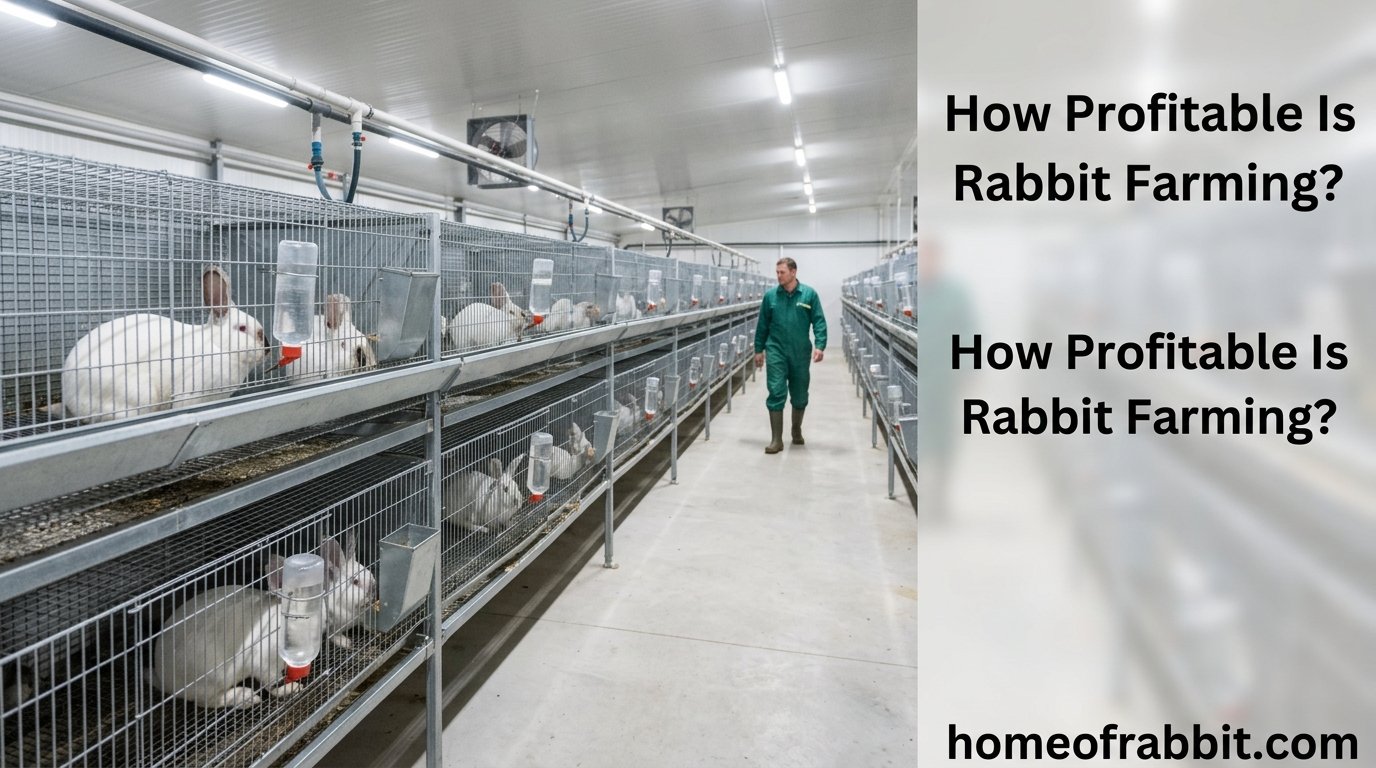
Rabbit farming can be profitable, but usually as a modest side income rather than a full-time living. Profit depends on three things: what you pay for feed, whether you can sell dressed meat directly to customers at good prices, and whether you count your own labor. Sell live rabbits at wholesale-style prices, or pay yourself an hourly wage, and the margin can shrink to almost nothing.
This guide walks through the actual numbers, shows where the money is made or lost, and helps you decide whether the business fits your situation.
What research and extension budgets show
Published economics vary widely, and that variation is itself the lesson.
- The University of Maine Extension’s backyard budget projected a return of about $67.50 per doe per year over annual costs, based on 30 fryers per doe, with family labor unpaid and building and buck costs excluded. That budget dates from 2014, so today’s feed and equipment prices are higher. umaine
- A cost model of a typical semi-technified Mexican farm found a production cost of $5.56 per kilogram of carcass meat and a benefit-cost ratio of 1.29, or about 29% profitability. oup
- A three-year analysis of a small Argentine farm found negative profit once labor was counted, with feed making up about 48% of costs and labor about 41%. researchgate
These studies come from different countries, price levels, and accounting methods, so don’t treat any one number as your forecast. What they agree on is that feed and labor drive results. Agricultural marketing specialists also describe rabbits as a slim-margin enterprise, advising producers to start small and secure a market before scaling up. agmrc
A realistic per-doe budget
The table below is my own back-of-envelope estimate, not a published figure. Adjust it with your local prices. You can also plug your numbers into our rabbit farm calculator.
Assumptions
- 30 fryers sold per doe per year. This is the Maine bulletin’s benchmark, from 6 litters, and it is realistic only if fryers reach at least 4 pounds by 8 to 10 weeks. umaine
- About 2.5 lb dressed weight per rabbit. This is conservative, given a 4.5 lb live rabbit and a carcass yield near 55% (a figure used in the Mexican model). oup
- About 650 lb of feed per doe per year. This is roughly 30 fryers × 4.5 lb gain × a feed conversion ratio of about 3.5, plus about 150 to 200 lb for the doe and her share of the buck and replacements. Real-world conversion varies a lot, and the Mexican model used a feed conversion ratio near 3.4. oup
- Feed at $0.45 to $0.56 per pound. Recent retail listings show a 50 lb Producer’s Pride bag at about $0.45/lb and a Purina 50 lb bag at about $0.56/lb. Bulk or local mill pricing may be lower. tractorsupplychewy
- Other costs (equipment wear, vet supplies, utilities, bedding) of about $60 per doe. This is an estimate.
- Labor is not counted in the net figure. Maine estimates about 20 hours per doe per year for care. I add roughly 5 to 8 more for slaughter and packing. umaine
| Scenario | Sale price | Revenue per doe | Costs per doe | Net before labor |
|---|---|---|---|---|
| Low: direct, weak local demand | $8/lb dressed | ~$600 | ~$425 | ~$175 |
| Mid: direct, steady customers | $10/lb dressed | ~$750 | ~$355 | ~$395 |
| High: direct, premium local market | $12/lb dressed | ~$900 | ~$355 | ~$545 |
| Live sales at Maine’s 2014 price | $1.75/lb live | ~$235 | ~$355 | about –$120 |
The last row uses the price from the 2014 budget. Current live-sale prices vary by region and I couldn’t verify one, so ask local buyers and processors.
On an hourly basis: at about 25 to 30 hours per doe, the low, mid, and high scenarios work out to roughly $6, $14, and $20 per hour. That’s a decent supplement, not an easy living.
Where do those direct prices come from? They’re consistent with what farms and breeders report. One online seller lists whole rabbit at $11 per pound. Breeder forum posts show a wide spread, from roughly $5 to $14 per pound depending on region and buyer. Specialty online retailers charge much more, but that’s not what a small farm typically receives. grandarmyfarmrabbittalk
What that means at 5, 10, and 25 does
Multiply the per-doe net by herd size, then subtract fixed costs such as cages, housing, and a buck.
| Herd size | Rabbits sold per year | Net before labor (low / mid / high) |
|---|---|---|
| 5 does | ~150 | ~$875 / ~$1,975 / ~$2,725 |
| 10 does | ~300 | ~$1,750 / ~$3,950 / ~$5,450 |
| 25 does | ~750 | ~$4,375 / ~$9,875 / ~$13,625 |
Two cautions. First, 300 rabbits a year means finding about 25 buyers every month, and Maine’s guidance is to grow the herd only as local sales grow. Second, replacing a $40,000 income at these margins would take roughly 75 to 165 does, and at that scale you would likely be selling wholesale at lower prices than the table assumes. For most people, rabbits work best as a side business or a way to lower the family’s own food costs. umaine
What decides whether you make money
Feed. It’s the largest cost. A Mexican cost model identified litter size and feed conversion as the traits with the greatest economic influence. Track feed by the pound, not by the bag. Our rabbit feeding calculator can help you estimate needs. oup
Litters and survival. Maine’s bulletin describes 6 to 8 litters per doe per year as the target, with 7 to 8 kits per litter, and 10 to 15% typical mortality between weaning and market. Use the rabbit pregnancy calculator to plan rebreeding, and see how many babies a rabbit can have for realistic litter sizes. umaine
Breed choice. Meat operations typically use commercial lines. Maine’s bulletin recommends commercial New Zealand Whites or Californian × New Zealand crosses, and cautions that fancy or show stock is generally a poor fit for year-round meat production. Our guide to the best rabbits for meat compares options. umaine
Sales channel. Direct-to-consumer sales of dressed meat pay far more than live wholesale, but they require customers, processing, and compliance. Note also that rabbit prices tend to run lower in summer because of higher supply. psu
Health losses. Weaning-age losses can erase profit. Read up on the most common causes of death in rabbits and why baby bunnies die before you buy stock.
Housing efficiency. Cages and nest boxes are a modest cost, but poor ventilation or heat stress cuts fertility. See our cage size calculator and nesting box guide.
Selling rabbit meat legally in the U.S.
Rules differ by state, so check yours before you sell anything.
- Rabbits are not an “amenable species” under federal meat inspection law, so federal inspectors aren’t required, but other federal and state rules still apply. farmandranchfreedom
- States set their own limits. California allows rabbit operations under its exemption without an annual numeric cap, direct-to-consumer only. Missouri’s exemption stops applying if you process more than 1,000 rabbits in a calendar year. West Virginia allows up to 20,000 per year on the premises where they were raised, with registration and record-keeping. On-farm Poultry Meat Processing with USDA Exemption +2
- Selling to restaurants, stores, or across state lines usually requires more than a basic exemption. Commercial slaughter facilities for rabbits are limited in number across the U.S. agmrc
- Zoning is a separate issue. Check with your town or county office if you live within city limits. umaine
The most reliable step is to call your state department of agriculture and ask exactly what you may sell, to whom, and with what labeling. Rules change, so verify current requirements.
Other income streams
These usually add little, but they can help at the margin. Maine’s bulletin lists breeding stock, pets, tanned skins, bagged manure or compost, and worms grown in the manure. Breeding stock usually needs good records and a reputation. Manure is a real benefit if you garden. See what rabbits are good for for more uses. umaine
Common mistakes
- Building the herd before finding buyers. Rabbits multiply fast, and unsold inventory eats feed.
- Ignoring labor. Profit that looks fine at $0 per hour can look poor at $8.
- Buying pet-store or show rabbits for meat. Commercial lines produce more and grow faster.
- Skipping records. Without litter and feed data you can’t see what’s working.
- Assuming online retail prices apply to you. Specialty shipped-rabbit prices are not what a farm typically receives.
- Overlooking local rules. Zoning and sale rules can stop a plan before it starts.
Is rabbit farming right for you?
- You want cheaper, high-quality meat for your family: Likely a good fit. Four to five does can supply about two fryers a week, per Maine’s estimate.
- You want side income from farmers market or neighbor sales: Feasible, if you can find and keep direct buyers and stay within state rules.
- You want a full-time income: Difficult at U.S. price and demand levels. Test a small operation for a year before making bigger commitments.
- You dislike slaughter: You could sell live breeding stock, though the income ceiling is lower and the market is smaller.
Before-you-start checklist
- Confirm zoning and state or local rules on keeping and selling rabbits
- Ask your state ag department what you can sell and how it must be labeled
- Line up at least a few committed buyers
- Price feed locally and calculate cost per fryer
- Buy commercial meat-line stock from a reputable breeder
- Set up predator-safe, ventilated housing
- Start with 3 to 5 does and keep records for a full year
- Recalculate profit including your time
Conclusion
So, how profitable is rabbit farming? In realistic U.S. conditions, expect roughly a few hundred dollars per doe per year before labor when selling dressed meat directly, and little or nothing when selling live at wholesale prices or valuing your time highly. It rewards careful record-keeping, low feed costs, and reliable local buyers. Start small, prove your market, and run the numbers with your own prices before scaling.
9. FAQ
How much money can you make from 10 female rabbits?
Using the illustrative model above, roughly $1,750 to $5,450 per year before labor and fixed costs, if you sell dressed meat directly. Your result depends on feed cost, litter survival, and local prices.
Is rabbit farming more profitable than chickens?
I didn’t find a reliable U.S. side-by-side comparison, so I can’t say. Rabbits have higher per-pound prices in niche markets but a much smaller customer base and fewer processing options. Compare using your own local prices.
How many rabbits do you need to make a living?
Under these assumptions, roughly 75 to 165 does to replace a $40,000 income, before building, marketing, and tax costs. That would likely force wholesale sales at lower prices than assumed here, so treat it as a rough floor rather than a plan.
Do I need a license to sell rabbit meat?
It depends on your state and sales channel. Rabbits aren’t subject to mandatory federal inspection, but state exemptions, registration, labeling, and volume caps vary. Contact your state department of agriculture.

1 Comment
Pingback: How Long Does Growing Rabbits for Meat Take? - homeofrabbit